<?xml version="1.0" encoding="UTF-8"?>
<feed xmlns="http://www.w3.org/2005/Atom">
    <title>Montréalités Arrival</title>
    <link rel="alternate" type="text/html" href="http://www.montrealites.ca/arrival/" />
    <link rel="self" type="application/atom+xml" href="http://www.montrealites.ca/arrival/atom.xml" />
    <id>tag:www.montrealites.ca,2015-03-10:/arrival//47</id>
    <updated>2015-04-17T20:58:32Z</updated>
    
    <generator uri="http://www.sixapart.com/movabletype/">Movable Type Pro 6.3</generator>

<entry>
    <title>5 ways Orthodox Easter in Montreal is spectacular...and 1 way it makes me nostalgic</title>
    <link rel="alternate" type="text/html" href="http://www.montrealites.ca/arrival/2015/04/5-ways-orthodox-easter-in-montreal-is-spectacularand-1-way-it-makes-me-nostalgic.html" />
    <id>tag:www.montrealites.ca,2015:/arrival//47.6007</id>

    <published>2015-04-12T22:19:47Z</published>
    <updated>2015-04-17T20:58:32Z</updated>

    <summary> 1. A separate date Easter is one of the two biggest Christian holidays worldwide, but it originated long before organized religion, as a celebration of spring, joy and rebirth. There&apos;s no fixed date in the calendar for it: in...</summary>
    <author>
        <name>Carmen Pintea</name>
        
    </author>
    
    
    <content type="html" xml:lang="en-US" xml:base="http://www.montrealites.ca/arrival/">
        <![CDATA[<p><a href="http://www.montrealites.ca/arrival/assets_c/2015/04/2015-03-30%2013.11.26-thumb-550xauto-8094.jpg"><img alt="Thumbnail image for 2015-03-30 13.11.26.jpg" src="http://www.montrealites.ca/arrival/assets_c/2015/04/2015-03-30%2013.11.26-thumb-550xauto-8094-thumb-550x413-8095.jpg" class="mt-image-center" style="text-align: center; display: block; margin: 0 auto 20px;" height="413" width="550" /></a></p>
<p><strong>1. A separate date</strong></p>
<p>Easter is one of the two biggest Christian holidays worldwide, but it originated long before organized religion, as a celebration of spring, joy and rebirth. There's no fixed date in the calendar for it: in Western Christianity (the Catholic and Protestant denominations), according to the Gregorian calendar, Easter always falls on a Sunday between March 22<sup>nd</sup> and April 25<sup>th</sup>, following the first astronomical full moon after the spring equinox; Eastern Christianity, on the other hand, bases its calculations on the Julian Calendar, which is currently behind the Gregorian one by 13 days. Orthodox Easter therefore varies between April 4<sup>th</sup> and May 8<sup>th</sup>, so it rarely overlaps with the Western one, and mostly falls later in the year.</p>
<p>While we've been assaulted for weeks now by images of chocolate eggs and bunnies in store window displays, few Montrealers for whom Easter is a religious holiday seem to care much about the religious aspect of it - they just enjoy their day off, eat a lavish lunch and spend time with families. <span>On the contrary, for Orthodox communities (mostly Russian, Ukrainian, Romanian, Bulgarian, Greek and Coptic) in the city, this is the most important holiday of the year. It seems fitting that they would have a separate date to celebrate it.</span></p>]]>
        <![CDATA[<p><b>2. </b><b>Diversity of customs</b></p>
<p>Even within one single culture, the manifestations of one holiday tend not to be unitary. In a multicultural city like Montreal, the ethic immigrant communities have maintained their traditions fiercely, passing them down through generations. From the decorations on their eggs, to the shape of the Easter buns, to the time of the church services, each cultural group manifests their unique Easter customs. Moreover, some of these customs are so old that they seem to have been lost in the home country.</p>
<p>For someone who's not Orthodox, it's easy to miss the ways in which these communities prepare themselves for their biggest feast. The most visible mention of it might be Easter bazaars. The Ukrainian community in Montreal is very vocal and staunch in displaying their customs, even non-Easter related, so that on visiting an Easter bazaar this year, between <a href="http://cym.org/ca/2015/04/03/velikodne-privitannya/">end of March</a> and <a href="http://www.stsophiemontreal.com/">Palm Sunday</a>, you also had the chance to admire (and buy) traditional motif clothing or have a typical lunch of borscht and cabbage rolls.</p>
<p></p>
<p><b>3. </b><b>Best painted eggs</b></p>
<p>Even before Christianity, painted eggs, as symbols of spring, were believed to have magic powers, to bring luck and protect the home against demons and evil spirits; the shells of Easter eggs were kept and sprinkled over the soil in gardens to provide for fertility and richer crops.</p>
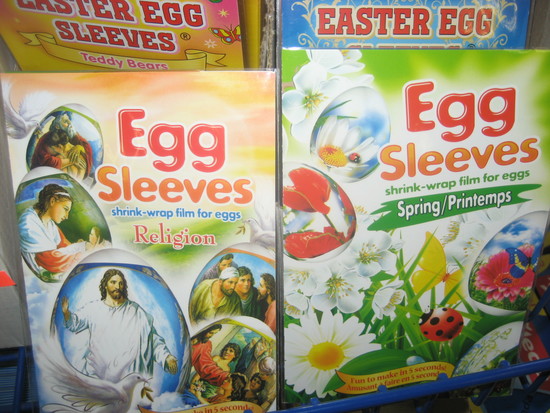
<p>There are two types of traditional Easter eggs in Eastern-European cultures. One type is for eating: commonly painted red (to commemorate Jesus' blood), they are broken immediately after midnight mass in joyous acknowledgement that "Christ Is Risen!". Sometimes the hard-boiled painted eggs can be adorned with natural patterns (leaves) and there's, of course, a going-back-to-origins trend toward using natural resources, like onions or beets, to dye the eggshell. Absent that, egg dye and egg sleeves are found for sale in Montreal stores that cater to the respective Orthodox communities. (Here's the <a href="http://www.stiridemontreal.com/2015/04/vopsea-de-oua/">local Romanian website</a> compiling a list of where to buy egg dye within the city area - it's a concern! I got mine sent from Romania, because my parents apparently don't believe we have proper stores here.)</p>
<p></p>
<p><a href="http://www.montrealites.ca/arrival/2014-04-20%2011.58.14.jpg"><img alt="2014-04-20 11.58.14.jpg" src="http://www.montrealites.ca/arrival/assets_c/2015/04/2014-04-20%2011.58.14-thumb-550xauto-8096.jpg" class="mt-image-center" style="text-align: center; display: block; margin: 0 auto 20px;" height="413" width="550" /></a></p>
<p>The other type of Easter eggs is the decorative painted ones, raised to the level of true objects of art. Eggshells are emptied of yolk and egg white, then covered in a wax mold, on which intricate designs (sometimes religious, but not only) are traced with a special pen. These exquisitely embellished Easter eggs are more typical for Ukraine and Poland, and got popularized in Canada as "pysanky" - but some parts of eastern Romania do them too. This time of the year there will be cheaper wooden versions for sale in stores, but the real deal is more likely to be available in one of the Ukrainian bazaars.</p>
<p><a href="http://www.montrealites.ca/arrival/2015-03-22%2012.39.48.jpg"><img alt="2015-03-22 12.39.48.jpg" src="http://www.montrealites.ca/arrival/assets_c/2015/04/2015-03-22%2012.39.48-thumb-550xauto-8098.jpg" class="mt-image-center" style="text-align: center; display: block; margin: 0 auto 20px;" height="413" width="550" /></a></p>
<p></p>
<p><b>4. </b><b>Traditional Easter breads and buns</b></p>
<p><a href="http://www.montrealites.ca/arrival/250px-Kulich_pies.JPG"><img alt="250px-Kulich_pies.JPG" src="http://www.montrealites.ca/arrival/assets_c/2015/04/250px-Kulich_pies-thumb-250x188-8100.jpg" class="mt-image-left" style="float: left; margin: 0 20px 20px 0;" height="188" width="250" /></a>Bread is the commonest symbol of home, of plenty and gratitude. Though generally not dissimilar in offer from the traditional Italian or Portuguese fare, typical Easter sweet bread comes with its own special twist in each Orthodox community. Light and fluffy in texture, all of these pastries may or may not contain bits of raisin, nuts or even Turkish delight - but what they do have in common is a lot of eggs mixed in the dough. The Slavic peoples have the <i>kulich</i>(Russian) or <i>babka</i> (Ukrainian), tall, cylindrical in shape, sometimes glazed. There's also a Polish-style <i>babka</i>, which looks more like a typical ring cake. The Greek brag of their braided buns with red eggs boiled inside, which look a lot like the Portuguese <i>folar de pascoa</i>. The <a href="http://www.montrealites.ca/arrival/tsoureki.jpg"><img alt="tsoureki.jpg" src="http://www.montrealites.ca/arrival/assets_c/2015/04/tsoureki-thumb-250xauto-8102.jpg" class="mt-image-left" style="float: left; margin: 0 20px 20px 0;" height="188" width="250" /></a>Romanian-typical Easter bread usually contains cheese. Another type of sweet bread served only on holidays makes use of a good amount of sweetened crushed walnuts or poppyseed grains.</p>
<p><span>In Montreal you can order any of these goodies in the specific stores or bakeries (think Rosemont for Polish-Ukrainian, Park Extension for Greek, Cote-des-Neiges/Plamondon for Russian, Decarie for Romanian etc.) - sometimes even weeks before Easter.</span></p>
<p><b style="line-height: 1.62;">5. </b><b style="line-height: 1.62;">Amazing ceremonies and sense of community</b></p>
<p><a href="http://www.montrealites.ca/arrival/300px-Pasca.JPG"><img alt="300px-Pasca.JPG" src="http://www.montrealites.ca/arrival/assets_c/2015/04/300px-Pasca-thumb-250xauto-8104.jpg" class="mt-image-left" style="float: left; margin: 0 20px 20px 0;" height="227" width="250" /></a>In some ethnic and immigrant communities throughout Canada, religion has high stakes; Orthodoxism at least is strongly intertwined with the belonging to a cultural community. Certain aspects of preserving a heritage - and Easter celebration is a perfect illustration of this - bring entire parishes together, at least twice a year.<span>This year I came to realize that all Orthodox denominations in Montreal do attend to Good Week religious rituals that are richer and more elaborate than I'd ever taken part in in my Transylvanian birthplace.</span></p>
<p>One Easter custom preserved in Montreal that was new to me is the blessing of the food basket on Easter day: parishioners bring to church, for the priest's blessing, baskets containing a few staple foods: eggs painted red, bread, some meats, cheese, butter, salt and pepper - these represent the first meal they will have right after Ressurection. In Ukrainian churches this can happen on Good Saturday or Good Sunday after morning service. In my (smaller, I presume) Romanian church, people came forward with baskets after midnight service. My father says this custom was respected back in his village when he was young, but apparently it didn't get carried on to Romanian city life.<b></b></p>
<p>On Good Friday, I knew (but again, I'd never witnessed) that the congregation walks around the church carrying an icon embroidered on cloth, which represents the Crucifixion - commemorating the burial of Christ's earthly body. This year I attended the corresponding Greek ceremony, which appears to be a more complex and joyful ritual. The Holy Epitaph - a tall litter-like structure made of flowers - is paraded throughout the neighbourhood after dark, accompanied by altar boys and flower girls dressed in white, carrying baskets of petals. The procession meanders through the pre-blocked streets of the neighbourhood, discreetly watched over by police. Retracing its way back to the church, the crowd then dismantles the Epitaph to take the flowers home. Taking part in this communal walk was exhilarating for me: I will admit that hearing a ceremony in an unknown language may lend it a more solemn, striking air, but I was also impressed by the numbers in attendance and the organization of it all.</p>
<p><a href="http://www.montrealites.ca/arrival/IMG_20150410_215357.jpg"><img alt="IMG_20150410_215357.jpg" src="http://www.montrealites.ca/arrival/assets_c/2015/04/IMG_20150410_215357-thumb-550xauto-8106.jpg" class="mt-image-center" style="text-align: center; display: block; margin: 0 auto 20px;" height="413" width="550" /></a></p>
<p>A Greek-Canadian friend also shared vivid memories from a typical Good Saturday service, where a "mini-ressurection" is role-played: "The priest and altar boys simulate the rock moving from the grave where Jesus was placed. In most churches it's a pretty small noise, but at our church we used to even light up firecrackers in garbage cans[...] to make a loud noise and smoke. The people in the pews bang their hands on the wood of the pews and on the balcony upstairs, the priest would save old chairs and tables he wanted to throw away and would let us bang them and break them."</p>
<p>Still, my favourite Easter ceremony, the climax of the biblical story, remains the Easter midnight procession where the crowd gathered outside has to walk around the church three times, with their lit candles, singing "Christ Is Risen" for the first time in the year. Of course, churches in Europe are usually built in squares, so crowds of people can actually go around them, while in North America they're mostly squeezed in some street corner; nevertheless, excitement was palpable this Saturday night as I stood surrounded by hundreds of fellow expats, waiting to testify to the rebirth of Christ and "receive the light".</p>
<p>The light, symbolizing resurrection, is an important part of this ritual: the priest shares light with a few believers at the front of the crowd, but then they have to spread it around, lighting other people's candles, so everybody would have a light to take into their homes. What can be a more apt symbol for togetherness on this Holiest of nights?</p>
<p><a href="http://www.montrealites.ca/arrival/easter-russian-orthodox-parade_852x480_2450585074.jpg"><img alt="easter-russian-orthodox-parade_852x480_2450585074.jpg" src="http://www.montrealites.ca/arrival/assets_c/2015/04/easter-russian-orthodox-parade_852x480_2450585074-thumb-550xauto-8108.jpg" class="mt-image-center" style="text-align: center; display: block; margin: 0 auto 20px;" height="310" width="550" /></a></p>
<p></p>
<p><b>...but where are my nettles?</b></p>
<p>Local weather has not been kind to Easter celebrations lately, no matter how far into April the calendar tries to place them. As I write, there are still patches of snow on the ground, and the wind blew with a vengeance last night during the service, threatening everyone's lit candles!</p>
<p><a href="http://www.montrealites.ca/arrival/2013-05-05%2005.21.26.jpg"><img alt="2013-05-05 05.21.26.jpg" src="http://www.montrealites.ca/arrival/assets_c/2015/04/2013-05-05%2005.21.26-thumb-250xauto-8110.jpg" class="mt-image-left" style="float: left; margin: 0 20px 20px 0;" height="188" width="250" /></a>Since we're not getting buds and flowers this early in the season, it stands to reason that some things will be different from what I was used to back in my home country. For example, on Palm Sunday (one week before Easter) instead of adorning the church with blooming willow branches, here we have actual palm leaves - though I don't know where from. I miss those willow branches and I hope to meet them soon in a park near me!</p>
<p>Also, one of my favourite Easter traditions back in Romania was washing my face right after the midnight church service: in a basin filled with water, one placed a painted egg, a shiny coin and a nettle, so that the person washing their face would be, for the rest of the year, beautiful as the egg, loved as money and fierce as a nettle. I haven't been able to do that for years now, due to the absence of nettles at this time in Montreal. Can anyone maybe help me find some?</p>
<p>This being said, Happy Easter to everyone! Hristos a înviat! Христос воскрес! Χριστὸς ἀνέστη!</p>
<hr />
<p>Photo credits:</p>
<p>4. Kulich - <a href="http://en.m.wikipedia.org/wiki/Kulich">http://en.m.wikipedia.org/wiki/Kulich</a></p>
<p>5. Tsoureki - <a href="http://www.sheridanrogers.com.au/tsoureki-greek-easter-bread-2/">http://www.sheridanrogers.com.au/tsoureki-greek-easter-bread-2/</a></p>
<p>6. Pasca -<a href="http://ro.wikipedia.org/wiki/Fi%C8%99ier:Pasca.JPG"> http://ro.wikipedia.org/wiki/Fi%C8%99ier:Pasca.JPG</a></p>
<p>7. Holy Epitaph procession - photo by Andriani T.</p>
<p>8. Romanian Orthodox Easter celebration - www.cbc.ca April 19, 2014</p>
<p>Sources:</p>
<p><a href="http://en.wikipedia.org/wiki/Easter">http://en.wikipedia.org/wiki/Easter</a></p>
<p>Easter traditions - painted eggs: <a href="http://www.rounite.com/2008/04/18/painted-eggs/">http://www.rounite.com/2008/04/18/painted-eggs/</a></p>
<p>Personal interview - Andriani T., April 5</p>]]>
    </content>
</entry>

<entry>
    <title>The first years: settling in Montreal</title>
    <link rel="alternate" type="text/html" href="http://www.montrealites.ca/arrival/2015/03/the-first-years-settling-in-montreal.html" />
    <id>tag:www.montrealites.ca,2015:/arrival//47.5860</id>

    <published>2015-03-11T20:39:18Z</published>
    <updated>2015-03-13T04:32:11Z</updated>

    <summary> Walking around Montreal, people-watching, one would find it hard to tell by their faces, dress or demeanour whether these passersby were born here, and - if not - when they arrived, how much at home they feel, how easy...</summary>
    <author>
        <name>Carmen Pintea</name>
        
    </author>
    
    <category term="arrival" label="arrival" scheme="http://www.sixapart.com/ns/types#tag" />
    <category term="immigrant" label="immigrant" scheme="http://www.sixapart.com/ns/types#tag" />
    <category term="immigration" label="immigration" scheme="http://www.sixapart.com/ns/types#tag" />
    <category term="montreal" label="montreal" scheme="http://www.sixapart.com/ns/types#tag" />
    
    <content type="html" xml:lang="en-US" xml:base="http://www.montrealites.ca/arrival/">
        <![CDATA[<p><a href="http://www.montrealites.ca/arrival/mtl%201%20fromspace.jpg"><img alt="mtl 1 fromspace.jpg" src="http://www.montrealites.ca/arrival/assets_c/2015/03/mtl%201%20fromspace-thumb-550xauto-7432.jpg" width="550" height="367" class="mt-image-center" style="text-align: center; display: block; margin: 0 auto 20px;" /></a></p>
<table></table>
<h6 style="text-align: center;"></h6>
<p>Walking around Montreal, people-watching, one would find it hard to tell by their faces, dress or demeanour whether these passersby were born here, and - if<span style="line-height: 1.62;"></span><span style="line-height: 1.62;"> not - when they arrived, how much at home they feel, how easy it is for them to melt into this sea of diversity. Some never even wonder about it: multiculturality is a face of Canada that's natural to them, expected. I always wonder about it - because I'm still a new immigrant.</span></p>
<p>Canada is a country built on immigration, with <a href="http://ccrweb.ca/sites/ccrweb.ca/files/static-files/bpfina1.htm">95% of its current population non-aboriginal</a>, a strong testament to how people can make a new start in this place, no matter the circumstances of their arrival. Over time, and notably toward the end of last century, it has started regulating its immigration practices, with a view to supporting and promoting multiculturalism. It is no wonder that <a href="http://en.wikipedia.org/wiki/Immigration_to_Canada">around 250 000 people arrive every year</a>, ready to make this place their new home.</p>]]>
        <![CDATA[<p>Among Canadian provinces, Quebec holds a special place due to its strong Francophone culture. Surrounded by Francophony, Montreal is of Quebec and still different, a cosmopolitan and diverse city. Of the approximately 50 000 yearly new residents in Quebec, <a href="http://montrealgazette.com/news/quebec/montreal-calls-on-quebec-for-more-powers-and-money-to-help-immigrants">35 000 land in Montreal</a>, and the obstacles they have to face in order to get to function in this society are typical of its particular intersection of culture, language and economy.</p>
<p>I talk to people about immigration and integration on an almost daily basis. Most of the immigrants who've crossed my path recently are highly educated and chose to come here as adults - on paper, they are the model residents that Canada, and Quebec, are looking for. After 2 to 5 years here, it is clear that these people want to settle, so, how far along have they come? In their hierarchy of needs, once they have solved the basics, what other problems rear their heads, and are these problems more and more Canadian as time goes by?</p>
<p style="text-align: center;">***</p>
<p><a href="http://www.montrealites.ca/arrival/immigration%202.jpg"><img alt="immigration 2.jpg" src="http://www.montrealites.ca/arrival/assets_c/2015/03/immigration%202-thumb-300x226-7422.jpg" width="300" height="226" class="mt-image-right" style="float: right; margin: 0 0 20px 20px;" /></a></p>
<p>There is no denying that there are a lot of programs and organizations in Montreal <a href="http://www.immigration-quebec.gouv.qc.ca/en/settle/services-organizations.html">working towards facilitating the integration of newcomers</a>. On the other hand, the requirements made on newcomers here are harsher than elsewhere: learning a new language on top of equivalating one's education and coming to grips with a social environment that is strongly polarized and where it seems like the Allophones, in spite of their more and more visible presence, still have little to say.</p>
<p>Finding work is always the hardest part of moving to a new place. The unemployment rate for Montreal in 2014 was of <a href="http://montrealgazette.com/news/quebec/montreal-calls-on-quebec-for-more-powers-and-money-to-help-immigrants">11.3% among the immigrants, compared to 7% for the city overall</a>; this despite the fact that <a href="http://www.theglobeandmail.com/news/politics/quebec-preparing-major-reform-to-immigration-policy/article22628471/">almost 60% of the immigrants to Quebec have completed at least 14 years of schooling</a>, and a majority of the well-educated ones choose Montreal as their destination. All across Canada, the unemployment gap between immigrants and Canadian-born workers is biggest for those with the most education ( <a href="http://globalnews.ca/news/1074811/immigrant-unemployment/">4 to 1 in 2014</a>) and Quebec has generally had worse immigrant unemployment figures than most other provinces. Currently the province is attempting an upheaval of its immigration policy based on the specific necessities of the job market and a tightening of the language requirements, but for the newcomers who have already made it in it`s still an uphill struggle.</p>
<p>The standard guide to integration a new resident gets on entry recommends attending Emploi Quebec workshops. These are 7 or 8 sessions of instruction which give the participants basic information and training on life and work in Quebec, ranging from getting warm clothes for winter to knowing how to introduce oneself to potential employers. A major advantage of these courses is that they alert newcomers to opportunities, such as the option (for residents who arrived less than 5 years ago) of <a href="http://www.emploiquebec.gouv.qc.ca/en/citizens/starting-a-new-job/employment-integration-programs/employment-integration-program-for-immigrants-and-visible-minorities-priime/">being matched up for an internship with an entreprise in their field</a>.</p>
<p>Amiee H., 36, an American who moved to Montreal in 2013, sponsored by her Quebecer partner, is a textbook example of perseverence in this respect. After completing Francisation in 2014, she took any internship that was on offer: "I attended a 3-day training for Human Resource professionals with the Board of Trade, a 4-week training with the Club de recherche d'emploi Montréal Centre-Ville and a 4-week internship with the Interconnexion program offered by the Board of Trade of Montréal. I also completed a one-month unpaid internship with Quantum Staffing Services, in hopes of [acquiring] the Canadian experience I needed to get a job."</p>
<p>It was through the Interconnexion internship that Amiee found her first and current job as an Assistant-H.R. and Administration, more than one year after arrival, which is still remarkably quickly. Common wisdom may say it was easier for her as an American, because the transition is not as abrupt - but Amiee did immerse herself willingly into a foreign culture, bringing positive attitude and determination to the process. She commends the spirit of hard-working self-reliance in which she was raised by her parents, Mexican immigrants to Texas themselves.</p>
<p style="text-align: center;">***</p>
<p>Amiee is lucky to have landed a first job in her field. Apart from the few whose qualifications are in demand, it is mostly assumed that immigrants will hold different subsistence jobs before they get themselves on their feet. "I think the biggest challenge for me is patience, because to get where you want to get you need to do a bunch of things that usually take a lot of time," says Claudia P., a language teacher with an MA in Education, who arrived in 2009 from Colombia. For example, it takes at least a few months for the newcomers' study diplomas to be equivalated according to Quebec standards, not to mention that some degrees may not be recognized, or may need to be completed. Claudia obtained her first job, in a kindergarten, 6 months after arrival, through Emploi Quebec; more than a year later she started teaching Spanish part time for the Montreal School Board, and is now studying to complete a certificate in teaching English, which would widen her job opportunities.</p>
<p>In the same evening classes in the <a href="http://doe.concordia.ca/programs/teaching-english-second-language/tesl-teaching-english-as-second-language-bed/">TESL program at Concordia University</a> I met Blagovesta K., who arrived in 2010 from Bulgaria, with her family. Her first Canadian job, obtained through a friend of a friend's, was in a call center. She has more than 10 years' experience teaching English in her native country, but finds breaking into the job market here intimidating and hopes that Canadian certification in her profession would help pad her résumé. One of the draws of Quebec in this respect is very accessible education costs for residents in the province, supplemented by <a href="http://www.mesrs.gouv.qc.ca/en/aide-financiere-aux-etudes/procedures/studies-in-quebec/">financial aid</a> which allows a lot of newcomers to buy a little adaptation time through pursuing full-time studies. It is an enormous investment and at the same time a gamble - both for students, who put in time and effort without having guarantees of employment, and for the province, which is spending money to groom specialists that might well decide to move to other provinces with their degrees, especially in fields like Teaching English.</p>
<p align="center">***</p>
<p><span>The importance of the French language is paramount in both the professional and social life of Montreal. Talking about challenges she faced in adaptation, Amiee remembers: "I was told my French was not good enough [...] which prevented me from obtaining a first job, even jobs that I was over-qualified for."</span></p>
<p><span><a href="http://www.montrealites.ca/arrival/mtl%203%20french.jpg"><img alt="mtl 3 french.jpg" src="http://www.montrealites.ca/arrival/assets_c/2015/03/mtl%203%20french-thumb-350xauto-7428.jpg" width="350" height="226" class="mt-image-left" style="float: left; margin: 0 20px 20px 0;" /></a></span></p>
<p>According to recent statistics, <a href="http://www.theglobeandmail.com/news/politics/quebec-preparing-major-reform-to-immigration-policy/article22628471/">43% of the newcomers to Quebec do not speak French at all</a> upon arrival. <a href="http://www.immigration-quebec.gouv.qc.ca/en/settle/french-courses.html">French language courses</a> are offered for free or almost, to new residents who can afford to take time and sit through them either full time or in evening classes. For many, irrespective of the type of work they are looking for, learning French means a commitment to Quebec values, which they undertake willingly.</p>
<p><span>Some, like Amiee, who have a partner's support and aim for good jobs off the bat, have attended Francisation full-time, systematically. Others, like Blagovesta, have taken some time off it, returned and retaken some levels. A lot of newcomers are financially pressed to start working right away, and, together with the stress of adjustment, taking French classes often proves too much of a burden. But there is proof that when one sticks with the program, benefits will follow. Alejandro R., 40, arrived from Mexico in 2009, managed to finish his 6 levels of French in night classes over the course of 2 years, while holding a day job in a shoe factory. He had a degree in IT from his country and knew the language would be a stepping stone towards a well-paid job, which soon proved to be the case. Emboldened by this success, in 2012 he started an MA program in French at Université de Montreal, which he counts on to lead him to further career advancement. His girlfriend, whom he met here, is a Quebecer, so most of his life does happen in French, a sign of successful integration if any.</span></p>
<p align="center">***</p>
<p style="text-align: left;" align="center"><span>In conversations with newcomers, finding out your interlocutor's status can be a surprise. I started questioning M. L., 35, about her work and life in Montreal knowing she arrived less than 2 years ago from South Korea, with her husband, and she works in IT (as a 3D artist, doing augmented reality implementation) - only to find out that she had been unemployed until last October, filling her time with sending CVs and taking French classes for 6 months at a language school. "Why didn't you go to Francisation?" I inquired - "Oh, my husband and I had no permit. If I want to take the class, I should hand in work permit papers." So...she is not a resident yet? - "I'm nothing here," M. says disarmingly, but "we are progressing." She and her husband first arrived as tourists, on a 6 month visa. The fact that she is now working in her field has enabled them both to start their residency application, and they will wait for the response from here; by the time they become residents, their integration will be well on its way.</span></p>
<p style="text-align: left;"><span>In my 5 years here, I met a lot of people who, like M., hope to change their limited visas into a Canadian residency. Some apply to be sponsored by Quebecer spouses, and can stay on as tourists while their files are being processed. Of course, this precludes access to legal jobs, health care, or to education at the much lower tuition costs paid by provincial residents. French schools also only cater to residents, refugees or workers, not to "tourists", though these actually need to learn French in order to support their applications.</span></p>
<p align="center">***</p>
<p align="center"><a href="http://www.montrealites.ca/arrival/stairways-knotted-staircase-de-broin.jpg"><img alt="stairways-knotted-staircase-de-broin.jpg" src="http://www.montrealites.ca/arrival/assets_c/2015/03/stairways-knotted-staircase-de-broin-thumb-550x413-7430.jpg" width="550" height="413" class="mt-image-center" style="text-align: center; display: block; margin: 0 auto 20px;" /></a></p>
<p></p>
<p><span>When it comes to genuine social interactions, during their first years immigrants will mostly meet other immigrants, owing to their specific priorities and circumstances. While this still counts as making their place in the city, it keeps them somewhat isolated from Anglophone and Francophone circles. Alejandro, Amiee and Claudia have all made their first "Canadian" friends in Francisation, though with the rigours of their respective new job and studies they don't have much time for socializing any more. The work or school environment may help diminish the cultural gap or, on the contrary, reinforce it at first. "I think it will just take time getting used to the way people interact with each other," says Amiee. "Back home, I was able to read between the lines during conversation and I understood body language and tone of voice. Here, I never know when someone's joking, when they're being sarcastic and when serious. This is something I encounter mainly at work."</span></p>
<p><span>While unemployed, M.L. has relied a lot on meeting people through local meetup groups. Her main group of close acquaintances in the city labels itself a gathering of "international women", the word "immigrant" (with its implications of hardships and obstacles) not even mentioned; the membership is diverse, including newcomers, temporary workers from European French-speaking countries and women born in Canada who value their second- or third-generation ancestry. These friends have been a great help to M., advising her in her job search, on making cold calls and going out in person to companies instead of just dropping her CV, which has been instrumental in her getting her first job opportunities. Moreover, they have helped her think of Montreal as a welcoming place, where she has chances of fitting in.</span></p>
<p>"I am as integrated as I could be," concludes Claudia, matter-of-factly, after more than 5 years here. "I have a job, I have adapted myself to the Canadian, and more specifically, to the Quebecois way of life, and so far it's been trauma-free. However, even if I am Canadian now, I know I'll never be a true Canadian; I speak, think, do things differently. What's missing [here for me]? family or a tighter support system."</p>
<p>Blagovesta says that friendships, apart from some Bulgarians she knew from before moving, have been almost impossible to make: "We don't listen to the same music, eat the same food, discuss the same topics. I see that people are not interested in my culture, they expect me to be interested in theirs. Friendship and interest has to be mutual." Still, she notices a change in her attitude compared to immediately after arrival: "In the beginning, I tried hard to assimilate, become Canadian - then I realized that everyone has their history, and I can just be Bulgarian-Canadian, which is what I am anyway."</p>
<p></p>
<p></p>
<hr />
<p style="text-align: left;">Photo credits:</p>
<p style="text-align: left;">(1) Montreal as seen from space <a href="http://spacing.ca/montreal/2011/01/10/montreal-as-seen-from-space/">http://spacing.ca/montreal/2011/01/10/montreal-as-seen-from-space/</a></p>
<p style="text-align: left;">(2) <a href="http://www.agoracosmopolitan.com/news/lifestyles/2011/12/28/2454.html">http://www.agoracosmopolitan.com/news/lifestyles/2011/12/28/2454.html</a></p>
<p style="text-align: left;">(3) <a href="http://www.ledevoir.com/politique/quebec/406769/le-francais-c-est-l-inclusion">http://www.ledevoir.com/politique/quebec/406769/le-francais-c-est-l-inclusion</a></p>
<p style="text-align: left;">(4) <em>Revolutions</em> by Michel de Broin, next to Papineau metro, Montreal</p>
<p style="text-align: left;"><a href="%20http://weburbanist.com/2010/09/27/stairs-to-nowhere-15-works-of-surreal-staircase-sculpture/"> http://weburbanist.com/2010/09/27/stairs-to-nowhere-15-works-of-surreal-staircase-sculpture/</a></p>
<p style="text-align: left;">Sources:</p>
<p style="text-align: left;"><a href="http://www.immigration-quebec.gouv.qc.ca/en/settle/montreal.html">http://www.immigration-quebec.gouv.qc.ca/en/settle/montreal.html</a></p>
<p style="text-align: left;"><a href="http://www.emploiquebec.gouv.qc.ca/en/citizens/starting-a-new-job/employment-integration-programs/employment-integration-program-for-immigrants-and-visible-minorities-priime/">http://www.emploiquebec.gouv.qc.ca/en/citizens/starting-a-new-job/employment-integration-programs/employment-integration-program-for-immigrants-and-visible-minorities-priime/</a></p>
<p><em>Best Settlement Practices</em>, Canadian Council for Refugees 1998 <a href="http://ccrweb.ca/sites/ccrweb.ca/files/static-files/bpfina1.htm">http://ccrweb.ca/sites/ccrweb.ca/files/static-files/bpfina1.htm</a></p>
<p><a href="http://montrealgazette.com/news/quebec/montreal-calls-on-quebec-for-more-powers-and-money-to-help-immigrants">http://montrealgazette.com/news/quebec/montreal-calls-on-quebec-for-more-powers-and-money-to-help-immigrants</a></p>
<p><a href="http://montrealgazette.com/news/quebec/montreal-calls-on-quebec-for-more-powers-and-money-to-help-immigrants">http://www.theglobeandmail.com/news/politics/quebec-preparing-major-reform-to-immigration-policy/article22628471/</a></p>
<p><a href="http://globalnews.ca/news/1074811/immigrant-unemployment/">http://globalnews.ca/news/1074811/immigrant-unemployment/</a></p>
<p>Personal interviews, February 22-25, 2014</p>]]>
    </content>
</entry>

<entry>
    <title>How to cope with missing your country: a guide for new immigrants in Montreal</title>
    <link rel="alternate" type="text/html" href="http://www.montrealites.ca/arrival/2015/01/how-to-cope-with-missing-your-country-a-guide-for-new-immigrants-in-montreal.html" />
    <id>tag:www.montrealites.ca,2015:/arrival//47.5690</id>

    <published>2015-01-30T09:21:05Z</published>
    <updated>2015-02-13T16:10:50Z</updated>

    <summary> The first year after settling into a new country is the hardest in terms of adaptation, as the immigrant is caught between two worlds. At the same time as having to deal with new situations and make a new...</summary>
    <author>
        <name>Carmen Pintea</name>
        
    </author>
    
    <category term="homesickness" label="homesickness" scheme="http://www.sixapart.com/ns/types#tag" />
    <category term="immigrant" label="immigrant" scheme="http://www.sixapart.com/ns/types#tag" />
    <category term="immigration" label="immigration" scheme="http://www.sixapart.com/ns/types#tag" />
    <category term="montreal" label="montreal" scheme="http://www.sixapart.com/ns/types#tag" />
    
    <content type="html" xml:lang="en-US" xml:base="http://www.montrealites.ca/arrival/">
        <![CDATA[<p>
<iframe width="100%" height="384" src="//www.pixton.com/schools/embed/fzwpxa3t" frameborder="0" allowfullscreen=""></iframe>
</p>
<p></p>
<p>The first year after settling into a new country is the hardest in terms of adaptation, as the immigrant is caught between two worlds. At the same time as having to deal with new situations and make a new life from day to day, one tends to idealize all that's left behind, regret familiar comforts and miss loved ones back there. While time is the great healer, and integration will help ease the cultural shock, here are some basic steps meant to guide newcomers through the nostalgia and inevitable false starts of their first few months in Montreal.</p>]]>
        <![CDATA[<p><strong>1) Have an action plan beforehand, and stick to it.</strong></p>
<ul>
<li><b>Make concrete plans for your next visit</b> home. Having a return plane ticket or a scheduled date allows you to look forward to something in the short/medium run.</li>
<li><b>Set up regular times for communication</b> with your family or friends in the old country. Take into account time differences and work schedules.</li>
</ul>
<p><i>Caution:</i><b> </b>While those closest to you are not out of your life just because you are away, it is important to not reduce your life to keeping contact with them.</p>
<ul>
<li><b>Keep yourself busy</b><strong>.</strong> Follow through with the actions required to settle in Montreal/Quebec. On arrival, you will be given a list of governmental organisations and NGOs that offer workshops and information sessions to support immigrants in their process of settling and integration. More information on this can be found at <a href="http://www.midi.gouv.qc.ca/fr/services.html">the Ministry of Immigration website (in French only).</a><a href="http://www.micc.gouv.qc.ca/fr/services.html"><br /></a></li>
</ul>
<p><i>Note:</i> If at this stage you are unemployed and have a lot of time on your hands, it is advisable do something toward integration and wellbeing: take<a href="http://www.immigration-quebec.gouv.qc.ca/en/french-language/learning-quebec/full-time/index.html"> the free French courses offered by the Ministry of Immigration</a>; practice sports or other activities for free at <a href="http://ville.montreal.qc.ca/portal/page?_pageid=5798,85813661&amp;_dad=portal&amp;_schema=PORTAL">your neighbourhood community center</a>.</p>
<ul>
<li><b>Channel nostalgia into something concrete</b><strong>.</strong> Everything that you actively produce is a step forward toward building a new life - but this does not have to involve cutting all ties or repressing your feelings. You may be cooking traditional dishes of 'back home' or decorating your new place to mark continuity with the old one. If you are so inclined, you can express yourself in a poem, a painting or a diary detailing your transition.</li>
</ul>
<p><strong>2) Explore the new place</strong></p>
<ul>
<li><b>Find solace in sameness</b>: look for and enjoy the elements of the place that are similar to those in your old country. If the climate is the same, delight in the seasons. If churches, parks, open markets are familiar spaces, incorporate them into your new routines.</li>
<li><b>Find excitement in difference</b><strong>.</strong> In the beginning of your stay, you have the luxury of being a tourist in Montreal. Enjoy discovery of its most celebrated attractions: the Old Port, the view on top of Mont Royal, the Saint Joseph Oratory. Gradually take in the atmosphere that makes the place unique - elements of architecture; history of Montreal/Quebec; multiculturality; local cuisine.</li>
</ul>
<p><i>Caution:</i> Do not pit this new environment against your old one, in terms of either loving or hating it. Your impressions are still fragile. Comparison is inevitable, but it is recommended to make it in terms of "different", not "better" or "worse".</p>
<p><strong>3) Talk to new people</strong></p>
<ul>
<li><b>Seek out your native cultural community</b>. You are not the only one or the first of your country to have made it to Montreal: no matter how small, there are groups of people here who speak your language and are trying to preserve your common traditions. It is not mandatory to get involved in their activities, just know they are there as potential resource.</li>
<li><b>Share with other new immigrants</b>. They are probably the ones relating the most to what you are going through. New immigrants are easy to meet, in French classes or integration workshops. Some NGOs, like for example <a href="http://www.maisondelamitie.ca/">La Maison de l'Amitie</a> or <a href="http://www.arrondissement.com/montreal/collectifdesfemmesimmigrantesduquebeccfiq">Le Collectif des Femmes Immigrantes</a>, offer programmes of social get-togethers for immigrants alongside regular workshops.</li>
<li><b>Talk to locals.</b> In the first stages, locals are harder to form relationships with, especially outside of a school or workplace environment. However, you can, without having high expectations, make small talk at the grocery store, laundromat, community center, or strike up a conversation with your instructors after a workshop. Use this as an opportunity to test the language and create ties to your new neighbourhood.</li>
</ul>
<p><i>Caution</i>: Terminology may feel tricky at first, in communication. You may feel you should declare allegiance to Canada, or that you are not entirely Canadian yet, or that your old country is not your country anymore; these internal grapplings will be resolved in time; rest assured that your old country is still your country if you choose to call it so, for as long as you choose to, irrespective of citizenship status.</p>
<p><i>Note:</i> You will be asked "Do you miss your country?" a lot. While to some it may be a triggering question, keep in mind that people probably don't mean harm, on the contrary, they want to show empathy. If this is a sensitive question for you, it would probably help to come up with a neutral, stock answer.</p>
<p><strong>4) Know that setbacks are normal during this time.</strong></p>
<p>One day you may feel full of hope and energy, the next day you'll be lying on the floor catatonically or fantasizing about taking the first flight back. Allow yourself these feelings, they are natural; it should get better in the long run.</p>
<p><strong>5) Ask for specialized help.</strong></p>
<p>If you feel continually depressed and homesick a while after arrival, and the decision to return is ruled out, you can seek the help of a professional.Your local center of community services (CLSC) provides psychological care for anyone in need. Some of the integration centers for immigrants may also offer informal services of counseling. In situations of extreme stress, you may appeal to one of the<a href="http://www.santemontreal.qc.ca/en/support-services/emergency-services/crisis-centres/#c2837."> crisis centers in Montreal</a>.<a href="http://www.santemontreal.qc.ca/en/support-services/emergency-services/crisis-centres/#c2837"><br /></a></p>
<p>Remember: the very fact that you are living here now represents a great achievement on your part, an act of patience, ambition and courage. Your life is wherever you choose to be - good luck making the best of it!</p>]]>
    </content>
</entry>

<entry>
    <title>Learning to live together</title>
    <link rel="alternate" type="text/html" href="http://www.montrealites.ca/arrival/2014/11/learning-to-live-together.html" />
    <id>tag:www.montrealites.ca,2014:/arrival//47.4457</id>

    <published>2014-11-28T12:24:25Z</published>
    <updated>2014-12-04T12:40:32Z</updated>

    <summary> Diane Proulx is one of those Francophones who have a special relationship with and a deep understanding of the process of immigration to Quebec: her job is to assist the new arrivals along their way to social integration. She...</summary>
    <author>
        <name>Carmen Pintea</name>
        
    </author>
    
    <category term="arrival" label="arrival" scheme="http://www.sixapart.com/ns/types#tag" />
    <category term="french" label="French" scheme="http://www.sixapart.com/ns/types#tag" />
    <category term="immigration" label="immigration" scheme="http://www.sixapart.com/ns/types#tag" />
    <category term="integration" label="integration" scheme="http://www.sixapart.com/ns/types#tag" />
    <category term="montreal" label="Montreal" scheme="http://www.sixapart.com/ns/types#tag" />
    <category term="quebec" label="Quebec" scheme="http://www.sixapart.com/ns/types#tag" />
    
    <content type="html" xml:lang="en-US" xml:base="http://www.montrealites.ca/arrival/">
        <![CDATA[<p><a href="http://www.montrealites.ca/arrival/Petit%20cadeau%20pour%20Ibar.JPG"><img alt="Petit cadeau pour Ibar.JPG" src="http://www.montrealites.ca/arrival/assets_c/2014/11/Petit%20cadeau%20pour%20Ibar-thumb-550xauto-5527.jpg" width="550" height="412" class="mt-image-center" style="text-align: center; display: block; margin: 0 auto 20px;" /></a></p>
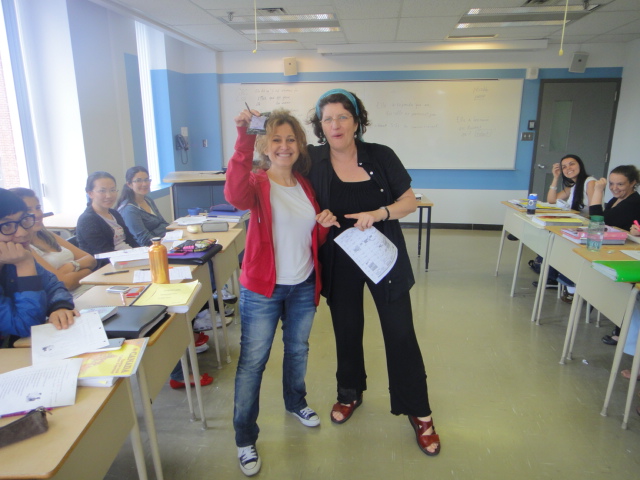
<p><span class="yiv4339642801" id="yui_3_16_0_1_1417130635591_2079">Diane Proulx is one of those Francophones who have a special relationship with and a deep understanding of the process of immigration to Quebec: her job is to assist the new arrivals along their way to social integration. She</span><span class="yiv4339642801" id="yiv4339642801yui_3_16_0_1_1417126911000_6363" lang="FR-CA"> has been a French teacher with MIDI (Ministère de l'Immigration, de la Diversité et de l'Inclusion) for almost 35 years now. </span><span class="yiv4339642801" id="yiv4339642801yui_3_16_0_1_1417126911000_6365">The program she works for consists in nine months of full-time French classes, and most of her students start going through it as soon as they step into the province. For many of them throughout these years she has represented the first contact with Quebec culture, lifestyle and values.</span></p>
<div class="yiv4339642801" id="yiv4339642801yui_3_16_0_1_1417126911000_6366"><span class="yiv4339642801" id="yiv4339642801yui_3_16_0_1_1417126911000_6367"><span class="yiv4339642801"></span>Diane has graciously agreed to share some thoughts about her work, her students and the situation of French language in Quebec - all this in English, for which I couldn't be more grateful.</span></div>
<p></p>]]>
        <![CDATA[<p><strong>Could you, please, describe the Ministry of Immigration program where you're teaching now? What is the difference between it and the French courses offered to immigrants by the French School Board?</strong></p>
<p>I'd say that when I started it was not very different. We had almost the same program. But with the years, I think it's very different. Our program (Intégration et francisation des nouveaux arrivants) is not only a program on language teaching; we, French teachers of the MIDI, are what I call in French "passeurs de culture", and this role is more important than simply teaching French - it's also to give the students all the tools they need to have for life here, and for finding a job.</p>
<p>I started working at UQAM in January 2000, and I teach immigrants that have a degree. Immigrants who don't have a degree have the same kind of course in <i>cégep</i>, or an association. I would say that we have the program of the Ministry, but it's richer, because it's in university level and [our students] want to study to have a degree from here, or they want to be recognized as doctors, engineers, and they have to know very well the context to do their job.</p>
<p>So, they have 20 hours of French a week with me, the teacher, and 10 hours of activities with an animator. Level 1, they would have visits to discover Montreal, university, <i>la Grande Bibliothèque</i>, and they have workshops on the computer, to learn vocabulary. And in Level 2, the main workshop is knowing Quebec, geography, and the history, so that they can understand why the situation between French and English is the way it is in Quebec. Level 3, they have workshops on finding a job, and workshops in improvisation, and they learn to speak without being prepared, to be able to communicate even when the situation is stressful.</p>
<p><b>You have students from a variety of countries, could you tell me a little bit about that?</b></p>
<p>What happens is that when you have a problem in the world you will receive people. If there is a war, we can be sure that we will receive applicants from these countries. We have more people from countries that have problems with war, political problems, or economical problems, like for example we have lots of people coming from Colombia.</p>
<p>Usually I don't do this in the classroom, but when I speak with them individually I ask about their situation, because it helps me to understand why they are not studying, why they have problems. There are situations, like, I had a student from Cuba and he was supposed to come here with his wife, but she was a doctor and she wasn`t allowed to leave. And finally, she was allowed to, but it took 2 years for her to leave. But he was here alone and he had to pay all the bills and to reimburse all the money that he took from friends to be able to come here, because Canada asks the immigrants to arrive with a certain amount of money. So it's very hard when you come to a new country without a lot of money - the reason they leave their country is that they are not making enough money.</p>
<p><b>It's a vicious circle.</b></p>
<p>Yes. But we have students from the ex-USSR, I mean Uzbekistan, Kazakhstan - I've never heard of these countries before, then I have one [person] in my class and we discover things, it's very interesting. Well, and we have lots of students from China, and sometimes they don't come here to stay. They come here to study in Canadian universities and go back with a diploma that will allow them to have a better life in China. But I would say that was more five or six years ago. Now the students that I have come here mostly because of the pollution. When I ask them why they decided to immigrate, pollution comes up a lot from people from Shanghai, from Beijing...They say the pollution is terrible, lots of health problems, and they think of having a child, and job doesn't necessarily come first. Because I have students with degrees, my students sometimes left behind very good jobs. And they think that they would have the same here. And, surprise, it's not that easy.</p>
<p><b>From your experience, what advice would you give to people who consider immigrating to Quebec, to make their transition easier?</b></p>
<p>So, I think the reason people come here is to have a better life, but they have rose-coloured glasses on, and sometimes I'm surprised about their lack of information about the place where they want to come and have a life. If they go to a meeting and they learn about immigration, that's like a kind of publicity, to try to have them move here. But, I mean, they could have some other source of information, before deciding.</p>
<p>I think they have to prepare themselves, and study French, it's a good idea to study a bit before coming.The problem we have is that sometimes people think that in Canada everybody speaks the two languages, and it's not the case. In Montreal, it's very bilingual, but if you go in other part of Quebec, it's French only, and in other provinces it's the opposite, except some places in Ontario or New Brunswick.But most of the time it's English everywhere and here it's French everywhere. But they don't know that.</p>
<p>I think an immigrant, someone who wants to come here, if they could come for a vacation, see how it is - the vacation is not the same thing, for sure, but they would have a better idea. And not come necessarily in the best of time, in summer, come in winter or fall and see the difference of weather, because some people don't come prepared for the weather.</p>
<p><b>I suppose your program assists them with these aspects too: what to buy, how to prepare...</b></p>
<p>Yes, that's one thing we do in the course. We don't only teach, I mean when we discuss weather, we discuss what should we wear. I remember with refugees from Cambodgia, Vietnam - sometimes I had a woman coming in the classroom in sandals and I said, you cannot wear that in winter, there's snow. And there are places where you can buy boots, not too expensive. We show them that. And now we have internet in our classrooms, I can give them some information. And, you know, they also have each other. I mean, these are some of the values that we want the immigrants to have: caring and sharing, actual equality, men and women, things like that.</p>
<p><b>Has it ever happened to you, to have equality issues in your classroom?</b></p>
<p>When I started teaching, I had a student from Iran, and he didn't want to be in my class because I was a woman - I was a teacher, but a woman. So the supervisor at the time decided to take care of the problem and put him in another class, and I was not happy about that. It was a short time solution, it's not fair. He has to accept, or, if he won't accept that, he won't accept other things either. And this course is part of that too. I think we have to stand for ourselves. You have a free course, you have a professional teacher, no? you accept that, or you have the choice [not to].</p>
<p>What I think is that we have to be open to the people who come here, but the people have to share our values, and walk towards us. I mean, we cannot live each in our little ghetto, I think we have to live together.</p>
<p><a href="http://www.montrealites.ca/arrival/F%C3%AAte%20d%27une%20%C3%A9tudiante%20.JP%20jpg"><img alt="Fête d'une étudiante .JP jpg" src="http://www.montrealites.ca/arrival/assets_c/2014/11/F%C3%AAte%20d%27une%20%C3%A9tudiante%20.JP%20jpg-thumb-550x315-5529.jpg" width="550" height="315" class="mt-image-center" style="text-align: center; display: block; margin: 0 auto 20px;" /></a></p>
<p><b>And still, you've decided you prefer to teach immigrants, rather than non-immigrants, in spite of the cultural differences...</b></p>
<p>Because with immigrants it's different. I'm taking a Spanish course, for my pleasure, it's not something that I need. But my students, they need French to have a good job. Most of my students are very very devoted to their learning, motivated. That's why I really prefer it, and also I feel that I do something useful, I do something for them. This is very important for me, I mean I help them understand Quebec, Quebecers. I don't want them to live here and not know anything. I want them to enjoy being in Quebec and love French. I say to them: I know it's not easy to learn a language, but it's so much fun when you can communicate with people, don't you think? And I try to make them love it.</p>
<p><b>Do your students already speak English, generally?</b></p>
<p>More and more. If I think back, maybe fifteen years ago, I had people from Spanish-speaking countries speaking only Spanish and French, and now sometimes in the classroom they will ask me things in English because they want to understand. I say, well, try to think in your own language, because it's closer to French. I don't speak English in my classroom anyway, but we have more and more students speaking English, which is normal, all over the world it's the same. But it's a problem, because there are some companies that don't respect Bill 101, and that have job interviews only in English, and they have to speak English in the office...but, I don't know, we're in Quebec! I mean, we had that when I was young, my father was a truck driver and he had to learn some English just to be able to drive a truck in Quebec. I said that to a person recently: I'm not against English, I'm for French. He said I was like KKK, who say "I don't hate black people, I just like white". But I'm not saying that. I'm saying, you don't understand the situation here: if we're not careful, we'll lose French in Quebec. It's not being against English, it's trying to keep our tradition and our culture...and I think sometimes when the immigrants come here, they don't always understand what's going on. They say, oh, we're in Canada. Yes, you are in Canada, but you are in the province of Quebec, and here there is one official language, it's French.</p>
<p><b>I do have a feeling that a lot of immigrants come because they just want to leave their countries and have a better life, as you said. And because it's easy to immigrate to Quebec, they will come here, but then maybe they won't stay.</b></p>
<p>They are changing a lot of things now [regarding immigration], and one of the things they are changing is, it won't be as easy. And I'm not all against it, because sometimes it's easy, but when you come here you don't find a job. So we have people coming and taking 9 months of French, being paid for it, and then they move to Vancouver, or to Ontario.</p>
<p>Personally, I think it's good when people come because they have prospects, they have a job here they can stay in, not only a contract that lasts for 2 months. But then we have people that come here and their diplomas are not recognized. And they should know that before.</p>
<p><b>I know a few people in this situation, they say they had no idea their diplomas wouldn't be recognized.</b></p>
<p>I have a friend who works in Immigration and she was meeting people in Syria, in Iran, Iraq [for interviews], and I said to her: Please, when you see them, tell them, especially if they are engineers, that they cannot work [here]...She said, not only we tell them, but they sign a paper. But after being in that state of becoming an immigrant for a year and a half or two years, when I meet them, they hear me, but they don't hear. So they sign the paper, but they forget it, they say, oh, I'll be OK...and it's like denial.</p>
<p>I know they've changed the rules. For example, before, everybody who was applying had to receive an answer [of acceptance]. But now they will be looking for a certain kind of workers: we're looking for technicians in so-and-so; you are a teacher, sorry, we cannot take you, maybe you can apply again in one year...That's better, because they would do it faster, it won't take 2-3 years to have an answer; and the others will be rejected, which is sad for them, but it's worse when they come and they don't have a job.</p>
<p><b>Do your students complain to you about their life here, the difficulties they have?</b></p>
<p>Yes, of course. Sometimes we are the only Quebecers that they know. Before, when we had the COFI (Centres d'orientation et de formation des immigrants), we had a social worker, but we don't have the same service now.</p>
<p>[Once] I had a student and I knew there was a problem; I spoke to her outside the classroom, and she told me that she was afraid for herself, but she was thinking of doing something, because she began to be afraid for her children too. And finally she wrote to me, she left her husband a year after the course, but I had her in contact with a shelter for women. But I'm a French teacher, I cannot be a social worker. I have to do it in a way, but we have one person in UQAM that will help the students with their job and will receive them in his office to give them information. But he's a man. It was better before, when it was a woman, I think for some problems it's better, but we don't have enough service, and they cut, cut, cut.</p>
<p><b>How do these recent budget cuts affect your program, and the immigration process in general?</b></p>
<p>They cut all the regional offices, it means that all the immigrants that do not arrive in Montreal, but in Sherbrooke, Laval...anyplace, they don't have this service there. They have courses, but they won't have an immigration office. And I spoke to a friend who works at Immigration and she said, you know, Diane, the services are given to immigrants by other offices, like for example at Unemployment they take care of French courses. And I said, well, they don't know anything about it, and they don't know the difference between a School Board and what we do. They will give you some French courses to help you find a job, but what they want, they want the people to work. And personally, I want the people to work, but in their field or similar, I don't want them to work in a Macdo. You know, so, I think all these cuts, if we see it in the long run, it could cost us more - we can see it in France, we can see it in other countries...I think we receive people here, so we have to make sure that they can start a life here.</p>
<p><b>I know you're working on a project at the moment, apart from teaching. Could you explain what it is about?</b></p>
<p>I am working, with 2 other teachers, on a French as a Second Language book for adults, where all the teaching situations are from Quebec and Canada. You see, the books for French as Second Language usually come from France. When a person from Colombia, Brazil or Russia has the project to immigrate to Quebec, they often take French courses at <i>l'Alliance française</i> and they learn a vocabulary, a reality that is representative of France. With this work, we want students of French as a Second Language - future immigrants, Anglophones from Canada and newly arrived in Quebec - to have books that reflect Quebec reality. A first volume will be released in the fall of 2015, and the second, the one I am working on, will come later.</p>
<p><b>I just had one more question, coming back to what we touched on earlier. Your students, after 9 months of school in French, they go out in the world. And sometimes they discover that they may not even need to use the French they learned, maybe they can just get along with English everywhere...what can be done about this?</b></p>
<p>There's nothing we can do. It depends where you live, what kind of job you have, what kind of friends you have. If people stay in a ghetto, anyplace where you don't have to... you can do everything in English, but you're missing out on something. The culture here is incredible, and also the people, if you speak the language you don't have the same contact, think of that.</p>
<p><b>I think people are trying, but they don't understand how hard they should try when they see very little response at first.</b></p>
<p>Well, if I were in the government, I would have a lot of incentive for French-Canadians, Quebecers, to speak French. If [the immigrants] are new, if you say <i>bonjour</i> and they don't know, you can speak with them in English. But if not, even if they know only 10 sentences of French, encourage them to use them, and it would be a difference, I think. They don't come here because they hate the French. Sometimes they love French but they are so discouraged because they don't speak well, because it's hard, because people speak English to them because they hear an accent, and it's not fair. And they say, they don't understand me and I don't understand them, we have to speak English. Well, no, you have to start from the beginning, you have to use speaking strategies, ask again, and be patient.</p>]]>
    </content>
</entry>

<entry>
    <title>&quot;This is your day&quot;: Natalia becomes a Canadian citizen</title>
    <link rel="alternate" type="text/html" href="http://www.montrealites.ca/arrival/2014/11/this-is-your-day-natalia-becomes-a-canadian-citizen.html" />
    <id>tag:www.montrealites.ca,2014:/arrival//47.4363</id>

    <published>2014-11-02T17:03:07Z</published>
    <updated>2014-11-09T06:20:45Z</updated>

    <summary> At 8.30 on a crisp fall morning, in the lobby of the Marriott hotel in downtown Montreal, a continually-lenghtening line snakes down toward the &quot;grand ballroom&quot; in the basement. It&apos;s the waiting line for one of today&apos;s citizenship ceremonies,...</summary>
    <author>
        <name>Carmen Pintea</name>
        
    </author>
    
    <category term="arrival" label="arrival" scheme="http://www.sixapart.com/ns/types#tag" />
    <category term="canadian" label="Canadian" scheme="http://www.sixapart.com/ns/types#tag" />
    <category term="citizenship" label="citizenship" scheme="http://www.sixapart.com/ns/types#tag" />
    <category term="immigrant" label="immigrant" scheme="http://www.sixapart.com/ns/types#tag" />
    <category term="montreal" label="Montreal" scheme="http://www.sixapart.com/ns/types#tag" />
    
    <content type="html" xml:lang="en-US" xml:base="http://www.montrealites.ca/arrival/">
        <![CDATA[<p><a href="http://www.montrealites.ca/arrival/FullSizeRender%281%29.jpg"><img alt="FullSizeRender(1).jpg" src="http://www.montrealites.ca/arrival/assets_c/2014/11/FullSizeRender%281%29-thumb-550xauto-5317.jpg" class="mt-image-center" style="text-align: center; display: block; margin: 0 auto 20px;" height="541" width="550" /></a></p>
<p><span>At 8.30 on a </span><span>crisp fall morning, in the lobby of the Marriott hotel in downtown Montreal, a continually-lenghtening line snakes down toward the "grand ballroom" in the basement. It's the waiting line for one of today's citizenship ceremonies, of which there are three or four happening daily in the city. Natalia B. is ready for this milestone she's reached after four and a half years in Canada. In a demure top and skirt, discreetly made up, her hair in a ponytail, she clutches at the immigration documents she's brought with her. "I'm not feeling anything special," she tells me, "maybe I will later."</span></p>
<p><span><span>I first met Natalia three years ago: for a short while she was my teacher in a Russian class I took at a language center downtown. Soon I found out she had been trained to teach English, not Russian, and had in fact worked as an English teacher for ten years in Kyrgysztan and Russia. We bonded over our immigrant backgrounds, discovering we'd arrived in Montreal the same year, in 2010. At the time Natalia was juggling studying full-time at Concordia University (where she got a BA in French Studies and, more recently, a TESL certificate) with teaching Russian not only at the language center, but also in a neighbourhood Russian school.</span></span></p>]]>
        <![CDATA[<p><span>Today, on her big day, Natalia looks a little tired and distracted. "I just have a lot of work things on my mind," she apologizes, shaking herself up. However much she loves freelance teaching, it can be a very taxing job. After finishing her TESL program this summer, she has finally started teaching English here in a few different places, among which a small school with mostly Russian students and the local Y des Femmes. She's happy she just got work at a new school: "Only one group of business English, but once they receive good feedback from students I think they will give me more. I'll take all they have."</span></p>
<p><span>Our line shuffles by some tables where clerks check people's documents and have them sign forms, then pushes into the ballroom. I hear languages spoken which I recognize, and some I don't, I see Asian couples, Hispanic clusters, headscarves, a lot of children. it's not much different from an everyday scene on the metro at rush hour. I remark that it doesn't look like Canada needs to fear depopulation, and Natalia brings up a new law, passed only this summer, which restricts the rights of new Canadians and makes it easier for the government to potentially strip them of citizenship. She uses the term "second class citizen" in her usual straightforward manner, grimacing slightly: "They can take it back anytime if you don't behave."</span></p>
<p>The great room is dimly-lit, full of numbered seats. People take photos on the empty stage flanked by flags. Next to us, a child born here, a citizen, cries from the arms of his not-citizen-yet mother, and we wonder for a moment at the importance place of birth has in shaping one's life and at how much harder it is to immigrate as an adult, when you already have a formed identity and vision of the world. For Natalia, coming to Canada was the fulfillment of her dream of studying English abroad in order to become a better teacher. After going to university, then working in the Kyrgyz capital, Bishkek, she moved to Moscow in 2007 in search of wider horizons. But few people speak English even in Moscow, she explains, so she still felt isolated from the culture she was supposed to be transmitting along with the language. She aimed to go study in France, as learning an extra language was a strong incentive, but finally it was Quebec, years later, that opened its borders to her. It's been a long journey, not longer than most other immigrants' though. Was it worth it? - "I'm still here. I think this is the answer."</p>
<p>The oath-taking ceremony starts at 10 a.m. and will last about 45 minutes. 325 immigrants, from 71 different countries, who entered this room as permanent residents, will exit as Canadian citizens. I let Natalia take her seat and move to the guest area at the back of the room. The presiding judge for the ceremony is a middle-aged woman with a warm, welcoming voice. Her opening remarks are mostly in French, but she reinforces the key points in strongly-accented English. "This is your day," she tells her audience. "You 'ave worked 'ard to be 'ere. You are winners - vous êtes des vainqueurs!"</p>
<p>She acknowledges the sacrifices the immigrants have made in leaving their countries, families and jobs, as long as the gruelling wait between stages of the immigration process. She thanks those of them doing volunteer work here; when she asks for a show of hands, the number of volunteers in the room really is impressive. Volunteerships are often the only way immigrants have of padding their CVs by acquiring Canadian experience. Natalia's hand is up too, as she's been volunteering as an English teacher with various local NGOs for more than half a year now.</p>
<p>The citizenship judge also has a special note for women, welcoming them to Canada as a place of equality and giving herself as an example for the premise that they too can achieve all their dreams. Then comes the standard reminder that most Canadians' ancestors arrived as immigrants themselves as far as 400 years ago, and that everyone should put in effort toward building the nation together. After the oath-taking there is a moment when the new citizens, still standing, are instructed to congratulate each other. I can't distinguish Natalia in the orderly crowd, but I imagine the restrained, mildly quizzical way she must be shaking hands with the strangers around.</p>
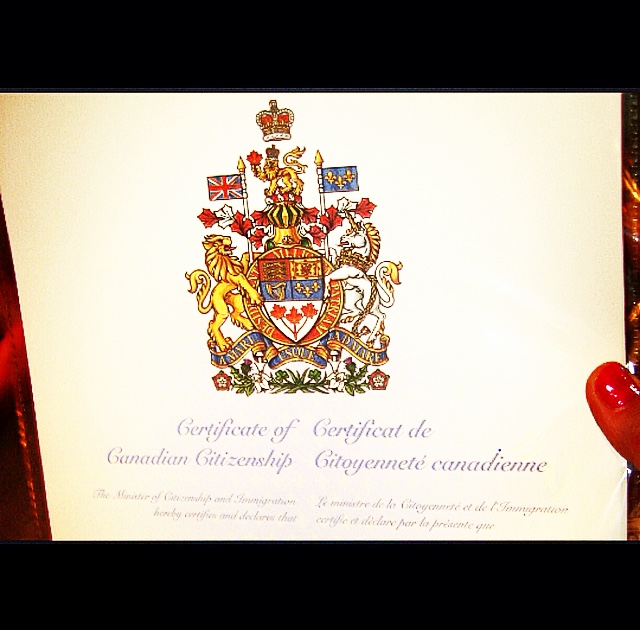
<p>And here she comes, with swift serious steps, holding her fresh citizenship certificate. Excited yet? "Not really," she says, but half-smilingly. She holds the paper back in the light, then pulls out her cellphone: "I think one picture is alright to take now." She did like the speech, but her favourite part by far was the judge being a woman. This makes her think of the Libyan students in one of her classes, headscarfed and speaking no English, but eager to learn and start practicing their professions here. Her smile grows larger as she describes how, when teaching, she scans their faces for signs of understanding, approval or laughter, in the absence of verbal clues. Like any true educator I`ve met, she gets animated talking about the different classes she teaches at the moment, with their particularities - for example a group of Russian students to whom she sometimes explains the finer points of English grammar in her maternal tongue.</p>
<p>I ask whether she feels that her status and the specific of her work have kept her living in an immigrant bubble. Natalia frowns, in search of an accurate answer. No, maybe a little, but not necessarily. While most of her friends here are Russian, she's also interacted with many born Quebecers, both Anglophones and Francophones, in school and work contexts. Loneliness is harsh at times, but the moments of interaction and discovery feel poignant. Outside of work she does yoga and meditation and tries to take advantage of the cultural life Montreal has to offer. She laughs at the memory of a holiday in Halifax, when she realized she missed seeing bilingual street signs everywhere around. "English AND French," she says, "it feels like home now."</p>
<p>We follow the crowd spilling out in the street, in the light of early fall. This solemn oath-taking moment has been anticipated for years, awaited for months, marked in calendars - but, by the time it's rolled around, it's already taken in, consumed. The new citizens already have new pressing concerns and hurry to get on with their day.</p>
<p>What does the future hold? Natalia blinks a little, adjusting to the sunlight. Citizenship does open up new possibilities for her, one of which is teaching abroad. She's thought of going for one year or two to South Korea, where there are jobs available and the pay for English teachers is better. "Why not," she shrugs, not even defensively. "There's a lot of Canadians who do the same. Teaching is my job, I do it where I can."</p>]]>
    </content>
</entry>

<entry>
    <title>Living in limbo</title>
    <link rel="alternate" type="text/html" href="http://www.montrealites.ca/arrival/2014/10/living-in-limbo.html" />
    <id>tag:www.montrealites.ca,2014:/arrival//47.4218</id>

    <published>2014-10-04T18:38:44Z</published>
    <updated>2014-10-11T04:11:31Z</updated>

    <summary>I started from scratch three times in Canada, the way it goes in fairy tales. Tales are important to mention here, because I&apos;ve always loved storytelling, and it was the idea of becoming a writer that first pushed me to...</summary>
    <author>
        <name>Carmen Pintea</name>
        
    </author>
    
    <category term="arrival" label="arrival" scheme="http://www.sixapart.com/ns/types#tag" />
    <category term="immigrant" label="immigrant" scheme="http://www.sixapart.com/ns/types#tag" />
    <category term="memoir" label="memoir" scheme="http://www.sixapart.com/ns/types#tag" />
    <category term="montreal" label="montreal" scheme="http://www.sixapart.com/ns/types#tag" />
    <category term="stories" label="stories" scheme="http://www.sixapart.com/ns/types#tag" />
    
    <content type="html" xml:lang="en-US" xml:base="http://www.montrealites.ca/arrival/">
        <![CDATA[<p><a href="http://www.montrealites.ca/arrival/casgrain.jpg"><img alt="casgrain.jpg" src="http://www.montrealites.ca/arrival/assets_c/2014/10/casgrain-thumb-550xauto-5037.jpg" class="mt-image-center" style="text-align: center; display: block; margin: 0 auto 20px;" height="306" width="550" /></a>I started from scratch three times in Canada, the way it goes in fairy tales. Tales are important to mention here, because I've always loved storytelling, and it was the idea of becoming a writer that first pushed me to leave the comforts of my home and my country.</p>
<p><span>When I arrived in Vancouver to go to Writing School, I thought I had it all figured out: I was going to write about important, universal things, in English, the universal language. I knew nothing about Canada. During that first year, from my basement room and venturing only to campus and the IGA, Canada was a blandness of wet weather, sameness of landscape and architecture, ultra-leftist views and annoying speech intonation. My first reaction to living abroad was a total refusal to integrate. I try to remember how I must have been then, lonely and scornful, judging everyone from my corner in workshops. But what Vancouver gave me, aside from a different perspective of the world, was the freedom of becoming unmoored. Once you pick up and leave, you see how easy it would be to just do it all over again.</span></p>
<p></p>]]>
        <![CDATA[<p>Moving to Montreal, I wasn't a foreign student from an exotic land any more: on my way from the airport, the Arabic taxi driver guessed my ethnicity AND paid me a compliment in stilted Romanian. Montreal seduced me with its charm, different brand of multiculturality, and with a first very short and easy winter. I applied for Canadian residency, though I knew it might take a long time to get it. In this new life, everywhere around me, in French language school and restaurant kitchen jobs, I met adults returned to beginners just like me, stumbling through their own fresh starts. People who had troubles, families, busy schedules, various sorts of accents; who paced along corridors for hours on the phone to some mysterious distant place; who knew to ask about my "papers" and nod, offer advice and share their experiences. A thick complicity enveloped us, like on night buses where everyone who's not out partying is dozing off the nightshift, propped onto arm holders, anxious not to miss their stop.</p>
<p>Then I had to return to Romania, but I knew I just couldn't go back to how I used to live. The years spent in Canada had changed me in ways I couldn't explain to my friends, and made me less likely to embrace the safe and familiar. My contemporaries had gotten married, had children, had built careers, were vacationing in places in Europe where I'd never go, because my life was on hold waiting for a decision from Ottawa on my residency. Those days of aimlessly lingering online, I edited my facebook profile, only instead of replacing "Montreal" with a Romanian town as 'location', on a dark whim I looked up "Limbo" and turned up a series of cities of that name all over the world. I chose the Limbo in Sonora, Mexico, then inevitably had to reassure acquaintances that no, I hadn't moved again overnight, it was just a metaphor, for God's sake. Facebook sidebar, of course, took me for a Canadian expat in Mexico until I changed my 'location' again.</p>
<p>It took me six years to become a Canadian resident and now, living here, I am still waiting to see if at any point I will start feeling fully Canadian. The people I relate to most and whom I seek out are still usually trilingual, have memories about residency applications, and somewhere else to be nostalgic about. Since settling, I have become much more aware of my privilege in having been able to pick a place on the map and go live in it. I am also more aware of the loss that this kind of choice entails. I can see how, in the colorful culture mix Canada is proud of, roots and connections get lost, some subsisting only as meaningless echoes - in a lilt, a shade of skin, the curvature of a nose, a heirloom ring of forgotten origins. If I have children, they will be Canadian, will maybe visit Romania on holidays, and their children might not even speak Romanian at all.</p>
<p>I have continued to collect stories, in the hope that I'll write them someday. "Necessity" versus "choice" is a key point in all immigrant narratives I hear, on a par with "here" versus "there". What I have realized is that these stories are not just inventories of immigrant hardship: they speak of distinct individual journeys, like any human has. In telling them, we honor where we are in life as well as what brought us here and every step we took along the way.</p>]]>
    </content>
</entry>

<entry>
    <title>Miss Hu Goes to Montreal</title>
    <link rel="alternate" type="text/html" href="http://www.montrealites.ca/arrival/2012/06/-what-makes-china-the.html" />
    <id>tag:www.montrealites.ca,2012:/arrival//47.2564</id>

    <published>2012-06-09T05:32:38Z</published>
    <updated>2012-06-10T22:45:00Z</updated>

    <summary><![CDATA[By: Shengxixi HuWhat makes China the most mysterious country? Is it the Paramount Leader Hu and the Premier Wen?&nbsp; The notion of "mysterious Asian" comes from the manner in which China has been portrayed through an accumulated five thousand years...]]></summary>
    <author>
        <name>Jeannette Novakovich</name>
        <uri>http://www.jnovakovich.com/</uri>
    </author>
    
    <category term="canada" label="Canada" scheme="http://www.sixapart.com/ns/types#tag" />
    <category term="cegep" label="CEGEP" scheme="http://www.sixapart.com/ns/types#tag" />
    <category term="china" label="China" scheme="http://www.sixapart.com/ns/types#tag" />
    <category term="chinese" label="Chinese" scheme="http://www.sixapart.com/ns/types#tag" />
    <category term="chineselanguage" label="Chinese language" scheme="http://www.sixapart.com/ns/types#tag" />
    <category term="chinesepeople" label="Chinese people" scheme="http://www.sixapart.com/ns/types#tag" />
    <category term="communistpartyofchina" label="Communist Party of China" scheme="http://www.sixapart.com/ns/types#tag" />
    <category term="ericliu" label="Eric Liu" scheme="http://www.sixapart.com/ns/types#tag" />
    <category term="flickr" label="Flickr" scheme="http://www.sixapart.com/ns/types#tag" />
    <category term="generaltsoschicken" label="General Tso&apos;s chicken" scheme="http://www.sixapart.com/ns/types#tag" />
    <category term="hujintao" label="Hu Jintao" scheme="http://www.sixapart.com/ns/types#tag" />
    <category term="liu" label="Liu" scheme="http://www.sixapart.com/ns/types#tag" />
    <category term="montreal" label="Montreal" scheme="http://www.sixapart.com/ns/types#tag" />
    <category term="paramountleader" label="Paramount leader" scheme="http://www.sixapart.com/ns/types#tag" />
    <category term="premierwen" label="Premier Wen" scheme="http://www.sixapart.com/ns/types#tag" />
    <category term="starwars" label="Star Wars" scheme="http://www.sixapart.com/ns/types#tag" />
    <category term="student" label="Student" scheme="http://www.sixapart.com/ns/types#tag" />
    <category term="theaccidentalasiannotesofanativespeaker" label="The Accidental Asian : Notes of a Native Speaker" scheme="http://www.sixapart.com/ns/types#tag" />
    <category term="wenjiabao" label="Wen Jiabao" scheme="http://www.sixapart.com/ns/types#tag" />
    <category term="westernworld" label="Western world" scheme="http://www.sixapart.com/ns/types#tag" />
    <category term="xijinping" label="Xi Jinping" scheme="http://www.sixapart.com/ns/types#tag" />
    
    <content type="html" xml:lang="en-US" xml:base="http://www.montrealites.ca/arrival/">
        <![CDATA[By: Shengxixi Hu<br /><a href="http://www.montrealites.ca/arrival/Screen%20shot%202012-06-07%20at%201.45.34%20AM.png"><img alt="Screen shot 2012-06-07 at 1.45.34 AM.png" src="http://www.montrealites.ca/arrival/assets_c/2012/06/Screen%20shot%202012-06-07%20at%201.45.34%20AM-thumb-500x345-2949.png" class="mt-image-center" style="text-align: center; display: block; margin: 0px auto 20px;" height="345" width="500" /></a><br />What makes <a class="zem_slink" href="http://maps.google.com/maps?ll=39.9166666667,116.383333333&amp;spn=10.0,10.0&amp;q=39.9166666667,116.383333333%20%28China%29&amp;t=h" title="China" rel="geolocation">China</a> the most mysterious country? Is it the <a class="zem_slink" href="http://en.wikipedia.org/wiki/Paramount_leader" title="Paramount leader" rel="wikipedia">Paramount Leader</a> Hu and the <a class="zem_slink" href="http://en.wikipedia.org/wiki/Wen_Jiabao" title="Wen Jiabao" rel="wikipedia">Premier Wen</a>?&nbsp; The notion of "mysterious Asian" comes from the manner in which China has been portrayed through an accumulated five thousand years of recorded civilization. This has resulted in a twisted and devious fashion 
of thinking of the Chinese people, which is confusing and shocking and gradually habitual to the westerners. "S/he is Chinese" is almost an omnipotent answer to solve all problems: the Chinese drink hot water; the Chinese step on couch with their shoes off; the Chinese don't call 
people by name; the Chinese have a narrow mind towards sex; the Chinese are less self-centered, self-centered being in a way of daring to speak out, a trait the Chinese parents will not appreciate.<br /><br />When my father sent me to <a class="zem_slink" href="http://maps.google.com/maps?ll=45.5088888889,-73.5541666667&amp;spn=0.1,0.1&amp;q=45.5088888889,-73.5541666667%20%28Montreal%29&amp;t=h" title="Montreal" rel="geolocation">Montreal</a> to study, I found myself a "mysterious" Asian to others and to my family. I objected to my parent's expectations of entering banking and turned my interest in an unusual direction, film.&nbsp; <br />]]>
        <![CDATA[<p>In film studies, first and foremost is language. It is funny that the exam-oriented 
pedagogy in China never teaches students real English. My first 
encounter with non-<a class="zem_slink" href="http://en.wikipedia.org/wiki/Chinese_language" title="Chinese language" rel="wikipedia">Chinese</a>
 printed English words shocked me in the sense that words do actually 
compose a literature-like text other than examination. Three-year high 
school without even the slightest reference to the Western ideology, 
when I came to <a class="zem_slink" href="http://maps.google.com/maps?ll=45.4,-75.6666666667&amp;spn=10.0,10.0&amp;q=45.4,-75.6666666667%20%28Canada%29&amp;t=h" title="Canada" rel="geolocation">Canada</a> with a bulk of knowledge consisting solely of propaganda, I found myself caught up between being an art-lover and a bad student. <br /><br /></p><p>As I eventually learned authentic English and criticism, I was like a crab forced to crawl vertically: teachers assume that every student is familiar with critical writing, a fundamental subject that CEGEPs offer as preparation for university. In China, however, criticism is considered dissent, voice no orthodox schools want to hear; love for movies is fiddling that no good students want to waste their time on. </p>

<p>Falling behind both internally and externally, with an intensive workload adds to the burden; to complete logic and poetic in not-so-naïve sentences is a task, competing with people who use their first language in a field of study where the beauty as well as the rationality of language plays the most important part. Even though every professor accepts papers written in French if the students are not confident of their English, this is a privilege a student like me can never enjoy.</p>

<p>On the level of personal life, language is also a true obstacle for outsiders. The bilingual environment in Monteal is charming and at the same time demanding. The "retiring" and "shy" Chinese stereotype as observed by Eric Liu is crucially due to the middling proficiency of the language (Liu 51). Most of the time, I just don't get the punch line. The contemplation of expressing my feelings is drawn back by sentence structure and verb agreement; insensitiveness of English words makes me a dull person. Deep down inside, a voice is shouting: I really mean it when I say "interesting"! </p>

<p>Culture-related backgrounds are like blind spots to me. For example, I never understand why every film student is so crazy about Star Wars or the profound impact the 70's has had on pop culture. What does "how are you" really mean to people who say and respond it? Even if I look up to them, the understanding is forged, theoretical than empirical.&nbsp;</p><p><br />
Sadly, culture has come to embrace its status of oblivion. China has become the world machine and seems to be happy about it. The quotidian banality "made in China" means nothing more than bad quality. To look at our neighbor, Japan, who does not have integrated history of philosophy will only yield envy. The Chinese are, as they have always been, so engaged in reproducing and making a living that seldom do they create or meditate. What has the five thousand years of civilization left for the West? What will a westerner think of when s/he thinks of China? A bowl of General Tao chicken, I bet. And ironically, there is no such thing as General Tao chicken in China. It has been invented for the westerners specifically. </p>

<p>Culture determines language, and influences the way people think. I didn't know I was going to be assimilated when I came to Canada, and now I find myself trying so hard to get rid of my Chinese otherness. Objecting to parental expectation is just a beginning, and I know there is still a long way to go.</p>

<p>Works Consulted<br />
Liu, Eric. The Accidental Asian. New York: A Division of Random House, 1998</p><p>Image source:<a href="http://www.flickr.com/photos/lupos/2056983723/"> Flickr</a><br />
 
</p><div><br /></div>


<div style="margin-top:10px;height:15px" class="zemanta-pixie"><a class="zemanta-pixie-a" href="http://www.zemanta.com/?px" title="Enhanced by Zemanta"><img style="border:none;float:right" class="zemanta-pixie-img" src="http://img.zemanta.com/zemified_e.png?x-id=b9fe7175-f10f-4274-988c-f3065dc594e1" alt="Enhanced by Zemanta" /></a></div>]]>
    </content>
</entry>

<entry>
    <title>Snowshoes have become our very own Canadian fashion statement: Who knew?</title>
    <link rel="alternate" type="text/html" href="http://www.montrealites.ca/arrival/2012/06/snowshoes-have-become-our-very-own-canadian-fashion-statement-who-knew.html" />
    <id>tag:www.montrealites.ca,2012:/arrival//47.2889</id>

    <published>2012-06-07T15:31:00Z</published>
    <updated>2013-01-13T17:01:47Z</updated>

    <summary>By: Leena FalcigliaHave you ever walked into a Montreal souvenir shop? It is a sea of red and brown, no not brown as in the &apos;new black&apos;, I mean brown as in &apos;Jack the Bear&apos; brown. And if the maple...</summary>
    <author>
        <name>Jeannette Novakovich</name>
        <uri>http://www.jnovakovich.com/</uri>
    </author>
    
    <category term="canada" label="canada" scheme="http://www.sixapart.com/ns/types#tag" />
    <category term="canadian" label="canadian" scheme="http://www.sixapart.com/ns/types#tag" />
    <category term="fashion" label="fashion" scheme="http://www.sixapart.com/ns/types#tag" />
    <category term="littleblackdress" label="little black dress" scheme="http://www.sixapart.com/ns/types#tag" />
    <category term="mapleleaf" label="maple leaf" scheme="http://www.sixapart.com/ns/types#tag" />
    <category term="maplesyrup" label="maple syrup" scheme="http://www.sixapart.com/ns/types#tag" />
    <category term="moose" label="moose" scheme="http://www.sixapart.com/ns/types#tag" />
    <category term="snowshoes" label="snowshoes" scheme="http://www.sixapart.com/ns/types#tag" />
    <category term="souvenirs" label="souvenirs" scheme="http://www.sixapart.com/ns/types#tag" />
    
    <content type="html" xml:lang="en-US" xml:base="http://www.montrealites.ca/arrival/">
        <![CDATA[By: Leena Falciglia<a href="http://www.montrealites.ca/arrival/Screen%20shot%202012-06-07%20at%2011.38.40%20AM.png"><img alt="Screen shot 2012-06-07 at 11.38.40 AM.png" src="http://www.montrealites.ca/arrival/assets_c/2012/06/Screen%20shot%202012-06-07%20at%2011.38.40%20AM-thumb-500x470-2957.png" class="mt-image-center" style="text-align: center; display: block; margin: 0 auto 20px;" height="470" width="500" /></a>Have you ever walked into a Montreal souvenir shop? It is a sea of red and brown, no not brown as in the 'new black', I mean brown as in 'Jack the Bear' brown. And if the maple leaf is not on everything, it isn't on anything; from the flag to the pin of the flag, to the moose, to the goose wearing the red Mounties uniform, to the beaver wearing the uniform. The only item not to have a maple leaf is the life-size statue of the Indian chief at the entrance or exit of the shop depending on if you are coming or going. Snowshoes line the walls, making this our official foot apparel. How else would we get around our city streets?<br /><br />I am constantly reminded every time I go to the airport in Montreal, or am at a souvenir shop downtown, how 'Canadian' we really are. I have nieces from California who believe we live in a remote part of the world where the deer and the antelope play, in our streets! We do have snow and very cold winters, but that is only one of our four seasons.&nbsp; We also have rain, and wear rain boots, should we start selling those as souvenirs as well? The baggage claim at the Pierre-Elliot Trudeau airport is filled with snowshoes, I mean, really what do they think they're going to do with them once they get home? <br /><br /><br />]]>
        <![CDATA[Here in Montreal snowshoes are among the favorite souvenir items and our
 souvenir shops do nothing to discourage our tourists. They are 
convinced that all Canadians must own at least one pair, making 
snowshoes a 'must have' souvenir. However, being of the female 
persuasion who reads fashion magazines, I can state with confidence that
 snowshoes is not a becoming shoe, and does not complete the look of the
 little black dress. We are actually considered by some as being one of 
the fashion capitals of the world, along with Paris and Milan, and trust
 me when I say 'snowshoes do not an accessory make'. What gives our 
cousins to the south and east and west for that matter, the impression 
that we are&nbsp; 'backwoodsy'?&nbsp;&nbsp; We need to stop the madness...stop marketing 
Canadians as Canadians. These shops need to either shape up or ship out.<br />
<br />
6000 man-made moose and Mounties danced in the Olympic host nation's 
playful poke at what it means to be Canadian...not funny! After 7 years of
 work for 17 days of Games, famous actors spoke of pride in people who 
'know how to make love in a canoe' and apologize for winning gold 
medals. International Olympic Committee President Jacques Rogge paid 
Canada the ultimate compliment of staging 'excellent and very friendly 
Games' before declaring them closed. Great, not only do we wear 
snowshoes, we are really nice people who wear snowshoes. &nbsp;<br />
<br />
We cannot fault just the souvenir shops; this image is taught to us by 
our very own Concordia University by depicting Canadians as snowshoe 
loving folks.&nbsp;&nbsp;&nbsp;&nbsp; There is no getting around it, as long as souvenir 
shops and Canadian Universities keep this image alive, we may as well 
own up and start our very own fashion statement...Sigh!<br /><br />Image: <a href="http://www.flickr.com/photos/garlandcannon/6590266453/lightbox/">Back in the Day</a><br />]]>
    </content>
</entry>

<entry>
    <title>French Competency Skills for Newcomers to Montreal</title>
    <link rel="alternate" type="text/html" href="http://www.montrealites.ca/arrival/2012/04/the-importance-of-french-for-newcomers-to-montreal.html" />
    <id>tag:www.montrealites.ca,2012:/arrival//47.2888</id>

    <published>2012-04-22T21:44:51Z</published>
    <updated>2013-01-13T17:01:47Z</updated>

    <summary>Play our interactive videos below to find out more about the French competencies skills that you will need as a fresh immigrant in Montreal.Have fun and explore!...</summary>
    <author>
        <name>J. Brown</name>
        
    </author>
    
    <category term="canada" label="Canada" scheme="http://www.sixapart.com/ns/types#tag" />
    <category term="competencyskills" label="competency skills" scheme="http://www.sixapart.com/ns/types#tag" />
    <category term="french" label="French" scheme="http://www.sixapart.com/ns/types#tag" />
    <category term="frenchlanguage" label="French language" scheme="http://www.sixapart.com/ns/types#tag" />
    <category term="montreal" label="Montreal" scheme="http://www.sixapart.com/ns/types#tag" />
    <category term="natural" label="Natural" scheme="http://www.sixapart.com/ns/types#tag" />
    <category term="quebec" label="Quebec" scheme="http://www.sixapart.com/ns/types#tag" />
    <category term="romance" label="Romance" scheme="http://www.sixapart.com/ns/types#tag" />
    <category term="socialsciences" label="Social Sciences" scheme="http://www.sixapart.com/ns/types#tag" />
    
    <content type="html" xml:lang="en-US" xml:base="http://www.montrealites.ca/arrival/">
        <![CDATA[<a href="http://www.montrealites.ca/arrival/Screen%20shot%202012-04-23%20at%205.54.22%20PM.png"><img alt="Screen shot 2012-04-23 at 5.54.22 PM.png" src="http://www.montrealites.ca/arrival/assets_c/2012/04/Screen%20shot%202012-04-23%20at%205.54.22%20PM-thumb-500x301-2904.png" class="mt-image-center" style="text-align: center; display: block; margin: 0pt auto 20px;" height="301" width="500" /></a>Play our interactive videos below to find out more about the French competencies skills that you will need as a fresh immigrant in <a class="zem_slink" href="http://maps.google.com/maps?ll=45.5088888889,-73.5541666667&amp;spn=0.1,0.1&amp;q=45.5088888889,-73.5541666667%20%28Montreal%29&amp;t=h" title="Montreal" rel="geolocation">Montreal</a>.<br /><br />Have fun and explore!<br /><br /><p><iframe src="http://www.youtube.com/embed/w6WknIzRy3E" allowfullscreen="" frameborder="0" height="315" width="560"></iframe></p>

<div style="margin-top: 10px; height: 15px;" class="zemanta-pixie"><a class="zemanta-pixie-a" href="http://www.zemanta.com/" title="Enhanced by Zemanta"><img style="border: medium none; float: right;" class="zemanta-pixie-img" src="http://img.zemanta.com/zemified_e.png?x-id=9b9bff19-6524-4578-8bf3-1ce3d043c3fc" alt="Enhanced by Zemanta" /></a></div>]]>
        
    </content>
</entry>

<entry>
    <title>The long farewell</title>
    <link rel="alternate" type="text/html" href="http://www.montrealites.ca/arrival/2012/02/the-bad-moments-of-travelling.html" />
    <id>tag:www.montrealites.ca,2012:/arrival//47.2887</id>

    <published>2012-02-24T19:36:42Z</published>
    <updated>2013-02-18T21:14:19Z</updated>

    <summary> Airports create awkward scenes for immigrants arriving at and departing from their homelands. Family members and friends expect immediate and close interaction at the airport and on the way leading from and to it. Immigrants, for starters, find themselves...</summary>
    <author>
        <name>J. Brown</name>
        
    </author>
    
    <category term="airport" label="Airport" scheme="http://www.sixapart.com/ns/types#tag" />
    <category term="arrival" label="Arrival" scheme="http://www.sixapart.com/ns/types#tag" />
    <category term="aviation" label="Aviation" scheme="http://www.sixapart.com/ns/types#tag" />
    <category term="barackobama" label="Barack Obama" scheme="http://www.sixapart.com/ns/types#tag" />
    <category term="brody" label="Brody" scheme="http://www.sixapart.com/ns/types#tag" />
    <category term="damianlewis" label="Damian Lewis" scheme="http://www.sixapart.com/ns/types#tag" />
    <category term="emotion" label="Emotion" scheme="http://www.sixapart.com/ns/types#tag" />
    <category term="family" label="Family" scheme="http://www.sixapart.com/ns/types#tag" />
    <category term="friends" label="Friends" scheme="http://www.sixapart.com/ns/types#tag" />
    <category term="gatwickairport" label="Gatwick Airport" scheme="http://www.sixapart.com/ns/types#tag" />
    <category term="homeland" label="Homeland" scheme="http://www.sixapart.com/ns/types#tag" />
    <category term="immigration" label="Immigration" scheme="http://www.sixapart.com/ns/types#tag" />
    <category term="irregularimmigration" label="Irregular immigration" scheme="http://www.sixapart.com/ns/types#tag" />
    <category term="londonheathrowairport" label="London Heathrow Airport" scheme="http://www.sixapart.com/ns/types#tag" />
    <category term="normsocial" label="Norm (social)" scheme="http://www.sixapart.com/ns/types#tag" />
    <category term="television" label="Television" scheme="http://www.sixapart.com/ns/types#tag" />
    <category term="transport" label="Transport" scheme="http://www.sixapart.com/ns/types#tag" />
    <category term="travel" label="Travel" scheme="http://www.sixapart.com/ns/types#tag" />
    <category term="unitedstates" label="United States" scheme="http://www.sixapart.com/ns/types#tag" />
    
    <content type="html" xml:lang="en-US" xml:base="http://www.montrealites.ca/arrival/">
        <![CDATA[<p><a href="http://www.montrealites.ca/arrival/Photo%20of%20immigrant.jpg"><img alt="Photo of immigrant.jpg" src="http://www.montrealites.ca/arrival/assets_c/2012/02/Photo%20of%20immigrant-thumb-500x332-2529.jpg" class="mt-image-center" style="text-align: center; display: block; margin: 0pt auto 20px;" height="332" width="500" /></a><br /><br />
Airports create awkward scenes for <a class="zem_slink" href="http://www.wikinvest.com/concept/Immigration" title="Immigration" rel="wikinvest">immigrants</a>
 arriving at and departing from their homelands. Family members and 
friends expect immediate and close interaction at the airport and on the
 way leading from and to it. Immigrants, for starters, find themselves 
time and again overwhelmed by the human intervention skills they have to
 develop. Surprisingly, everyone wants to fair the immigrant goodbye but
 cannot come to the airport because the flight lands or takes off at an 
unreasonable time of the day. When it is a night flight they have an 
important meeting the day after; and when required to come to the 
airport during the day--well--they obviously work. Already at this point
 immigrants find themselves taking the blame for these unpredictable 
inconveniences: "Why didn't you schedule your flight for the weekend?"</p>


<div style="margin-top: 10px; height: 15px;" class="zemanta-pixie"><a class="zemanta-pixie-a" href="http://www.zemanta.com/" title="Enhanced by Zemanta"><img style="border: medium none; float: right;" class="zemanta-pixie-img" src="http://img.zemanta.com/zemified_e.png?x-id=ee2c1a4c-987c-4e5b-8c9b-a0a57321d825" alt="Enhanced by Zemanta" /></a></div>]]>
        <![CDATA[<p><br />
The logistic preparations involved in the departure or arrival of immigrants also create unpleasant situations. For some reason there must be that one person who cannot commute to the airport on his- or her own and tries to get a ride from those who go to the airport. But space is not always available because of three, not-so-light pieces of luggage immigrants are forced to take with them. "No problem," says the friend who cannot commute, "just put the big piece of luggage on top on the car and I'll hold it; I have a strong left arm." How does one suddenly become an expert in spontaneous transport techniques whose left arm only can hold 50 pounds?&nbsp;</p><p><br />
Responding to friends and <a class="zem_slink" href="http://en.wikipedia.org/wiki/Family_%28biology%29" title="Family (biology)" rel="wikipedia">family</a>'s emotional reactions constitutes another difficulty immigrants have to face. Upon arrival, mothers jump on their sons, and fathers cry on their daughters' shoulders. And then friends join in the "fun." Did you ever stop to think whether your friends do it because they really want to and are thrilled to see you? Did it occur to you that by expressing emotions similar to those of your family your friends simply try to avoid an awkward scene where they would be seen as not enough emotional? Don't get me wrong. Every person has the right to express their feelings however they wish to. But I just hope friends would feel open enough to do whatever they want to do when they see their friend after a long time away.</p><p><br />
A popular cliché, perhaps, but promises are (indeed) hard to keep. Trying to make travelling immigrants feel better about their departure, friends and family often promise to be in touch with their beloved ones. Airports are rife with statements like "we'll be in touch!" and "we'll talk at least twice a week." Even mere acquaintances, people with whom you never really spoke on a daily basis become your best friends and promise to be the ones waiting for you at the airport. But it never happens.</p><p><br />
At the end of the day, nobody really asks you how come you did not stay in contact. Friends and family forgive. And admit it--neither do you wonder why nobody called in two months. What do you think: Is this the only good thing that stems from the synthesis of travel, <a class="zem_slink" href="http://en.wikipedia.org/wiki/Emotion" title="Emotion" rel="wikipedia">emotion</a>, friends, and family?<br />
</p>

<div style="margin-top: 10px; height: 15px;" class="zemanta-pixie"><a class="zemanta-pixie-a" href="http://www.zemanta.com/" title="Enhanced by Zemanta"><img style="border: medium none; float: right;" class="zemanta-pixie-img" src="http://img.zemanta.com/zemified_e.png?x-id=ee2c1a4c-987c-4e5b-8c9b-a0a57321d825" alt="Enhanced by Zemanta" /></a></div>]]>
    </content>
</entry>

<entry>
    <title>Prairie Guide to En Frensay</title>
    <link rel="alternate" type="text/html" href="http://www.montrealites.ca/arrival/2012/01/prairie-guide-to-en-frensay.html" />
    <id>tag:www.montrealites.ca,2012:/arrival//47.2130</id>

    <published>2012-01-19T03:32:26Z</published>
    <updated>2012-12-17T10:27:31Z</updated>

    <summary></summary>
    <author>
        <name>Jeannette Novakovich</name>
        <uri>http://www.jnovakovich.com/</uri>
    </author>
    
    
    <content type="html" xml:lang="en-US" xml:base="http://www.montrealites.ca/arrival/">
        <![CDATA[<a href="http://www.montrealites.ca/arrival/Screen%20shot%202012-01-18%20at%2010.31.48%20PM.png"><img alt="Screen shot 2012-01-18 at 10.31.48 PM.png" src="http://www.montrealites.ca/arrival/assets_c/2012/01/Screen%20shot%202012-01-18%20at%2010.31.48%20PM-thumb-500x234-2121.png" class="mt-image-center" style="text-align: center; display: block; margin: 0pt auto 20px;" height="234" width="500" /></a><div><br /></div>]]>
        <![CDATA[ <object classid="clsid:d27cdb6e-ae6d-11cf-96b8-444553540000" codebase="http://download.macromedia.com/pub/shockwave/cabs/flash/swflash.cab#version=9,0,0,0" id="pixtonComicViewer" align="middle" height="360" width="100%"><param name="flashvars" value="key=311gplri&amp;l=ca/" /><param name="allowScriptAccess" value="always" /><param name="allowFullScreen" value="true" /><param name="movie" value="http://www.pixton.com/ca/widget/2" /><param name="quality" value="high" /><param name="wmode" value="transparent" /><embed src="http://www.pixton.com/ca/widget/2" quality="high" wmode="transparent" flashvars="key=311gplri&amp;l=ca/" name="comicViewer" allowscriptaccess="always" allowfullscreen="true" type="application/x-shockwave-flash" pluginspage="http://www.macromedia.com/go/getflashplayer" align="middle" height="360" width="100%"></object>]]>
    </content>
</entry>

<entry>
    <title>A not so French French</title>
    <link rel="alternate" type="text/html" href="http://www.montrealites.ca/arrival/2012/01/a-not-so-french-french.html" />
    <id>tag:www.montrealites.ca,2012:/arrival//47.2122</id>

    <published>2012-01-18T19:17:04Z</published>
    <updated>2012-01-18T19:26:32Z</updated>

    <summary> While studying for a midterm exam at Concordia&apos;s Vanier library last December, I could not help overhearing a conversation between a man and his wife. They were discussing issues familiar to me, issues that many newcomers to Montréal face...</summary>
    <author>
        <name>Jeannette Novakovich</name>
        <uri>http://www.jnovakovich.com/</uri>
    </author>
    
    
    <content type="html" xml:lang="en-US" xml:base="http://www.montrealites.ca/arrival/">
        <![CDATA[<p><br /><img alt="Interview.jpg" src="http://www.portfolio-remix.com/joseph_brown/Interview.jpg" width="500" height="306" class="mt-image-right" style="float: right; margin: 0 0 20px 20px;" /><br />
While studying for a midterm exam at Concordia's Vanier library last December, I could not help overhearing a conversation between a man and his wife. They were discussing issues familiar to me, issues that many newcomers to Montréal face upon arrival.</p>

<p>The man had told his wife about another unsuccessful job interview he had had. "The interviewer asked me the same question," the husband complained to his wife in Hebrew, a language I also speak. I felt comfortable enough to approach the couple and introduce myself. "I know it is a bit rude to listen to other people's conversations," I acknowledged apologetically, "But your story sounds a lot like mine, and I am sure other Montréalers face the same hardships. What do you say we do something about it?"</p>

<p>Ron agreed to share his story with Montréalités. He believes that learning from the experiences of other immigrants is a solution. Predictably, he demanded we meet at Vanier library so he could save precious time.</p>]]>
        <![CDATA[<p><strong>Joseph:</strong> Tell me about the immigration process and what it entailed, particularly regarding French.</p>

<p><strong>Ron:</strong> Well, the consular staff in the Canadian embassy in Israel advised us that we should study French well before we even apply for an immigrant's visa.</p>

<p><strong>Joseph:</strong> What did you know about language requirements in Montréal's job market before your arrival to Canada?</p>

<p><strong>Ron:</strong> Well, I knew just about what every immigrant with an internet connection knew about Canada--that French is the predominant language in the province of Quebec, but that you can get along with English pretty well.</p>

<p><strong>Joseph:</strong> You say that you assumed you can get along with English pretty well. Does this mean that you did not learn French prior to immigrating even though the embassy advised you to do so?</p>

<p><strong>Ron:</strong> Not at all. I actually studied French for two years in evening school for which I paid top dollars. But the competencies in French which I acquired did not serve me when I arrived to Montreal.</p>

<p><strong>Joseph:</strong> What do you mean by that? Two years surely suffices to build a good base of French.</p>

<p><strong>Ron:</strong> You're right. And it did [provide me with a base in French.] But I was not able to use the French I had learned back home in Israel. When I studied French, I took on the French accent. When I spoke French with various service providers in Montreal, almost all the time I got questions and comments like: "Do you speak French?" or "I don't understand you." All that when I was speaking French. So I tried taking on the Quebecois accent, but with no success. I simply could not imitate it. I was stuck with an accent that many did not understand, and I did not understand the local accent.</p>

<p><strong>Joseph</strong>: When I met you at Vanier library a few weeks ago, you spoke to your wife about an unsuccessful job interview you had had. So what had gone wrong in that job interview?</p>

<p><strong>Ron:</strong> The interviewer had asked me whether I spoke French when I actually did.</p>

<p><strong>Joseph:</strong> What do you mean?</p>

<p><strong>Ron:</strong> She said she did not understand my French, and she also noticed I don't understand her French Canadian accent. To overcome the awkwardness she condescendingly asked me whether I spoke French.</p>

<p><big>Joseph:</big> I see. And did you consider taking a French course in Montreal, one that is given by a French Canadian instructor?</p>

<p><strong>Ron:</strong> I really want to do so, but that possibility was simply unrealistic. My wife attends university full time; I hold a full time job and go to school part time; and both of us somehow juggle these obligations with picking up our daughter from daycare. The only spare time we have is the weekend, but my wife and I promised each other to reserve weekends for family.</p>

<p><strong>Joseph:</strong> It sounds like a life of many other families in Montreal. You study, work and raise a child.</p>

<p><strong>Ron:</strong> It is a good life, and I cannot complain as long as I provide for my family. But without the ability to communicate in the local French efficiently, I will not be able to find a better job, even if I hold a Master's degree.</p>

<p><strong>Joseph:</strong> What type of resources, in your opinion, can help you improve your French?</p>

<p><strong>Ron:</strong> I recently discovered that Concordia University's Student Learning Centre offers free French conversation sessions to students who want to improve or just practice their French. You just show up and talk. It is very convenient for me as I am in school three times a week. But that's it for resources--not to many options.</p>

<p><strong>Joseph:</strong> Well Ron, I hope you find your way to improve your French and to a better job. I wish you all the best and thank you for taking your time to meet me.</p>

<p></p>

<p>Vanier Library<br />
7141 Sherbrooke West<br />
Montreal, Quebec<br />
H4B 1R6<br />
(514) 848-2424 ext. 7766</p>]]>
    </content>
</entry>

<entry>
    <title>How to improve your French</title>
    <link rel="alternate" type="text/html" href="http://www.montrealites.ca/arrival/2012/01/how-to-improve-your-french-you-already-know.html" />
    <id>tag:www.montrealites.ca,2012:/arrival//47.2885</id>

    <published>2012-01-01T15:17:38Z</published>
    <updated>2013-01-13T17:01:47Z</updated>

    <summary></summary>
    <author>
        <name>J. Brown</name>
        
    </author>
    
    
    <content type="html" xml:lang="en-US" xml:base="http://www.montrealites.ca/arrival/">
        <![CDATA[<img alt="Screen shot 2012-01-13 at 6.10.14 PM.png" src="http://www.montrealites.ca/arrival/Screen%20shot%202012-01-13%20at%206.10.14%20PM.png" class="mt-image-center" style="text-align: center; display: block; margin: 0pt auto 20px;" height="306" width="500" />]]>
        <![CDATA[<object classid="clsid:d27cdb6e-ae6d-11cf-96b8-444553540000" codebase="http://download.macromedia.com/pub/shockwave/cabs/flash/swflash.cab#version=9,0,0,0" id="pixtonComicViewer" align="middle" height="360" width="100%"><param name="flashvars" value="key=118nanzc&amp;l=ca/&amp;scale=auto" /><param name="allowScriptAccess" value="always" /><param name="allowFullScreen" value="true" /><param name="movie" value="http://www.pixton.com/ca/widget/2" /><param name="quality" value="high" /><param name="wmode" value="transparent" /><embed src="http://www.pixton.com/ca/widget/2" quality="high" wmode="transparent" flashvars="key=118nanzc&amp;l=ca/&amp;scale=auto" name="comicViewer" allowscriptaccess="always" allowfullscreen="true" type="application/x-shockwave-flash" pluginspage="http://www.macromedia.com/go/getflashplayer" align="middle" height="360" width="100%"></object>]]>
    </content>
</entry>

<entry>
    <title>City of Mary, City of Sin and City of Wonder </title>
    <link rel="alternate" type="text/html" href="http://www.montrealites.ca/arrival/2011/07/city-of-mary-city-of-sin-and-city-of-wonder.html" />
    <id>tag:www.montrealites.ca,2011:/arrival//47.1435</id>

    <published>2011-07-13T21:25:12Z</published>
    <updated>2012-03-06T20:02:22Z</updated>

    <summary><![CDATA[By Robert Duthie Image source:&nbsp;Flickr.The city of Montreal, in all its grander and splendour opens its arms and extends a welcome to outsiders who have come to take part in the city's atmosphere. Outsiders, visitors and friends who come on...]]></summary>
    <author>
        <name>Jeannette Novakovich</name>
        <uri>http://www.jnovakovich.com/</uri>
    </author>
    
    
    <content type="html" xml:lang="en-US" xml:base="http://www.montrealites.ca/arrival/">
        <![CDATA[By Robert Duthie<br /> <img alt="Screen shot 2011-07-13 at 5.31.02 PM.png" src="http://www.montrealites.ca/arrival/Screen%20shot%202011-07-13%20at%205.31.02%20PM.png" width="395" height="593" class="mt-image-center" style="text-align: center; display: block; margin-top: 0px; margin-right: auto; margin-bottom: 20px; margin-left: auto; " /><p class="MsoNormal" style="margin-top: 0cm; margin-right: 0cm; margin-bottom: 0.0001pt; margin-left: 0cm; border-top-width: 0px; border-right-width: 0px; border-bottom-width: 0px; border-left-width: 0px; border-style: initial; border-color: initial; padding-top: 0px; padding-right: 0px; padding-bottom: 0px; padding-left: 0px; font-size: 12pt; font-weight: normal; font-family: Cambria; text-align: center; "><span style="font-size: 10pt; font-family: Optima; ">Image source:&nbsp;<a href="http://www.flickr.com/photos/whfrank/5049236672/lightbox/" style="text-decoration: underline; ">Flickr</a>.</span></p><p class="MsoNormal" style="margin-top: 0cm; margin-right: 0cm; margin-bottom: 0.0001pt; margin-left: 0cm; border-top-width: 0px; border-right-width: 0px; border-bottom-width: 0px; border-left-width: 0px; border-style: initial; border-color: initial; padding-top: 0px; padding-right: 0px; padding-bottom: 0px; padding-left: 0px; font-size: 12pt; font-weight: normal; font-family: Cambria; "><span style="font-size: 10pt; font-family: Optima; "><br /></span></p><p class="MsoNormal" style="margin-top: 0cm; margin-right: 0cm; margin-bottom: 0.0001pt; margin-left: 0cm; border-top-width: 0px; border-right-width: 0px; border-bottom-width: 0px; border-left-width: 0px; border-style: initial; border-color: initial; padding-top: 0px; padding-right: 0px; padding-bottom: 0px; padding-left: 0px; font-size: 12pt; font-weight: normal; font-family: Cambria; "><span style="font-size: 10pt; font-family: Optima; ">The city of Montreal, in all its grander and splendour opens its arms and extends a welcome to outsiders who have come to take part in the city's atmosphere. Outsiders, visitors and friends who come on pilgrimage, business, or vacation can easily open up to the vastness of indulgence that Montreal offers. However it has become increasingly obvious that Montreal has developed a title as "party city." The city itself has become a pretty nasty place for a bender; leaving your head swelled with thick blood pulsating through the anvil in your temples. But one should ask themselves where the notion of party central comes from? And if it is truly authentic&nbsp; to the city of Montreal.<o:p></o:p></span></p><p class="MsoNormal" style="margin-top: 0cm; margin-right: 0cm; margin-bottom: 0.0001pt; margin-left: 0cm; border-top-width: 0px; border-right-width: 0px; border-bottom-width: 0px; border-left-width: 0px; border-style: initial; border-color: initial; padding-top: 0px; padding-right: 0px; padding-bottom: 0px; padding-left: 0px; font-size: 12pt; font-weight: normal; font-family: Cambria; "><span style="font-size: 10pt; font-family: Optima; "><br /></span></p><p class="MsoNormal" style="margin-top: 0cm; margin-right: 0cm; margin-bottom: 0.0001pt; margin-left: 0cm; border-top-width: 0px; border-right-width: 0px; border-bottom-width: 0px; border-left-width: 0px; border-style: initial; border-color: initial; padding-top: 0px; padding-right: 0px; padding-bottom: 0px; padding-left: 0px; font-size: 12pt; font-weight: normal; font-family: Cambria; "><span style="font-size: 10pt; font-family: Optima; ">It is interesting to think of Montreal as a party city when historically Montreal was originally named after the mother of Christ.&nbsp;<i>Ville Marie</i>&nbsp;or&nbsp;<i>City of Mary&nbsp;</i>was settled by a majority of French speaking Catholics, however today the city takes its name from the triple peaked mountain that is situated at the heart of the landscape. Mount Royal holds a defining role in the city's name; however remnants of the French Catholic church are still noticeably seen in the churches and basilicas that reside in the cities concrete and glass foliage like monoliths to the past. Mark Twain once said that "this is the first time I was ever in a city where you couldn't throw a brick without breaking a church window" and he was right. The city was at one time dominated by the ideals of the Catholic Church and Montreal itself directly reflected this notion. The churches, the basilicas, the Grey nuns, St Josephs Oratory, St Mary's hospital, Catholic schools and the Sunday morning service dominated the city's influence with connotations of near puritanical values. However, time corroded the strong presence of the church and the functioning ideals of Catholicism slowly deteriorated in the silence of a quite revolution.</span></p><p class="MsoNormal" style="margin-top: 0cm; margin-right: 0cm; margin-bottom: 0.0001pt; margin-left: 0cm; border-top-width: 0px; border-right-width: 0px; border-bottom-width: 0px; border-left-width: 0px; border-style: initial; border-color: initial; padding-top: 0px; padding-right: 0px; padding-bottom: 0px; padding-left: 0px; font-size: 12pt; font-weight: normal; font-family: Cambria; "><span style="font-size: 10pt; font-family: Optima; "><br /></span></p><p class="MsoNormal" style="text-align: right;margin-top: 0cm; margin-right: 0cm; margin-bottom: 0.0001pt; margin-left: 0cm; border-top-width: 0px; border-right-width: 0px; border-bottom-width: 0px; border-left-width: 0px; border-style: initial; border-color: initial; padding-top: 0px; padding-right: 0px; padding-bottom: 0px; padding-left: 0px; font-size: 12pt; font-weight: normal; font-family: Cambria; "><span style="font-size: 10pt; font-family: Optima; "><a href="http://www.montrealites.ca/arrival/defining-a-metropolis-city-of-mary-city-of-sin-and-city-of-wonder.html">Continue reading....</a></span></p> ]]>
        
    </content>
</entry>

<entry>
    <title>A Very Un-Canadian Timmy&apos;s</title>
    <link rel="alternate" type="text/html" href="http://www.montrealites.ca/arrival/2011/07/a-very-un-canadian-timmys.html" />
    <id>tag:www.montrealites.ca,2011:/arrival//47.1423</id>

    <published>2011-07-13T16:42:28Z</published>
    <updated>2013-05-02T07:04:00Z</updated>

    <summary><![CDATA[By Ariana HaltnerImage source:&nbsp;Flickr.The upstanding and proper Canadian people are proud of the many principled characteristics associated with their country.&nbsp;Canadian standards of hospitality are high and unyielding; any visitor to the country is treated well.&nbsp;&nbsp;Not only are visitors treated well...]]></summary>
    <author>
        <name>Jeannette Novakovich</name>
        <uri>http://www.jnovakovich.com/</uri>
    </author>
    
    
    <content type="html" xml:lang="en-US" xml:base="http://www.montrealites.ca/arrival/">
        <![CDATA[By Ariana Haltner<br /><a href="http://www.montrealites.ca/arrival/Screen%20shot%202011-07-13%20at%2012.41.44%20PM.png" style="text-decoration: underline;"><img alt="Screen shot 2011-07-13 at 12.41.44 PM.png" src="http://www.montrealites.ca/arrival/assets_c/2011/07/Screen%20shot%202011-07-13%20at%2012.41.44%20PM-thumb-550x461-1426.png" class="mt-image-center" style="border-width: 0px; text-align: center; display: block; margin: 0px auto 20px;" height="431" width="500" /></a><p style="margin: 0cm 0cm 0.0001pt; border-width: 0px; padding: 0px; font-size: 10pt; font-weight: normal; font-family: Times; text-align: center;"><span style="font-family: Optima; color: rgb(79, 79, 79);">Image source:&nbsp;<a href="http://www.flickr.com/photos/tigerzeye/175615012/lightbox/" style="text-decoration: underline;">Flickr</a>.</span></p><p style="margin: 0cm 0cm 0.0001pt; border-width: 0px; padding: 0px; font-size: 10pt; font-weight: normal; font-family: Times;"><span style="font-family: Optima; color: rgb(79, 79, 79);"><br /></span></p><p style="margin: 0cm 0cm 0.0001pt; border-width: 0px; padding: 0px; font-size: 10pt; font-weight: normal; font-family: Times;"><span style="font-family: Optima; color: rgb(79, 79, 79);">The upstanding and proper Canadian people are proud of the many principled characteristics associated with their country.&nbsp;Canadian standards of hospitality are high and unyielding; any visitor to the country is treated well.&nbsp;<span class="apple-converted-space">&nbsp;</span>Not only are visitors treated well but the entire Canadian community lives a fulfilling and loving life. Through honesty and hard work Canadians take care of the rich land around them.&nbsp;<span class="apple-converted-space">&nbsp;</span>Grown from Canadian roots the restaurant franchise Tim Hortons is publicized as a national symbol of Canada.&nbsp;<span class="apple-converted-space">&nbsp;</span>The average Canadian is proud to show support of such an icon.&nbsp;<span class="apple-converted-space">&nbsp;</span>Through its commercials, websites, and foundations Tim Hortons promotes and embodies all of a Canadian's main ideals and beliefs.&nbsp;<span class="apple-converted-space">&nbsp;</span>However, contrary to the propaganda, the Tim Hortons Company perpetrates fake promises that violate every Canadian Value.&nbsp;<span class="apple-converted-space">&nbsp;</span>&nbsp;A wholesome and pure Canadian background, fast and efficient service, an excellent standard of customer service, high quality and "Always Fresh" products, 'ethical and fair' business thinking, are the promises that go unfulfilled at Tim Hortons.<span class="apple-converted-space">&nbsp;</span>&nbsp;The franchise is a sham and a disgrace to all of Canada.&nbsp;Its current state of business annuls its humble Canadian beginnings.</span></p><p style="margin: 0cm 0cm 0.0001pt; border-width: 0px; padding: 0px; font-size: 10pt; font-weight: normal; font-family: Times;"><span style="font-family: Optima; color: rgb(79, 79, 79);"><br /></span></p><p style="margin: 0cm 0cm 0.0001pt; border-width: 0px; padding: 0px; font-size: 10pt; font-weight: normal; font-family: Times;"><span style="font-family: Optima; color: rgb(79, 79, 79);"><a href="http://www.montrealites.ca/arrival/a-very-un-canadian-timmys.html">Continue reading...</a>.</span></p> ]]>
        
    </content>
</entry>

<entry>
    <title>Hello $5 Coin, $200 Bill; Goodbye Penny!</title>
    <link rel="alternate" type="text/html" href="http://www.montrealites.ca/arrival/2011/05/hello-5-coin-200-bill-goodbye-penny.html" />
    <id>tag:www.montrealites.ca,2011:/arrival//47.1382</id>

    <published>2011-05-30T15:49:05Z</published>
    <updated>2012-03-14T22:19:37Z</updated>

    <summary>By Mitchell Fridman Canadians, more than most, love their money. How could we not, with our wallets constantly full of brightly coloured notes of brown, red, green, purple and blues and pockets full of jangling toonies, loonies, quarters, dimes, nickels...</summary>
    <author>
        <name>Jeannette Novakovich</name>
        <uri>http://www.jnovakovich.com/</uri>
    </author>
    
    
    <content type="html" xml:lang="en-US" xml:base="http://www.montrealites.ca/arrival/">
        <![CDATA[By Mitchell Fridman<a href="http://www.montrealites.ca/arrival/Screen%20shot%202011-05-30%20at%2011.50.02%20AM.png"><img alt="Screen shot 2011-05-30 at 11.50.02 AM.png" src="http://www.montrealites.ca/arrival/assets_c/2011/05/Screen%20shot%202011-05-30%20at%2011.50.02%20AM-thumb-500x373-1390.png" class="mt-image-center" style="text-align: center; display: block; margin: 0pt auto 20px;" height="373" width="500" /></a><span style="font-size: 10pt; font-family: Optima;"> <br /></span>

<p class="MsoNormal" style="margin: 0.1pt 0cm;"><span style="font-size: 10pt; font-family: Optima;">Canadians, more than most, love their
money. How could we not, with our wallets constantly full of brightly coloured
notes of brown, red, green, purple and blues and pockets full of jangling
toonies, loonies, quarters, dimes, nickels and pennies? The question then
becomes, how do we keep our monetary system working properly while inflation
constantly diminishes the value of the money in our pockets; well coin reform
is the most obvious way. I will discuss the uniqueness of our coinage via the
differences between it and the American monetary system while showing the
advantages of our coins and presenting three changes that are likely to come
about in the next decade.</span><br /></p><p class="MsoNormal" style="margin: 0.1pt 0cm;"><br /></p><p class="MsoNormal" style="margin: 0.1pt 0cm;"><a href="http://www.montrealites.ca/arrival/canadian-coin-and-banknote-reform-from-1987-to-the-near-future.html">Continue reading....</a><br /></p> ]]>
        
    </content>
</entry>

<entry>
    <title>What Makes Us Canadian?</title>
    <link rel="alternate" type="text/html" href="http://www.montrealites.ca/arrival/2011/05/what-makes-us-canadian.html" />
    <id>tag:www.montrealites.ca,2011:/arrival//47.2884</id>

    <published>2011-05-30T14:45:11Z</published>
    <updated>2013-01-13T17:01:47Z</updated>

    <summary>Anthony LeeThe history teacher dims the lights in the classroom before turning on the overhead projector. &quot;Great,&quot; we think, &quot;another class learning about the Plains of Abraham and the establishment of Canada... How exciting. Not.&quot; At some point in any...</summary>
    <author>
        <name>Jeannette Novakovich</name>
        <uri>http://www.jnovakovich.com/</uri>
    </author>
    
    
    <content type="html" xml:lang="en-US" xml:base="http://www.montrealites.ca/arrival/">
        <![CDATA[Anthony Lee<br /><a href="http://www.montrealites.ca/arrival/Screen%20shot%202011-05-30%20at%2010.53.47%20AM.png"><img alt="Screen shot 2011-05-30 at 10.53.47 AM.png" src="http://www.montrealites.ca/arrival/assets_c/2011/05/Screen%20shot%202011-05-30%20at%2010.53.47%20AM-thumb-500x335-1380.png" class="mt-image-center" style="text-align: center; display: block; margin: 0pt auto 20px;" height="335" width="500" /></a><br /><p class="MsoNormal"><span style="font-size: 10pt; font-family: Optima;">The history teacher dims the lights in the classroom before
turning on the overhead projector. "Great," we think, "another class learning
about the Plains of Abraham and the establishment of Canada... How exciting. Not."
At some point in any high school Canadian history class, I am sure that most of
us have felt bored or at least slightly exasperated with the material that the
teacher was presenting. After all, how many Canadians today can actually trace
their roots back to those French and British soldiers who fought for the
establishment of this country? With the exception of the white population
descended from the French settlers in Québec, these past events seem distant,
non-relatable, and free from any vested emotional currency. So, if we cannot
even emotionally proclaim our country's history, what makes us, us? What makes
us Canadian?&nbsp; <br /></span></p><p class="MsoNormal"><span style="font-size: 10pt; font-family: Optima;"><span style=""><a href="http://www.montrealites.ca/arrival/who-are-we.html">Continue reading....</a><br /></span></span></p>]]>
        
    </content>
</entry>

<entry>
    <title>Canadian, Eh?</title>
    <link rel="alternate" type="text/html" href="http://www.montrealites.ca/arrival/2011/05/canadian-eh.html" />
    <id>tag:www.montrealites.ca,2011:/arrival//47.2883</id>

    <published>2011-05-30T04:13:31Z</published>
    <updated>2013-01-27T19:49:55Z</updated>

    <summary><![CDATA[Canadians are known for many unique characteristics; our polite and friendly nature, which endures even under the most difficult conditions; our past association&nbsp;with&nbsp;the British, which is still in existence to this day; our fierce winters and abundance of snow, which...]]></summary>
    <author>
        <name>Jeannette Novakovich</name>
        <uri>http://www.jnovakovich.com/</uri>
    </author>
    
    
    <content type="html" xml:lang="en-US" xml:base="http://www.montrealites.ca/arrival/">
        <![CDATA[<a href="http://www.montrealites.ca/arrival/Screen%20shot%202011-05-30%20at%2012.17.56%20AM.png"><img alt="Screen shot 2011-05-30 at 12.17.56 AM.png" src="http://www.montrealites.ca/arrival/assets_c/2011/05/Screen%20shot%202011-05-30%20at%2012.17.56%20AM-thumb-500x408-1372.png" class="mt-image-center" style="text-align: center; display: block; margin: 0pt auto 20px;" height="408" width="500" /></a>Canadians
are known for many unique characteristics; our polite and friendly nature,
which endures even under the most difficult conditions; our past
association&nbsp;with&nbsp;the British, which is still in existence to this
day; our fierce winters and abundance of snow, which restrict us to our homes
for most of the year; our dependence upon the American entertainment industry;
which occupies most of our television; our love for beer and alcohol, which
often replaces our water; our crazed wildlife, which are dangerous and roam
free; and lastly our mysterious usage of the syllable "Eh". There is only one
Canadian characteristic that beats all others: the syllable "Eh". It is the
most distinct and uniquely Canadian element in existence. "Eh" embodies all
Canadian traits simultaneously and completely. It was passed down to us from
our forefathers and has become apart of the national Canadian identity.
<p style="margin: 0.1pt 0cm;">&nbsp;</p>

<p style="margin: 0.1pt 0cm;">Our
sovereigns and forefathers: the British, who often pretend we don't exist, were
the originals who gifted us with the expression "Eh". We admired their culture
and worshiped their royals. We emulated those proper and respectful Brits and
copied their casual usage of "Eh", which they used in their sophisticated
discussions. "Eh"has ingrained itself into the Canadian culture, becoming even
more famous through Canada than it ever was in Britain. For the British it was
just another word, in Canada it is a way of life. We thank them greatly for
their precious donation of "Eh". No other country recognizes our ownership of
"Eh" more than our fellow New World occupants, the Americans. Who, unlike us,
are not buried under snow for the winter and are able to mock us throughout the
whole year.</p>

<p style="margin: 0.1pt 0cm;">&nbsp;</p>

<p style="margin: 0.1pt 0cm;">Due
to harsh winter storms and layers upon layers of snow, Canadians must remain
indoors for most of the year. During these times of hardship, we must look to
our continent brothers, the Americans. Throughout the winter, American sitcom
serials are what keep us from the deepest of depressions. Occasionally they
generously dedicate episodes to documenting the Canadian lifestyle. These
episodes generally use "Eh" as a prominent tool for Canadian ridicule. As we
are good natured and friendly, we laugh along with our American brothers and
share in the joke of the syllable. In honor of America's recognition, we
proudly increased our usage of "Eh". However, our American brothers seem
confused about the meaning of "Eh", and frequently misuse it. "Eh", in fact, has
two main usages.</p>

<p style="margin: 0.1pt 0cm;">&nbsp;<br /></p>

<p style="margin: 0.1pt 0cm;">With
all of the beer Canadians drink, we are bound to mishear parts of a
conversation. That's where the first usage of "Eh" comes in. We fundamentally
need a polite, non-drunken, way to convey our confusion. We need a replacement
for the sentence: "What did you just say?" At its very core "Eh" is the sound
of a question mark and its simplicity easily covers alcohol induced, sloppy
behavior. In comparison to its American counterpart "Huh", "Eh" is proper and
respectful. "Huh" needs to be spoken gutturally with a slack jaw. "Eh" does not
require such a strenuous effort from our facial muscles, which makes it easier
to smile at the same time. The sentence "Huh, What did you just say?" which
sounds rude and aggressive, is replaced by a short "Eh?" and a smile. In Canada
where the wildlife is free and dangerous it is important to know how to smile,
much as it is important to speak quickly and with purpose.</p>

<p style="margin: 0.1pt 0cm;">&nbsp;</p>

<p style="margin: 0.1pt 0cm;">With
a wild animal about to attack at any moment, a Canadian must insure that they
have a quick way of encouraging a response during a conversation. This is the
second usage of "Eh". It is the sound of the desire for feedback. "Eh"is a fast
way of alerting someone to his or her turn to speak; basically it replaces the
question: "What do you think?" By adding an "Eh", a simple statement such as
"The party was really great last night." can be turned into a question. "The
party was really great last night, eh?" Now the statement merits a response.
With the small addition of a single syllable, a one sided statement has now
become a conversation. Canadians value their friends and strangers, who are
potential friends. We want to hear their opinions, so we speak with "Eh".</p>

<p style="margin: 0.1pt 0cm;">&nbsp;</p>

<p style="margin: 0.1pt 0cm;">The
syllable "Eh" is the only Canadian way to speak. It is a single representation
of all that is Canadian. It represents our British past and association. It
displays our un-reciprocated trust and respect for our New World brothers, the
Americans. It is how we remain polite, even while under other influences. It is
our mark of friendliness, even to those we do not know. Every time it slips
from our tongues, it is an embrace to our culture and to those around us. So go
forth non-Canadians and use our expression, because it will change your lives.
For it is good to live the Canadian way, Eh?</p><p style="margin: 0.1pt 0cm;"><br /></p><p style="margin: 0.1pt 0cm;">Image source: <a href="http://www.flickr.com/photos/suerichards/229156289/#/photos/suerichards/229156289/lightbox/">Flickr</a><br /></p>

<p class="MsoNormal">&nbsp;</p>]]>
        
    </content>
</entry>

<entry>
    <title>It&apos;s All Aboot Change</title>
    <link rel="alternate" type="text/html" href="http://www.montrealites.ca/arrival/2011/05/its-all-aboot-change.html" />
    <id>tag:www.montrealites.ca,2011:/arrival//47.1366</id>

    <published>2011-05-30T00:45:37Z</published>
    <updated>2011-08-27T09:27:07Z</updated>

    <summary><![CDATA[By Ryan Hutman "Canada is but a few acres of snow"-Voltaire. &nbsp; It seems that even the most notable philosophers in history did not think that highly of Canadian identity and culture. As a proud Canadian I would have to...]]></summary>
    <author>
        <name>Jeannette Novakovich</name>
        <uri>http://www.jnovakovich.com/</uri>
    </author>
    
    
    <content type="html" xml:lang="en-US" xml:base="http://www.montrealites.ca/arrival/">
        <![CDATA[By Ryan Hutman<br /><img alt="Screen shot 2011-05-29 at 8.44.50 PM.png" src="http://www.montrealites.ca/arrival/Screen%20shot%202011-05-29%20at%208.44.50%20PM.png" class="mt-image-center" style="text-align: center; display: block; margin: 0pt auto 20px;" height="332" width="500" /><span style="font-size: 10pt; font-family: Optima;"></span>

<p class="MsoNormal" style="margin: 0.1pt 0cm; text-align: center;" align="center"><span style="font-size: 10pt; font-family: Optima;">"Canada
is but a few acres of snow"-Voltaire.</span></p>

<p class="MsoNormal" style="margin: 0.1pt 0cm;"><span style="font-size: 10pt; font-family: Optima;">&nbsp;</span></p>

<p class="MsoNormal" style="margin: 0.1pt 0cm;"><span style="font-size: 10pt; font-family: Optima;">It seems that even the most notable
philosophers in history did not think that highly of Canadian identity and
culture. As a proud Canadian I would have to rephrase Voltaire's quote into one
saying "Canada is anything but a few acres of snow." Identifying oneself as a
Canadian goes much further than accepting the traditional stereotypes of being
poutine lovers, Molson drinkers, and hockey players. History's events have
shaped Canadian culture&nbsp;into one big melting pot of different&nbsp;</span><span class="MsoCommentReference"><span style="font-size: 10pt; font-family: Optima;"><a class="msocomanchor" id="_anchor_1" href="editor-content.html?cs=UTF-8#_msocom_1" name="_msoanchor_1"></a><span style="display: none;"><span style=""> </span></span></span></span><span style="font-size: 10pt; font-family: Optima;">values
and traditions. As we continue to marinate in this pot, new liberal movements
are constantly challenging past ideas. The recent Canadian federal election has
provided a great segue into showing the world that Canada is not just about
hockey and maple syrup but is a nation built upon progressive change and
reform.</span><br /></p><p class="MsoNormal" style="margin: 0.1pt 0cm;"><br /></p><p class="MsoNormal" style="margin: 0.1pt 0cm;" align="right"><a href="http://www.montrealites.ca/arrival/its-all-aboot-change.html">Continue reading.</a>..<br /></p> ]]>
        
    </content>
</entry>

<entry>
    <title>Which Bank Do I Choose?</title>
    <link rel="alternate" type="text/html" href="http://www.montrealites.ca/arrival/2011/04/which-bank-do-i-choose.html" />
    <id>tag:www.montrealites.ca,2011:/arrival//47.2882</id>

    <published>2011-04-03T00:36:33Z</published>
    <updated>2013-01-13T17:01:46Z</updated>

    <summary>By Julie PhaneufIn Canada, the Royal Bank of Canada (RBC), the Toronto-Dominion Canada Trust (TD), the Scotia bank, the bank of Montreal (BMO) and the Canadian Imperial Bank of Commerce (CIBC) dominate the region. The banks compete against each other...</summary>
    <author>
        <name>Jeannette Novakovich</name>
        <uri>http://www.jnovakovich.com/</uri>
    </author>
    
    <category term="bank" label="bank" scheme="http://www.sixapart.com/ns/types#tag" />
    <category term="bankofmontreal" label="bank of Montreal" scheme="http://www.sixapart.com/ns/types#tag" />
    <category term="bmo" label="BMO" scheme="http://www.sixapart.com/ns/types#tag" />
    <category term="canada" label="canada" scheme="http://www.sixapart.com/ns/types#tag" />
    <category term="canada" label="Canada" scheme="http://www.sixapart.com/ns/types#tag" />
    <category term="canadianimperialbankofcommerce" label="Canadian Imperial Bank of Commerce" scheme="http://www.sixapart.com/ns/types#tag" />
    <category term="cibc" label="CIBC" scheme="http://www.sixapart.com/ns/types#tag" />
    <category term="deals" label="deals" scheme="http://www.sixapart.com/ns/types#tag" />
    <category term="montreal" label="montreal" scheme="http://www.sixapart.com/ns/types#tag" />
    <category term="rbc" label="RBC" scheme="http://www.sixapart.com/ns/types#tag" />
    <category term="scotiabank" label="Scotia bank" scheme="http://www.sixapart.com/ns/types#tag" />
    <category term="td" label="TD" scheme="http://www.sixapart.com/ns/types#tag" />
    <category term="theroyalbankofcanada" label="the Royal Bank of Canada" scheme="http://www.sixapart.com/ns/types#tag" />
    <category term="torontodominioncanadatrust" label="Toronto-Dominion Canada Trust" scheme="http://www.sixapart.com/ns/types#tag" />
    
    <content type="html" xml:lang="en-US" xml:base="http://www.montrealites.ca/arrival/">
        <![CDATA[By Julie Phaneuf<img alt="Thumbnail image for Screen shot 2011-04-02 at 8.46.28 PM.png" src="http://www.montrealites.ca/arrival/assets_c/2011/04/Screen%20shot%202011-04-02%20at%208.46.28%20PM-thumb-500x260-1176.png" class="mt-image-center" style="text-align: center; display: block; margin: 0pt auto 20px;" width="449" height="233" /><span style="font-size: 10pt; font-family: Optima;">In Canada, the Royal Bank of Canada
(RBC), the Toronto-Dominion Canada Trust (TD), the Scotia bank, the bank of
Montreal (BMO) and the Canadian Imperial Bank of Commerce (CIBC) dominate the
region. The banks compete against each other to obtain the greatest volume of
managed funds in order to gain the first position in the top five banks, using
every marketing strategy available. RBC and TD are two ferocious competitors
currently ranking first (RBC) and second (TD) in the top five. However, because
their focus is on the quality of their products and offers, the Royal bank will
certainly remain in the first position.</span><br /><p class="MsoNormal" style="margin: 0.1pt 0cm;"><br /></p><p class="MsoNormal" style="margin: 0.1pt 0cm;" align="right"><a href="http://www.montrealites.ca/arrival/choosing-montreal-banking-services.html">Continue reading.</a>...</p><p class="MsoNormal" style="margin: 0.1pt 0cm;"><br /></p><p class="MsoNormal" style="margin: 0.1pt 0cm;" align="left">Image source: <a href="http://www.flickr.com/photos/pagedooley/5532144107/#/">Flickr</a><br /></p>]]>
        
    </content>
</entry>

</feed>