<?xml version="1.0" encoding="UTF-8"?>
<feed xmlns="http://www.w3.org/2005/Atom">
    <title>Montréalités Education</title>
    <link rel="alternate" type="text/html" href="http://www.montrealites.ca/education/" />
    <link rel="self" type="application/atom+xml" href="http://www.montrealites.ca/education/atom.xml" />
    <id>tag:www.montrealites.ca,2013-02-01:/education//41</id>
    <updated>2017-10-14T14:54:06Z</updated>
    
    <generator uri="http://www.sixapart.com/movabletype/">Movable Type Pro 6.3.6</generator>

<entry>
    <title>Are you ready to work for 34¢ an hour?</title>
    <link rel="alternate" type="text/html" href="http://www.montrealites.ca/education/2015/11/are-you-ready-to-work-for-34-an-hour.html" />
    <id>tag:www.montrealites.ca,2015:/education//41.6106</id>

    <published>2015-11-18T18:04:48Z</published>
    <updated>2017-10-14T14:54:06Z</updated>

    <summary> Sometime in your life, you most likely will receive an offer to sign on to a project that undermines your value as a professional. Do you accept the offer...</summary>
    <author>
        <name>Jeannette Novakovich</name>
        <uri>http://www.jnovakovich.com/</uri>
    </author>
    
    
    <content type="html" xml:lang="en-US" xml:base="http://www.montrealites.ca/education/">
        <![CDATA[<p><a href="http://www.montrealites.ca/education/Screen%20Shot%202015-11-13%20at%2012.44.42%20PM.png"><img alt="Screen Shot 2015-11-13 at 12.44.42 PM.png" src="http://www.montrealites.ca/education/assets_c/2015/11/Screen%20Shot%202015-11-13%20at%2012.44.42%20PM-thumb-550xauto-8443.png" width="550" height="440" class="mt-image-center" style="text-align: center; display: block; margin: 0 auto 20px;" /></a></p>
<p><span style="line-height: 1.62;"><span style="line-height: 1.62;">Sometime in your life, you most likely will receive an offer to sign on to a project that undermines your value as a professional. Do you accept the offer since it will beef up your professional resume or do you decline on principle?</span></span></p>
<p>On one hand, if this project involves a charitable organization, it might be a no brainer. You would not only be gaining valuable experience, you might argue, but you would also be making the world a better place.</p>
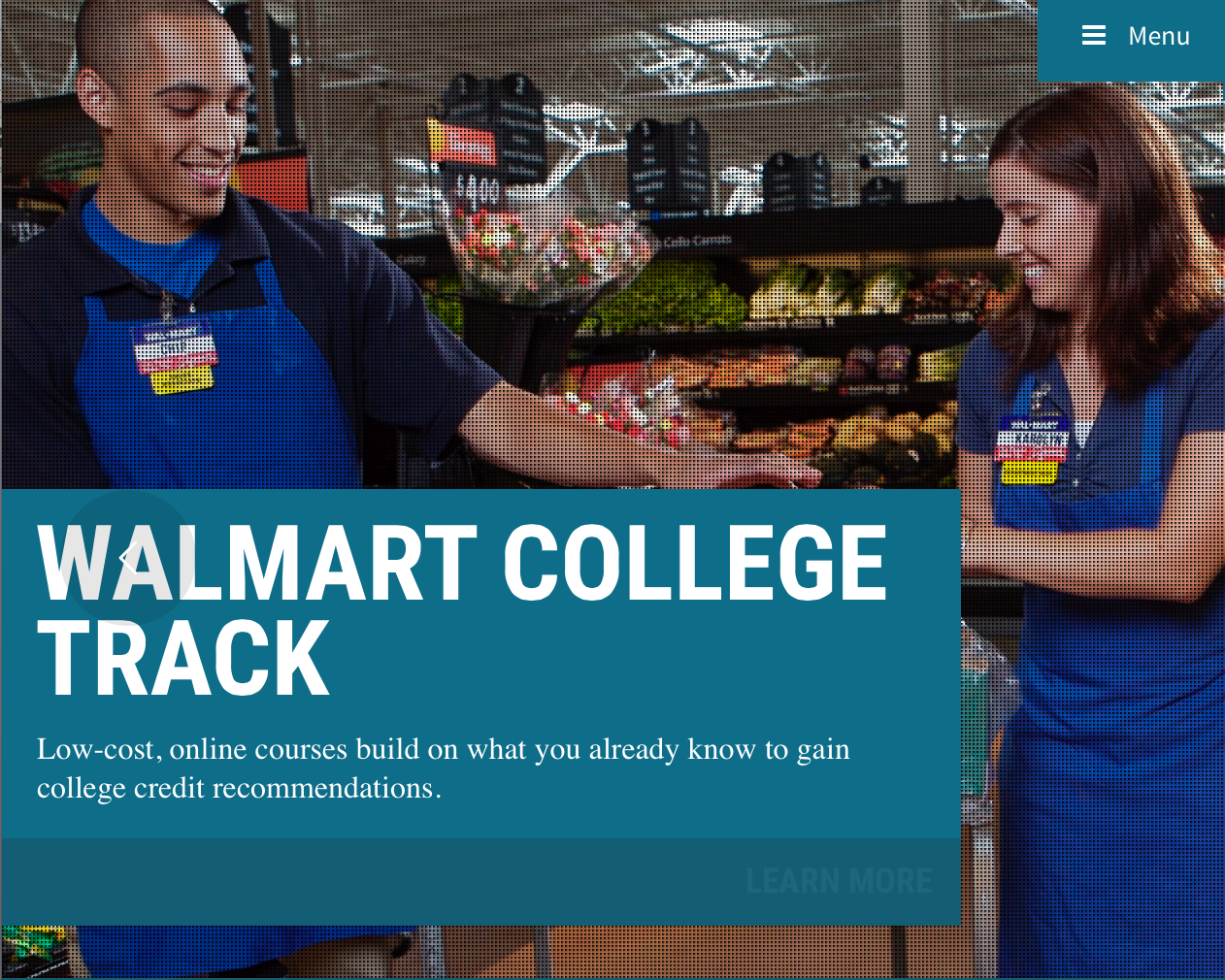
<p><span style="line-height: 1.62;">On the other hand, what if you were hired to design courseware for one of the richest global corporations in the world and offered not only below minimum wage compensation at the Masters or PhD level, but below the U.S. dollar level wages per hour? </span></p>
<p><span style="line-height: 1.62;">Recently, a company contacted me to design online courses intended for retail employees to help them gain a leg up in a competitive world.</span></p>]]>
        <![CDATA[<p><span>For example, a sales floor associate could take a completion course for the low cost of $210 and receive 15 college credits at $14/college credit, transferable to most universities in the States. The course includes modules on <span>Cashier Customer Service, Principles of Customer Service, and Intro to Workplace Safety and Health --</span> and is geared toward improving employee productivity by providing "off the clock" training at no cost to the company.</span></p>
<p><span>Well, maybe, it could be reasonable-- but only if you fail to consider college tuition makes up 1/8 of the average Wal-Mart employee's monthly wage, an average wage that is close to $1.300 and one that falls well below the threshold of poverty (calculated as monthly wages falling below </span><a href="http://www.theatlantic.com/business/archive/2015/09/americas-poverty-problem/405700/">$2.000 for 2014).</a></p>
<p><span>Think about it.</span></p>
<p><span>Is the cost accrued by the employee for this so-called "college" completion course a reasonable one for the employee to incur? </span></p>
<p><span>Nowadays, many companies are striving to improve productivity without making any contribution. Profits rise. Shareholders benefit. Labour loses.</span></p>
<p><span>Once upon a time, employers hired and trained people to work full time with accrued health and retirement benefits. Moving to part-time and contract labour offset labour costs 30%. If a degree in higher education becomes vocational to the extent that it is preparing people for entry-level minimum wage part-time work, the degree itself will no longer hold value or translate to a better life. When the traditional brick and mortar institutions fail as cheap online degrees replace them with cashier training courses, will the lower income classes have a chance at a better life? And will the middle class disappear altogether as a kind of fairy tale told in history texts with an unhappy ending?</span></p>
<p><span>I also have to question whether this transformation of higher education into a vocational skills courseware factory is undermining the intent of higher education, to improve minds and society? Is it naïve to believe in a better world? I feel as though in accepting such work, I am undermining my future as an educator.</span></p>
<p><span>In this equation, unskilled and skilled labour are treated as equals in a system that renders both sides powerless to the corporate shareholders whose sole function and contribution is to accumulate wealth gained by profiting from a de-humanized, capitalized labour force.</span></p>
<p><span>Working for below minimum wage with a Masters or PhD level education makes no sense. I can see myself turning down the offer, but in the back of my mind, I'm wondering if I can actually afford to.</span></p>]]>
    </content>
</entry>

<entry>
    <title>How online training can get you a stable career</title>
    <link rel="alternate" type="text/html" href="http://www.montrealites.ca/education/2014/08/how-online-training-can-get-you-a-stable-career.html" />
    <id>tag:www.montrealites.ca,2014:/education//41.4056</id>

    <published>2014-09-01T02:41:49Z</published>
    <updated>2017-08-09T09:37:35Z</updated>

    <summary>Online education has come a long way in the last few years. Even though a lot of you might still feel that the conventional classroom setting is safer, the fact...</summary>
    <author>
        <name>Jeannette Novakovich</name>
        <uri>http://www.jnovakovich.com/</uri>
    </author>
    
    
    <content type="html" xml:lang="en-US" xml:base="http://www.montrealites.ca/education/">
        <![CDATA[<p><a href="http://www.onbile.com/info/wp-content/uploads/2013/06/online-marketing-free-courses.jpg%20http://www.montrealites.ca/education/Untitled.png"><img alt="Untitled.png" src="http://www.montrealites.ca/education/assets_c/2014/08/Untitled-thumb-550x413-4887.png" class="mt-image-center" style="text-align: center; display: block; margin: 0 auto 20px;" height="413" width="550" /></a>Online education has come a long way in the last few years. Even though a lot of you might still feel that the conventional classroom setting is safer, the fact is online training provides immense flexibility that classroom setting does not. The convenience of attending an online, interactive class and studying at your own pace is unparalleled.</p>
<p>People who don't have time to attend a full-time college turn to online programs for career advancement. Working professionals looking for hikes and promotions, those wishing to switch careers, or stay-at-home moms who wish to pursue a course and begin working, all welcome the flexibility an online education can provide. There are hundreds of colleges that offer legit online programs, and here are some of the best and most popular online programs that guarantee a steady career with a respectable income.</p>
<p></p>]]>
        <![CDATA[<p><b>Online programs that offer stable Careers</b></p>
<p><b><i>Paralegal</i></b></p>
<p>For someone who's a skilled problem solver and wants work that's intellectually challenging, paralegal or legal assistant as they're sometimes known is a great career option. You get to work like a lawyer but without half a dozen years of education! A vital member of legal teams, their main job is to draft documents and litigation and perform research. Among the many schools offering online courses, <a href="http://www.studyincanada.com/english/schools/ProgramDetail.asp?ProgramID=30754&amp;URL=Program">Capilano University</a> offers online paralegal courses. Work settings could range from small lawyer's office, corporate offices, real estate firms, and with the increasing trend of telecommuting sweeping the nation, you could set up your very own office and work online from home!</p>
<p>Median hourly wage: $24.04</p>
<p><b><i>Medical Transcription</i></b></p>
<p>Medical transcriptionists listen to doctor-dictated audio files and transcribe them into documents to compile patients' health records. An aging and increasing population and the need to maintain patients' records for future reference has made medical transcription an almost indispensable part of healthcare. Medical transcriptionists, after a few years' experience, can choose to work remotely, making it a great telecommuting career. CareerStep offers online courses in medical transcription that can be completed in as little as four months. You can also do the medical transcription editing course which involves reviewing and correcting reports generated by the speech recognition software.</p>
<p>Median hourly wage: $21.00</p>
<p><b><i>Graphic designer</i></b></p>
<p>This one's for folks with a creative bent of mind. If you can combine presentation skills and typography strategically to come up with visually appealing designs, you can excel at this career! Though most graphic designers work in designing firms, freelancing is slowly gaining a strong foothold. If you're interested, begin by looking up the course offered by <a href="http://ce.uwaterloo.ca/GraphicDesign.html">University of Waterloo</a>.</p>
<p>Median hourly wage: $20.00</p>
<p><b><i>Writing</i></b></p>
<p>Some people are more at ease communicating through their writing skills than they are with face-to-face conversations. Does a grammatical or spelling error stir up an instant negative reaction in your mind? If you identify yourself with these traits, writing could be your calling!</p>
<p>You could write stories, articles, even poetry, publishing them on blogs and magazines? There's even a program structured specifically to sharpen your writing skills at <a href="http://learn.utoronto.ca/courses-programs/creative-writing">University of Toronto</a> and it also gives you a chance to meet other writers.</p>
<p>Median hourly wage: $26.92</p>
<p><b><i>Virtual Assistant</i></b></p>
<p>This fancy term is just another name for administrative assistant, but one who works remotely! Now isn't that cool? It's like outsourcing office duties to someone (I mean you) who works from home such as answering calls, organizing files and documents (online), booking appointments, making travel arrangements, managing emails, and the list goes on. You can even look up the training program developed at <a href="http://vatp.ca/info/source.html">VATP</a> just for virtual assistants.</p>
<p>Median hourly wage: $21.35</p>
<p>Online education has come a long way with the advent of the Internet. Sure there are scams, so you need to be a tad attentive when you do your research for online courses. Look for reputed institutes and get references from former students and employers who hire the students. It won't be an easy decision. So carefully evaluate your options and choose a profession that best suits your interests - and you could be heading for a rewarding career from the comfort of your home!</p>
<p><i>*</i><i>All hourly wage figures sourced from the Canadian Career-Wage report at http://www.jobbank.gc.ca/wage-outlook_search-eng.do?reportOption=wage.</i></p>]]>
    </content>
</entry>

<entry>
    <title>Ten Tips to Save Money (for Montreal Students)</title>
    <link rel="alternate" type="text/html" href="http://www.montrealites.ca/education/2014/05/ten-tips-to-save-money-for-montreal-students.html" />
    <id>tag:www.montrealites.ca,2014:/education//41.4031</id>

    <published>2014-05-14T22:46:49Z</published>
    <updated>2017-08-24T10:13:37Z</updated>

    <summary></summary>
    <author>
        <name>Karen S.</name>
        
    </author>
    
    
    <content type="html" xml:lang="en-US" xml:base="http://www.montrealites.ca/education/">
        <![CDATA[<iframe src="http://www.pixton.com/embed/p1rrzm8a" frameborder="0" width="100%" height="384" allowfullscreen></iframe>]]>
        
    </content>
</entry>

<entry>
    <title>Top 5 Benefits of Distance Learning. </title>
    <link rel="alternate" type="text/html" href="http://www.montrealites.ca/education/2014/03/top-5-benefits-of-distance-learning.html" />
    <id>tag:www.montrealites.ca,2014:/education//41.3621</id>

    <published>2014-03-02T00:36:53Z</published>
    <updated>2014-03-03T01:49:04Z</updated>

    <summary> Distance learning has become increasingly popular in recent years and has become a common route for individuals who wish to pursue higher education without the constraints of the traditional...</summary>
    <author>
        <name>Amber</name>
        
    </author>
    
    
    <content type="html" xml:lang="en-US" xml:base="http://www.montrealites.ca/education/">
        <![CDATA[<p><a href="http://www.montrealites.ca/education/Distance_Learning.jpg"><img alt="Distance_Learning.jpg" src="http://www.montrealites.ca/education/assets_c/2014/03/Distance_Learning-thumb-500x262-4376.jpg" class="mt-image-center" style="text-align: center; display: block; margin: 0 auto 20px;" height="310" width="593" /></a></p>
<p><a href="http://www.ilasallecampus.com/">Distance learning</a> has become increasingly popular in recent years and has become a common route for individuals who wish to pursue higher education without the constraints of the traditional classroom. It's an optional choice for adults who have restricted schedules and are in need of flexible school hours. A number of universities and colleges offer such course options, including CEGEPS in Quebec. Why choose a local CEGEP? If you are a young adult learner who wants to gain work experience while preparing for the university, registering for distance courses will allow you to complete your degree with greater flexibility. La Salle College, for example, is currently expanding its online course offerings.</p>
<p>We will take you through the top 5 benefits distance learning has to offer:</p>]]>
        <![CDATA[<p><strong>1)   Flexibility and Time</strong></p>
<p>Flexibility is one of the top reasons why people opt for distance learning over traditional in-class education. It caters to the accessibility of each individual student, thus allowing a possibility to fit education into their busy lifestyles. It is great for those who have other commitments and would prefer an education that allows them to do class work and study during their personal convenient hours. You can work on your classes at your own speed, whether it be after you get home from work, during your lunch breaks or on weekends. Distance learning programs are structured in a way that allows you to accomplish education and life simultaneously. </p>
<p><strong>2)   Easy Accessibility</strong></p>
<p>Another popular feature distance learning has to offer is that you can access your program and or class from any location in the world, as long as a computer and Internet access is present. Whether you are pursuing a program or class from another country, or simply on vacation, your learning travels with you. This feature is seen as extremely beneficial, considering the fact that you can accomplish your class work from just about anywhere. Whether you prefer studying at a local café or from home, distance learning provides you with a unique opportunity to accomplish your work from any location that best suits your needs. </p>
<p><strong>3)   Cost Effective</strong></p>
<p>Distance learning provides a cost-effective way to higher your education. Typically speaking, pursuing an online education will cost less than an on-campus education, considering the cost of travel expenses are not required, which can be quite expensive when the student does not live in close proximity to the schools campus.  Also, there is no need to spend money on campus living expenses, considering all your education can be accomplished from the comforts of your own home.</p>
<p><strong>4)   Networking Opportunities</strong></p>
<p>Through distance learning, online classes provide you with a unique way to network with individuals from around the world. Social media's popularity has taken off, in recent years, and this is no different. Bulletin boards, virtual classrooms, discussion boards and mailing lists are used to interact with classmates about the course, and to spark engaging conversations that would not be typically found in a traditional classroom setting. This type of opportunity is one of a kind. Being connected with students from other countries provides you with a unique opportunity to expand your network and knowledge, while maintaining beneficial relationships with people who might one day work in a similar field or who already work in a chosen field. </p>
<p><strong>5)   Personal Assistance</strong></p>
<p>Distance learning provides great benefits, one of which being that staff members are committed to providing you with personal assistance whenever you need it. Unlike a traditional class environment, when you have a question, you don't have to wait until your next class to ask it, you can either email or call to inquire about your concerns. Students can also use class discussion forums to interact with fellow classmates, thus making the learning process more collaborative. Students are encouraged to consult with industry-experienced tutors, who will provide answers to questions or provide unique viewpoints that students can learn from. Whatever the case, the personal service that is provided through distance learning is unique to the individual. Unlike a classroom environment, this assistance is one on one, thus making distance learning an appealing choice. </p>]]>
    </content>
</entry>

<entry>
    <title>How to handle misbehavior in your classroom </title>
    <link rel="alternate" type="text/html" href="http://www.montrealites.ca/education/2014/01/instructions-how-to-handle-a-misbehavior-in-your-classroom.html" />
    <id>tag:www.montrealites.ca,2014:/education//41.3604</id>

    <published>2014-01-30T23:15:21Z</published>
    <updated>2017-08-24T10:16:05Z</updated>

    <summary></summary>
    <author>
        <name>Hala Al-Sahnawi</name>
        
    </author>
    
    
    <content type="html" xml:lang="en-US" xml:base="http://www.montrealites.ca/education/">
        <![CDATA[<p><img alt="misbehavior-at-school.jpg" src="http://www.montrealites.ca/education/misbehavior-at-school.jpg" class="mt-image-none" height="399" width="600" /></p>
<p></p>
<p> </p>
<p><span> </span></p>
<p> </p>
<p> </p>
<p> </p>
<p> </p>
<p> </p>]]>
        <![CDATA[<p><strong>Step 1: Observe.</strong></p>
<p>Take a step back and observe what is going on in your classroom instead of jumping in and trying to stop the misbehavior right away.<span class="apple-converted-space"> </span>Give yourself a couple of seconds to understand the problem.</p>
<p><strong>Step 2: Stop the activity.</strong></p>
<p>Stop the activity by calling your students attention. If they don't give it to you right away, then you know this is something else you have to work on. To be an effective educator, it is important to able to get your students attention any time you need it.</p>
<p><strong>Step 3: Wait.</strong></p>
<p>Stand in one place and wait for another couple of seconds. Let the students' misbehavior hang in the air and let them feel the weight of it. Try to get your students to realize and understand what they did wrong all on their own.</p>
<p><strong>Step 4: Pause in silence.</strong></p>
<p>Put the class in a silent mode for a couple of seconds. Stand in your place and just gaze at the class, do not say a word or show any sharp reaction.</p>
<p><strong>Step 5: Send them back to where they are supposed to be.</strong></p>
<p>After your pause for a couple of seconds, send your students back to their seats or ask them to clear their desks and put their materials away. Refrain from lecturing or expressing disappointment. It may make you feel better, but it doesn't help. The focus now is on doing things the right way.</p>
<p><strong>Step 6: Replay.</strong></p>
<p>Try to put your students in your shoes; model for your students the misbehavior you observed, showing how it wasted time and disrupted learning. Modeling a misbehavior is a powerful strategy that allows students to view--and really understand--their actions from a different perspective.</p>
<p><strong>Step 7: Restart teaching </strong></p>
<p>Now model how the activity should be done. Explain to a nd show your students what you expect during that particular activity.</p>
<p><strong>Step 8: Practice.</strong></p>
<p>Begin practicing the activity with your class. Get all the students involved once a few of them have learned / done the activity correctly.</p>
<p><strong>Step 9: Prove it.</strong></p>
<p>Within a day or two, give your students another opportunity to prove they can perform the same, or similar, activity the correct way. When the activity is over, don't make a big fuss, but be sure and acknowledge the good work. <em><br /></em></p>
<p><strong>Step 10: Standardize your classroom's activities.</strong></p>
<p>Try to standardize the activities for your students. They should know the routine for successfully conducting an activity or a homework.</p>]]>
    </content>
</entry>

<entry>
    <title>Profile: Education for the New Generation</title>
    <link rel="alternate" type="text/html" href="http://www.montrealites.ca/education/2014/01/profile-education-for-the-new-generation.html" />
    <id>tag:www.montrealites.ca,2014:/education//41.3568</id>

    <published>2014-01-16T23:25:54Z</published>
    <updated>2017-10-14T15:33:49Z</updated>

    <summary> Education is one of the first things that come to mind when discussing Montreal. With access to six universities and twelve junior colleges in an eight kilometer radius, Montreal,...</summary>
    <author>
        <name>Hala Al-Sahnawi</name>
        
    </author>
    
    
    <content type="html" xml:lang="en-US" xml:base="http://www.montrealites.ca/education/">
        <![CDATA[<p align="center"><img alt="How-Technology-Changed-Online-Education.jpg" src="http://www.eatingcrow.ca/9nine/How-Technology-Changed-Online-Education.jpg" class="mt-image-center" height="312" width="490" /></p>
<p>Education is one of the first things that come to mind when discussing Montreal. With access to six universities and twelve junior colleges in an eight kilometer radius, Montreal, Quebec (Canada) has the highest proportion of post-secondary students of all major cities in North America. This represents approximately 248,000 post-secondary students, one of the largest numbers in the world. Many innovative people in the field of education have made countless changes to the educational system in Montreal, with many others still working hard to make their mark on the way teachers educate their students and in those students' lives. From teachers in kindergarten, elementary, and high schools, to professors in colleges and universities, to principles, and any number of other educators, there are innumerable people pursuing change and innovation in education. One person who strives to improve the education system in Montreal, and who has exhibited a history of innovating, experimenting with, and rethinking how we should better educate the new generation is Ofra Aslan.</p>
<p></p>]]>
        <![CDATA[<p>Ofra Aslan is a part-time instructor at Concordia University, an Assistive Technology Specialist and a private tutor and consultant. "I always knew that I was going to work with children. When I was young, I used to pretend play with my friends and I was always the teacher," Ofra said. After completing Cegep, Ofra went to McGill where she completed her Bachelor in Education (BEd) degree. Ofra believed in herself as a teacher, "I remember that the first time I stood in front of a class; I knew that it was right for me". Upon completing her degree, Ofra moved to BC where she worked in different educational settings and then went back to school to complete a Special Education diploma at the University of British Columbia. She got married and came to Montreal where she got a job teaching children with special needs in an inclusive setting. She continued teaching for several years in an elementary school in Montreal working as both a classroom teacher and as a resource teacher. She then went back to school to complete her Master's degree in Educational Technology with the goal of perhaps changing careers. She tried working for CN but she did not have any passion for it. She, therefore, went back to working in an elementary school as a technology coordinator. In this capacity, she observed the effect technology had on children's motivations and decided to go back to university to study the impact of technologies on children's learning. As a doctorate student, Ofra spent her time being involved in research related to children and technologies in general, and the use of technology with children with special needs in particular. Her dissertation thesis looked at the impact of oral retelling of folktales on cycle three students writing skills. Technology was used throughout her research to allow students to listen to stories and collaborate to retell them using an online tool called <i>VoiceThread.</i> Ofra is now a part time instructor in the Faculty of Education at Concordia University, teaching courses related to technology and education. She also has a tutoring and consulting business where she focuses on using technology to remediate academic difficulties of children with special needs.</p>
<p>Ofra believes that Quebec has a good curriculum in its schools and educational institutions. It recognizes the impact that technologies and globalization has on the generation of kids that are being raised today and the skills that are needed to succeed in a global economy. At the same time it is being based on current research in the field of education focusing on a constructivist approach to learning. The competencies that teachers need to develop alongside the subject area are essential for students' future success. However, at the same time, Ofra is concerned about the statue of the education system in Montreal: "The classroom size is large, which makes it difficult to provide the best quality education." Also she finds that the increasing number of students with special needs in the inclusive classroom makes the teacher's job much harder.  She is also concerned about the use of technology in the school system: "Many of the teachers do not have the training necessary to incorporate technology into the curriculum and end up using technology for low-level skills such as word processing." Ofra believes that teachers need proper training and modeling so that they could use technology to support students learning; that is why she appreciates the opportunity to teach pre-service teachers courses that are related to technology integration in the classroom. Ofra is hoping that when these teachers go into the school system they will use technology effectively to support students and curricular objectives.</p>
<p>Currently, Ofra Aslan is focusing on studying the impact of technologies on children with special needs' literacy skills.</p>
<p> Our Interview:</p>
<p>Me: Ofra, what does it mean to be a teacher/Professor?</p>
<p>Ofra: being a teacher means that you are responsible for students' learning. Therefore, a teacher or a professor needs to first explore in depth the subject that he/she is teaching. It means planning a curriculum that covers the topics while being flexible enough to be modified if necessary to address students' need. I believe that teachers need to be available to students and provide constructive feedback on assignments and tests. I also think that it is necessary for teachers to reflect at the end of each session on what has gone well and what should be changed. This reflection and evaluation is also necessary when the course or the semester has ended so that a revision could be made to the course content and structure.</p>
<p>An elementary and/or high school teacher is also responsible for his/her students well being. In this case, it is the teacher's obligation to notice any change in a student's behavior or if a student is being harassed or bullied and take the necessary steps to ensure student's safety.</p>
<p>Me: why did you choose the field of education, teaching in particular?</p>
<p>Ofra: in my opinion, it is important to enjoy what we do in life. I get this great feeling when I see that a student understood the material or learnt something new or made great progress. Teaching gives me great satisfaction.</p>
<p><span>Me: what are some of the challenges in the domain of teaching?</span></p>
<p>Ofra: the biggest challenge is managing the diverse needs of the students. At the elementary level, it is mostly about students' behavior or managing the diverse learning styles. At the university level it is also managing the diverse needs of the students who may have other courses and obligations and setting up the class to meet these needs.</p>
<p>Me: h<span>ow do you define good teaching? What are the criteria of a good teacher?</span></p>
<p><span>Ofra: when we talk about the quality of someone's teaching, we often think about techniques, content, and presentation. However, many teachers have tremendous knowledge but fail to communicate it resulting in students boredom or frustrated. Therefore, in my opinion, good teaching has less to do with knowledge and skills and more to do with attitude and towards students, subject, and work.</span></p>
<p>A good teacher:</p>
<p>• Expects all students to succeed;</p>
<p>• Is willing to adapt and change to meet students' needs;</p>
<p>• Is comfortable with not knowing;</p>
<p>• Reflects on his/her lessons;</p>
<p>• Is always willing to learn and explore new methodologies;</p>
<p>• Enjoys his/her work and students.</p>
<p>Me: h<span>ow do you view the student- teacher/professor relationship, do you think students should behave with the professors like friends, or is it necessary to maintain a disciplined environment to create a good classroom environment? </span></p>
<p><span>Ofra: I do not think that teachers should be their students' friend. I believe in a professional relationship.</span></p>
<p> Me: w<span>hat do you think must be changed in the current educational system in Montreal?</span></p>
<p>I believe that the class size has to be reduced. It may be unrealistic but if teachers had a maximum of 15 students in their class, I am sure that there is going to be a sharp rise in students' success. I also would like to see more gym periods in a school week. Recent surveys have shown that girls perform better academically than boys. Research has also shown that boys need to move around more. More gym period will address this issue.</p>
<p>Me: d<span>o you find that newly graduated teachers are ready to teach? Please explain.</span></p>
<p>Ofra: like any profession, good teaching comes with experience. Yes I believe that the BEd program provide teachers with enough background and experience to teach. With supported principal and co-worker he/she will develop the necessary competencies that we attribute to good teachers.</p>
<p>Me: d<span>o you believe that the current university teaching programs are well structured? </span></p>
<p>Ofra: I don't know enough about teaching programs at universities to comment.</p>
<p>Me: qhat are your current research interests and projects in the field of education?</p>
<p>Ofra: I am interested in the impact of technologies of children with special needs' literacy skills.</p>
<p><span>Me: if you didn't get the chance to teach, what would you have chosen as a profession?</span></p>
<p>Ofra: I would have become an architect.</p>]]>
    </content>
</entry>

<entry>
    <title>Guide to vocational schooling</title>
    <link rel="alternate" type="text/html" href="http://www.montrealites.ca/education/2013/03/instruction-set-comic.html" />
    <id>tag:www.montrealites.ca,2013:/education//41.2993</id>

    <published>2013-03-19T19:47:28Z</published>
    <updated>2013-03-25T19:26:01Z</updated>

    <summary></summary>
    <author>
        <name>StephanieT</name>
        
    </author>
    
    
    <content type="html" xml:lang="en-US" xml:base="http://www.montrealites.ca/education/">
        <![CDATA[<p>
<iframe width="100%" height="384" src="http://www.pixton.com/ca/embed/6ufiqcka" frameborder="0" allowfullscreen=""></iframe>
</p>]]>
        
    </content>
</entry>

<entry>
    <title>The Gordon Robertson Beauty Academy</title>
    <link rel="alternate" type="text/html" href="http://www.montrealites.ca/education/2013/03/feature-article-the-gordon-robertson-beauty-academy.html" />
    <id>tag:www.montrealites.ca,2013:/education//41.2992</id>

    <published>2013-03-18T18:16:25Z</published>
    <updated>2013-03-25T19:26:15Z</updated>

    <summary>Feature Article: The Gordon Robertson Beauty Academy Modern Beauty Academies Most people do not take beauty seriously when it comes to careers. When thinking of beauty school many people will...</summary>
    <author>
        <name>StephanieT</name>
        
    </author>
    
    
    <content type="html" xml:lang="en-US" xml:base="http://www.montrealites.ca/education/">
        <![CDATA[<p style="text-align: center;" align="center"><span style="color: #ff00ff; text-decoration: underline;"><strong>Feature Article: The Gordon Robertson Beauty Academy</strong> </span> </p>
<p align="center"><span style="color: #000000;"><b>Modern Beauty Academies</b></span></p>
<p align="center"><b><img style="text-align: center; display: block; margin: 0 auto 20px;" class="mt-image-center" alt="makeup face.jpg" src="http://www.eatingcrow.ca/thirteen/makeup%20face.jpg" height="320" width="286" /></b></p>
<p>Most people do not take beauty seriously when it comes to careers. When thinking of beauty school many people will still conjure an image of <i>Grease's</i> "Beauty School Drop Out" song in their minds. This image needs to be reinvented because today's beauty schools provide the training for women and men alike to create a successful and respectable career. With vocational training becoming a popular choice for students here in <st1:place><st1:state>Quebec</st1:state></st1:place>, many people are looking at beauty academies in a new light. When looking into beauty academies (or any vocational training school for that matter) it is well worth considering a public school because public vocational training is completely free for residents of <st1:state><st1:place>Quebec</st1:place></st1:state>.</p>
<p align="center"><span style="color: #000000;"><b> </b><b>The <st1:place><st1:placename>Gordon</st1:placename> <st1:placename>Robertson</st1:placename> <st1:placename>Beauty</st1:placename> <st1:placetype>Academy</st1:placetype></st1:place> </b></span></p>
<p align="center"><b><img style="text-align: center; display: block; margin: 0 auto 20px;" class="mt-image-center" alt="GRBC - LOGO - white.jpg" src="http://www.eatingcrow.ca/thirteen/GRBC%20-%20LOGO%20-%20white.jpg" height="106" width="220" /></b></p>
<p>One of the best public beauty academies in <st1:city>Montreal</st1:city> is the <st1:place><st1:placename>Gordon</st1:placename> <st1:placename>Robertson</st1:placename> <st1:placename>Beauty</st1:placename> <st1:placetype>Academy</st1:placetype></st1:place>. The <st1:placename>Gordon</st1:placename> <st1:placename>Robertson</st1:placename> <st1:placename>Beauty</st1:placename> <st1:placetype>Academy</st1:placetype> is located in the West Island of Montreal in <st1:city><st1:place>Beaconsfield</st1:place></st1:city> and their programs provide training for all aspects of the beauty field. The <st1:place><st1:placename>Gordon</st1:placename> <st1:placename>Robertson</st1:placename> <st1:placename>Beauty</st1:placename> <st1:placetype>Academy</st1:placetype></st1:place> was built in 1994 and was the first school of its kind located on the West Island of Montreal. The school is part of the Lester B. Pearson School Board and is named after Gordon Robertson who was a friend of the school board and a strong supporter of vocational training programs. The programs offered include:</p>
<p>-Become an Aesthetics Professional</p>
<p>-Become a Hair Care Professional</p>
<p>-Become a Professional Electrologist</p>
<p>-Become a Body Care Professional</p>
<p>-Become an Entrepreneur in the Beauty Industry</p>
<p>On the Gordon Robertson website they provide 5 questions to ask yourself if you are thinking of joining their beauty academy:</p>
<p>1)      Do you want a career in the beauty industry?</p>
<p>2)      Do you want a career that is in high demand?</p>
<p>3)      Are you a hands-on person?</p>
<p>4)      Do you want to own your own business?</p>
<p>5)      Do you want a fresh start in less than a year?</p>
<p>If you answered yes to most, or all of these questions, then The Gordon Robertson Beauty Academy is probably a good place for you to be.  All of the courses are offered solely on a part-time basis except for the aesthetics and hair care courses which can be taken full-time or part-time full time for 12 or 24 months respectively. Gordon Robertson is an English school, so all of the courses are offered in English only.</p>
<p> </p>
<p><st1:place><st1:placename>Gordon</st1:placename> <st1:placename>Robertson</st1:placename> <st1:placename>Beauty</st1:placename> <st1:placetype>Academy</st1:placetype></st1:place></p>
<p><st1:street><st1:address>240 Beaurepaire Drive</st1:address></st1:street></p>
<p><st1:place><st1:city>Beaconsfield</st1:city>, <st1:state>QC</st1:state></st1:place></p>
<p>H9W 6G4</p>
<p>514-426-5096</p>
<p><a href="http://grc.lbpsb.qc.ca/">http://grc.lbpsb.qc.ca/</a> </p>
<p style="text-align: center;"><strong> <span style="color: #000000;">Interview with a Gordon Robertson Graduate</span></strong></p>
<p style="text-align: center;"><img style="text-align: center; display: block; margin: 0 auto 20px;" class="mt-image-center" alt="Steph and Amanda pic2.jpg" src="http://www.eatingcrow.ca/thirteen/Steph%20and%20Amanda%20pic2.jpg" height="308" width="410" /></p>
<p style="text-align: center;"><em>(Photo of Amanda and I at the Interview: Amanda is on the right)</em></p>
<p style="text-align: left;">Amanda Carrier is a graduate of the aesthetics course at Gordon Robertson, and she offered to share some of her experience with me. We decide to meet for drinks so that I can ask her questions about the program that she completed.</p>
<p>Amanda is a 23 year old with a lot of drive and determination. She completed her aesthetics course a couple of years ago and is now halfway through the highly competitive professional photography program at <st1:place><st1:placename>Dawson</st1:placename> <st1:placetype>College</st1:placetype></st1:place>. She loves fashion and hopes to become a fashion photographer one day. She is brimming with creativity and it is no wonder that she loves to make things beautiful. She is a small girl with bright red hair, and very fair, porcelain-like skin. Her love of fashion and makeup can be seen right away through her stylish and fashion forward appearance. She carries herself very confidently. We order martinis and sit down at a table to proceed with the interview.</p>
<p><strong>Stephanie: </strong>So, what course did you take at Gordon Robertson?</p>
<p><strong>Amanda: </strong>I took the Aesthetics course.</p>
<p><strong>S: </strong>What did the course cover exactly?</p>
<p><strong>A: </strong>It covered makeup, waxing, facial treatments, body treatments, and a little bit of business and customer service skills.</p>
<p><strong>S: </strong>How long was the course? When did it start and finish?</p>
<p><strong>A: </strong>The course started at the end of August and went until mid-June. Just like high school or elementary school.</p>
<p><strong>S: </strong>How did you find the teachers? Helpful?</p>
<p><strong>A: </strong>The teachers were really nice and very passionate about what they taught. I was very impressed by them.</p>
<p><strong>S: </strong>What kind of form did the course take? Was it mostly hands-on?</p>
<p><strong>A: </strong>When we first started it was mostly theory, for about a month. Then at the end of the course we had to learn a little bit about business which was also mostly theory, but everything else in between was completely hands-on practice.</p>
<p><strong>S: </strong>Who did you practice on?</p>
<p><strong>A: </strong><span>For a month we practiced our skills on each other. Then we were allowed to bring people in to practice on, like friends and family members. Then we started getting real clients. </span></p>
<p><strong>S: </strong>Yeah, I read about that on the website, apparently people can make appointments and receive spa quality treatments from the students for reduced prices? Is that right? Are those the clients that you're talking about?</p>
<p><strong>A: </strong>Yes. It was mostly older women who came in. They were always really nice and patient with us. Every week one person would be manager. Basically you greeted the clients and assigned them to a student. We always had to tell the teacher what our facial treatment plan/makeup plan was before we started. The teacher would double check and ok our plan. We did facials, back facials (a facial for your back), makeup, waxing, manicures, and pedicures.</p>
<p><strong>S: </strong>What did you spend the most time learning?</p>
<p><strong>A: </strong>We spent the most time on facials. There was a lot to learn about skin types, skin condition, skin diseases, so on.</p>
<p><strong>S: </strong>Did you have to complete a stage to graduate?</p>
<p><strong>A: </strong>Yes we had to do a stage at the end of May. We had to work at a spa, for free, to see what the job was like.</p>
<p><strong>S: </strong>What would you say the best and worst parts of the course were?</p>
<p><strong>A: </strong>The best parts were the teachers, and learning about makeup. I love makeup so that was my favourite. We got so many makeup items that we were allowed to keep. Big palettes of all different colors, makeup brushes, almost everything that we would need for our kits. The worst part for me had to be the girls in my class. They were so lazy and never wanted to do anything, especially with the clients that came in. They would ask dumb questions in class, like why does the skin have three layers? There is no answer! It just does! I was taking the course very seriously. It is a career program! It seemed like the other girls weren't though. That's the only negative thing I can say though. Everything about the school itself was great.</p>
<p><strong>S: </strong>Thanks for all the information! I'm sure it will help someone out to read about your experience!</p>
<p><strong>A: </strong>You're welcome!</p>]]>
        
    </content>
</entry>

<entry>
    <title>Top 5 Public English-Language Vocational Training Schools in Montreal</title>
    <link rel="alternate" type="text/html" href="http://www.montrealites.ca/education/2013/03/Top 5 Public English-Language Vocational Training Schools in Montreal.html" />
    <id>tag:www.montrealites.ca,2013:/education//41.2990</id>

    <published>2013-03-15T20:02:24Z</published>
    <updated>2013-03-25T19:26:38Z</updated>

    <summary> Montreal is a great place to pursue vocational training programs. There are many vocational schools on the island where students can learn a variety of skilled trades. Successful and...</summary>
    <author>
        <name>StephanieT</name>
        
    </author>
    
    
    <content type="html" xml:lang="en-US" xml:base="http://www.montrealites.ca/education/">
        <![CDATA[<p align="center"><b><br /><st1:city><st1:place></st1:place></st1:city></b></p>
<p align="center"><b><img style="text-align: center; display: block; margin: 0 auto 20px;" class="mt-image-center" alt="welding.jpg" src="http://www.eatingcrow.ca/thirteen/welding.jpg" height="334" width="500" /></b></p>
<p><st1:city><st1:place>Montreal</st1:place></st1:city> is a great place to pursue vocational training programs. There are many vocational schools on the island where students can learn a variety of skilled trades. Successful and stimulating careers can be pursued through vocational training programs. Students can study cosmetology, hairdressing, plumbing, computer servicing, restaurant and hotel management, culinary work and more. Vocational training programs are a good choice for anyone who is ready to work hands-on.</p>
<p>Here in <st1:state><st1:place>Quebec,</st1:place></st1:state> vocational training programs are designed in collaboration with employers and are suited to regional economic activities. They also reflect the needs of the current labor market. This means that graduates usually have no trouble finding a job in their field, and most programs will even set students up with internships that can turn into full-time jobs after graduation. In fact in <st1:state><st1:place>Quebec</st1:place></st1:state> 75% of vocational school graduates find full-time work within a year, as there is currently a huge demand for skilled workers. Another amazing thing about pursuing vocational training in <st1:state>Quebec</st1:state> is that through public schools it is completely free for <st1:state><st1:place>Quebec</st1:place></st1:state> residents! This helps to encourage more people to study skilled trades.</p>
<p>There are many great vocational training schools that offer their courses in French, and there are also many private vocational training schools in Montreal, but this review will examine the top five English-language, public vocational training schools in Montreal. Let's get started!</p>
<p><b>5) Pearson Electrotechnology Centre (PEC): </b></p>
<p>5000 René-Huguet</p>
<p><st1:place><st1:city>Lachine</st1:city>, <st1:state>Quebec</st1:state></st1:place></p>
<p>H8T 1M7</p>
<p>514-798-1818</p>
<p><a href="http://pec.lbpsb.qc.ca" target="_blank">http://pec.lbpsb.qc.ca</a></p>
<p>This school belongs to the Lester B. Pearson School Board, and it is the only English public school of its kind in all of <st1:state><st1:place>Quebec</st1:place></st1:state>. It has been open since 2007 and the programs offered include: Electricity, Installation and Repair of Telecommunications Equipment and Computing Support Courses. Sometime in the near future the school will also be offering a Heating and Plumbing program.</p>
<p>Classes for all three programs are offered either during the day from 8:00 to 3:00, or in the evenings from 3:30-10:30. The school features state of the art equipment and all training involves hands-on experience with the highest safety standards. The school partners closely with many businesses including Videotron, Belden, Commission de la construction du <st1:state><st1:place>Quebec</st1:place></st1:state> and more. Students are offered many training opportunities through the school's various connections.</p>
<p><st1:place><st1:placename><b>4) West</b></st1:placename><b> <st1:placetype>Island</st1:placetype></b></st1:place><b> Career Centre (W.I.C.C):</b></p>
<p><st1:street><st1:address>13700 Pierrefonds Blvd.</st1:address></st1:street></p>
<p><st1:place><st1:city>Pierrefonds</st1:city>, <st1:state>QC</st1:state></st1:place></p>
<p>H9A 1A7</p>
<p>514-620-0707</p>
<p><a href="http://wicc.lbpsb.qc.ca" target="_blank">http://wicc.lbpsb.qc.ca</a></p>
<p>The West Island Career Centre belongs to the Lester B. Pearson School Board and offers training for a wide variety of skilled trades. They cover the fields of healthcare, automobile mechanics, interior decorating and visual display, residential and commercial drafting, and accounting and administration. The specific programs include: Accounting, Administrative Professional, Assistance in Healthcare Facilities, Automobile Mechanics, General building Maintenance, Health, Assistance and Nursing Care, Home Care Assistance, Hygiene and Sanitation in Health Care Settings, Interior Decorating and Visual Display, Medical Office Specialist, Medical Secretary, Residential and Commercial Drafting, and Starting a Business.</p>
<p>This school offers a "Student for a Day" program which pairs up potential students with current students. They are able to spend the day at the school, attending real classes before they decide if it is the right school and/or program for them.</p>
<p><b>3) PACC Vocational Centre (Pearson Adult and Career Centre):</b></p>
<p><st1:street><st1:address>8310 George Street</st1:address></st1:street></p>
<p><st1:place><st1:city>LaSalle</st1:city>, <st1:state>QC</st1:state></st1:place></p>
<p>H8P 1E5</p>
<p>514-363-6213</p>
<p><a href="http://paccvoc.lbpsb.qc.ca/" target="_blank">http://paccvoc.lbpsb.qc.ca/</a></p>
<p>The PACC Vocational Centre belongs to the Lester B. Pearson School Board. The school offers vocational programs in the fields of food services and tourism, administration, and health. The programs include: Retail Butchery, Food &amp; Beverage Services, Professional Cooking, Pastry Making, Accounting Studies, Administrative Professional , Pharmacy Technical Assistance, Home Care Assistance, Health, Assistance and Nursing Care, Dental Assistance, Assistance in HealthCare Facilities. There is a great variety of programs available to students.</p>
<p>An interesting note is that PACC offers their students an amazing resource free of charge, the online use of the language learning software, Rosetta Stone!</p>
<p><b>2) Shadd Business Centre:</b></p>
<p>1000 Old Orchard</p>
<p><st1:place><st1:city>Montreal</st1:city>, <st1:state>QC</st1:state></st1:place></p>
<p>H4A 3A4</p>
<p>(514) 484-0485</p>
<p><a href="mailto:shadd@emsb.qc.ca">shadd@emsb.qc.ca</a></p>
<p>The Shadd Business Centre is part of the English Montreal School Board. The school has been around for over 15 years and their reputation is highly respected. The Shadd Business Centre boasts an impressive job placement rate for qualified graduates. The programs that they offer include: Accounting, Assistance in Healthcare, Pharmacy Technical Assistance, Secretarial Studies, and Starting a Business.</p>
<p>All programs are full-time, but students have the option to sign up for daytime or evening classes. The Shadd Business Centre is very aware that many students are going to be balancing full-time jobs with school, and their flexible scheduling options reflect that.</p>
<p><b>1) Rosemount Technology Centre (RTC):</b></p>
<p><st1:street><st1:address>3737 Beaubien Ave</st1:address></st1:street></p>
<p><st1:place><st1:city>Montreal</st1:city>, <st1:state>QC</st1:state></st1:place></p>
<p>H1X 1H2</p>
<p>514-376-4724</p>
<p><a href="http://www.rosemount-technology.qc.ca/" target="_blank">http://www.rosemount-<wbr />technology.qc.ca/</a></p>
<p>The Rosemount Technology Centre is one of the largest English-language technical career training centres in all of <st1:state><st1:place>Quebec</st1:place></st1:state>. It belongs to the English Montreal School Board. The school offers amazing programs that are hands-on, and all of the featured trades are very in demand in <st1:state><st1:place>Quebec</st1:place></st1:state>. Programs include: Automated Systems in Electromechanics, Cabinet Making, Computer Graphics Techniques, Furniture Finishing, Industrial Drafting (CAD), Industrial Machine Operator, Machining Techniques, Numerical-Control Machine Tool Operation (CNC), and Printing and Digital Layout.</p>
<p>The school employs a work-study assignment within all of their programs which allows students to use their newly learned skills in real working environments. This often leads to job opportunities in the future.</p>
<p> </p>
<p> </p>
<p> </p>]]>
        
    </content>
</entry>

<entry>
    <title>Backgrounder on Residential Schools</title>
    <link rel="alternate" type="text/html" href="http://www.montrealites.ca/education/2013/02/backgrounder-on-residential-schools.html" />
    <id>tag:www.montrealites.ca,2013:/education//41.2900</id>

    <published>2013-02-03T05:56:33Z</published>
    <updated>2017-08-11T07:30:09Z</updated>

    <summary>Although Aboriginals attended residential schools during the late 19th to mid-20th century, their pain and suffering are still evident today. The children were sexually, physically, psychologically, and spiritually abused. These...</summary>
    <author>
        <name>Jeannette Novakovich</name>
        <uri>http://www.jnovakovich.com/</uri>
    </author>
    
    
    <content type="html" xml:lang="en-US" xml:base="http://www.montrealites.ca/education/">
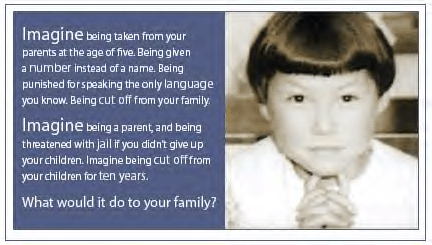
        <![CDATA[<p><span style="color: #ff0000;"><span style="color: #000000;"><a href="http://www.montrealites.ca/justice/ResidentialSchoolGirl.gif"><img alt="ResidentialSchoolGirl.gif" src="http://www.montrealites.ca/justice/assets_c/2012/10/ResidentialSchoolGirl-thumb-500x283-3231.gif" class="mt-image-center" style="text-align: center; display: block; margin: 0 auto 20px;" height="283" width="500" /></a></span></span>Although Aboriginals attended residential schools during the late 19<sup>th</sup> to mid-20<sup>th</sup> century, their pain and suffering are still evident today. The children were sexually, physically, psychologically, and spiritually abused. These emotional scars are still in effect, either through the attendees themselves, or through their families.To further stipulate, the abuse that the attendees received were passed down knowingly and unknowingly to their family members, especially their children. As the attendees were children themselves, they grew up in an environment where abuse was habitual and seemed normal. Therefore, when they had children themselves, they often imitated the habits they learned at school, consciously or unconsciously. This created discord amongst the communities where drug abuse, alcohol abuse, and sexual abuse are still active today. The main focus is that not enough action has been done to provide treatment and closure to the victims and their families.</p>
<p></p>]]>
        <![CDATA[<p align="center"><span style="color: #ff0000;"> </span></p>
<p align="center"><span style="color: #ff0000;">BACKGROUND HISTORY</span></p>
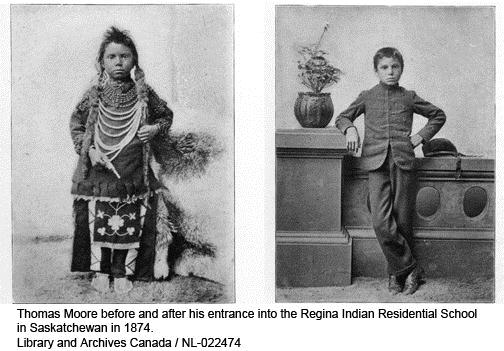
<p>The first residential school opened around 1874, and they existed until the last one closed in 1996 (Corntassel 138). They were built because the government of Canada wanted to fix what was called the "Indian problem" (Llewellyn 256).  After the war in 1812, the government did not need the Aboriginals anymore and a greater influx of British settlers forced the natives to live scattered amongst the settlements. This created disharmony between the two groups. Because the Aboriginals were financially tied with the government as "wards", the government thought it was best for everybody if they could assimilate the natives and at the same time get rid of the "Indian problem" and its costs (Llewellyn 256). Ted and Virginia Byfield write about the government's choice to hire priests and nuns:  "The churches were asked to staff them because priests, ministers and nuns would dedicate their lives to the task for very little pay" (2-3). The government and the colonies deemed that it was a solution for an escalating problem and thus, the first school was opened during mid-1800. They hoped that by assimilating a large population of aboriginal children, they could adopt the 'white' ways of life and pass it on to others.</p>
<p></p>
<p><a href="http://www.montrealites.ca/justice/Thomas%20Moore.jpg"><img alt="Thomas Moore.jpg" src="http://www.montrealites.ca/justice/assets_c/2012/10/Thomas%20Moore-thumb-500x348-3235.jpg" class="mt-image-center" style="text-align: center; display: block; margin: 0 auto 20px;" height="315" width="452" /></a></p>
<p align="center"></p>
<p>Since the government took total control over the schools, which they classified as "total institutions", it was the job of the institution to "re-socialize" the children by submitting them to any type of forced learning (Llewellyn 257). This type of assimilation involved "imposed conditions of disconnection, degradation, and powerlessness on the students" (Llewellyn 257). Therefore, abuse was generally encouraged so that the children learned faster. Many of them suffered sexual, physical, psychological, and spiritual abuse while being malnourished at the same time. They were punished and reprimanded when they spoke their ancestral language and many were not allowed to visit their siblings because they separated the sexes.</p>
<p>While not every student was abused at the school, the experience of being forcefully removed from their homes, families and communities by the government left emotional scars. Brenda Elias and fellow writers note that "many residential school children experienced a loss of culture, language, traditional values, family bonding, life and parenting skills, self-respect, and the respect for others. Their parents, in turn, lost their roles as caregivers, nurturers, teachers, and family decision-makers" (1561). Basically, the residential school shattered the bond between child and parent; between self and others. This continued on until the last residential school was closed in 1996. People may wonder if police were called to some of the schools where abuse was obviously going on. Some recall that the Royal Canadian Mounted Police (RCMP) aided in transporting children to the schools, while others remember that some officers helped stop a beating of a child during one school session (Narine 8). There is not enough written evidence to prove what exactly happened between the schools and the RCMP at the time.</p>
<p> </p>
<p align="center"><span style="color: #ff0000;">THE CURRENT SITUATION</span></p>
<p>Although the residential schools have been closed for almost two decades, the grief and traumas that the survivors' endured are still alive because of the abuse they received and witnessed during their schooling. Amy Bombay, Kimberly Matheson, and Hymie Anisman note: "Not surprisingly, as a result of these experiences, the capacity of [Indian residential school] survivors to socialize the next generation to cultural norms and practices, including parenting skills, was profoundly undermined" (368). They continue with: "In a national survey, First Nations adults reported that their parents' attendance at IRS negatively affected the quality of parenting they received as children" (369). In short, the attendees of residential schools adopted "inappropriate behavior patterns" towards themselves and others such as their surrounding families and future children (Bombay/Matheson/Anisman 369). Sylvia S. Barton, Harvey V. Thommasen, Bill Tallio, William Zhang and Alex C. Michalos note that most residential school survivors suffer from what is known as Residential School Syndrome (RSS), which avertedly almost resembles posttraumatic stress disorder. Features of Residential School Syndrome include:</p>
<ul>
<li>Recurrent intrusive memories</li>
<li>Nightmares</li>
<li>Occasional flashbacks</li>
<li>Avoidance of anything that may be reminiscent of the residential school experience</li>
<li>Relationship dysfunction</li>
<li>Diminished interest and participation in cultural activities</li>
<li>Sleep difficulties</li>
<li>Anger management difficulties</li>
<li>Tendency to abuse alcohol or sedative medication drugs<br /> (MacMillan et al., 1996; Young, 1994)</li>
</ul>
<p>What the list suggests is that survivors of residential schools have knowingly and unknowingly passed on the RSS onto their children by their behavior patterns.  This has created generations of disharmonized aboriginal elders, adults, and children and little has been done to aid them.</p>
<p> </p>
<p align="center"><span style="color: #ff0000;">IMPLICATIONS FOR THE FUTURE</span></p>
<p>The <i>Truth and Reconciliation Canada</i> <i>Commission of Canada</i> (TRC) was introduced to help stop the cycle of depression and to help heal the survivors and their families (Corntassel 138).</p>
<p></p>
<p align="center"><a href="http://www.montrealites.ca/justice/TRCphoto.jpg"><img alt="TRCphoto.jpg" src="http://www.montrealites.ca/justice/assets_c/2012/10/TRCphoto-thumb-500x281-3238.jpg" class="mt-image-center" style="text-align: center; display: block; margin: 0 auto 20px;" height="252" width="447" /></a></p>
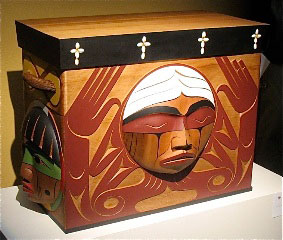
<p>The TRC have set up events to specifically target survivors and help their healing process. In June 2010, the TRC gathered with survivors in Winnipeg to give them the chance to talk about their experiences and traumas.  A Bentwood box with all the symbols of the Native people was erected to symbolize all of their pain (Narine 8). Back in July 2004, the Aboriginal Healing Foundation along with the TRC hosted workshops so that survivors could start their healing process (Carter 24). The government as well has given cheques to survivors as compensation of their distress by attending the schools.</p>
<p>In 2007, the Indian Residential School Settlement Agreement came into effect, providing "Common Experience Payments" to former students at the rate of $10,000 for the first school year plus $3,000 for each additional year ("Indian Residential Schools"). In addition, survivors who suffered "sexual or serious physical abuses" are eligible to apply for additional funds through the Independent Assessment Process (Henderson &amp; Wakeham 11).</p>
<p> Some may perceive this as easy money to the survivors, but one survivor Paul Daniels said: "The compensation I'm waiting for plays a very minor part in (my healing). I wish we would be treated the same as anyone else" (Narine 8). <i>Indian Life Magazine</i> reported that one residential school survivor, William Woodford, donated his 50 000 dollar compensation cheque to Siloam Mission, a shelter that takes care of Canada's Aboriginal peoples (1).</p>
<p>Apart from the monetary allocation given from the government, a public apology from Prime Minister Steven Harper (which received mixed reactions from the victims), and annual healing workshop events held by the TRC, nothing else has been done to help provide complete closure for the residential school attendees. Without closure, the cycle of interfamilial abuse will continue.</p>
<p style="text-align: center;"></p>
<p style="text-align: center;">             <a href="http://www.montrealites.ca/justice/BentwoodBox.jpg"><img alt="BentwoodBox.jpg" src="http://www.montrealites.ca/justice/assets_c/2012/10/BentwoodBox-thumb-500x424-3240.jpg" class="mt-image-center" style="text-align: center; display: block; margin: 0 auto 20px;" height="354" width="417" /></a></p>
<p align="center"></p>
<p> </p>
<p align="center">Works Cited</p>
<p>Llewellyn, Jennifer J. University of Toronto Law Journal; Summer2002, Vol. 52 Issue 3, p253,     48p</p>
<p>Barton, Sylvia S. Thommasen, Harvey V. Tallio, Bill. Michalos, Alex C. Zhang, William. Social Indicators Research; Aug2005, Vol. 73 Issue 2, p295-312, 18p</p>
<p>Corntassel, Jeff. English Studies in Canada; Spring2009, Vol. 35 Issue 1, p137-159, 23p</p>
<p>Indian Life; Mar/Apr2009, Vol. 29 Issue 5, p3-3, 1/3p</p>
<p>Carter, Carl. Windspeaker; Aug2004, Vol. 22 Issue 5, p24-24, 1p</p>
<p>Narine, Shari. Windspeaker; Aug2010, Vol. 28 Issue 5, p8-8, 2/3p, 1 Black and White Photograph</p>
<p>Bombay, Amy. Matheson, Kimberly. Anisman, Hymie. Transcultural Psychiatry; Sep2011, Vol. 48 Issue 4, p367-391, 25p</p>
<p>Byfield, Ted &amp; Virginia. Alberta Report / Newsmagazine; 11/04/96, Vol. 23 Issue 47, p40, 2/3p, 1 Black and White Photograph</p>
<p>Henderson, Jennifer.  Wakeham, Pauline. English Studies in Canada; Spring2009, Vol. 35 Issue 1, p1-26, 26p</p>
<p>Narine, Shari. Windspeaker; Dec2011, Vol. 29 Issue 9, p8-8, 1/3p</p>
<p>Residential School Girl Photo: <a href="http://www.turtleisland.org/discussion/viewtopic.php?f=4&amp;t=3202">http://www.turtleisland.org/discussion/viewtopic.php?f=4&amp;t=3202</a></p>
<p>Thomas Moore Photo: <a href="http://bethblogever.blogspot.ca/2012/04/truth-reconcilation-listening-to.html">http://bethblogever.blogspot.ca/2012/04/truth-reconcilation-listening-to.html</a></p>
<p>TRC Photo: <a href="http://aptn.ca/pages/news/2011/11/22/ottawa-churches-playing-hardball-over-residential-school-historical-documents-trc-charges/">http://aptn.ca/pages/news/2011/11/22/ottawa-churches-playing-hardball-over-residential-school-historical-documents-trc-charges/</a></p>
<p>Bentwood Box Photo: <a href="http://www.trc.ca/websites/trcinstitution/index.php?p=42">http://www.trc.ca/websites/trcinstitution/index.php?p=42</a></p>]]>
    </content>
</entry>

<entry>
    <title>A Glimpse into the Black History of Montreal by Tara Husbands</title>
    <link rel="alternate" type="text/html" href="http://www.montrealites.ca/education/2012/10/a-glimpse-into-the-black-history-of-montreal.html" />
    <id>tag:www.montrealites.ca,2012:/education//41.2796</id>

    <published>2012-10-17T22:44:14Z</published>
    <updated>2017-10-06T04:06:50Z</updated>

    <summary>The positive development of any given society is borne by its members and the contributions which they are allowed to make continue to enhance its progression. This statement can be...</summary>
    <author>
        <name>Dave</name>
        
    </author>
    
    
    <content type="html" xml:lang="en-US" xml:base="http://www.montrealites.ca/education/">
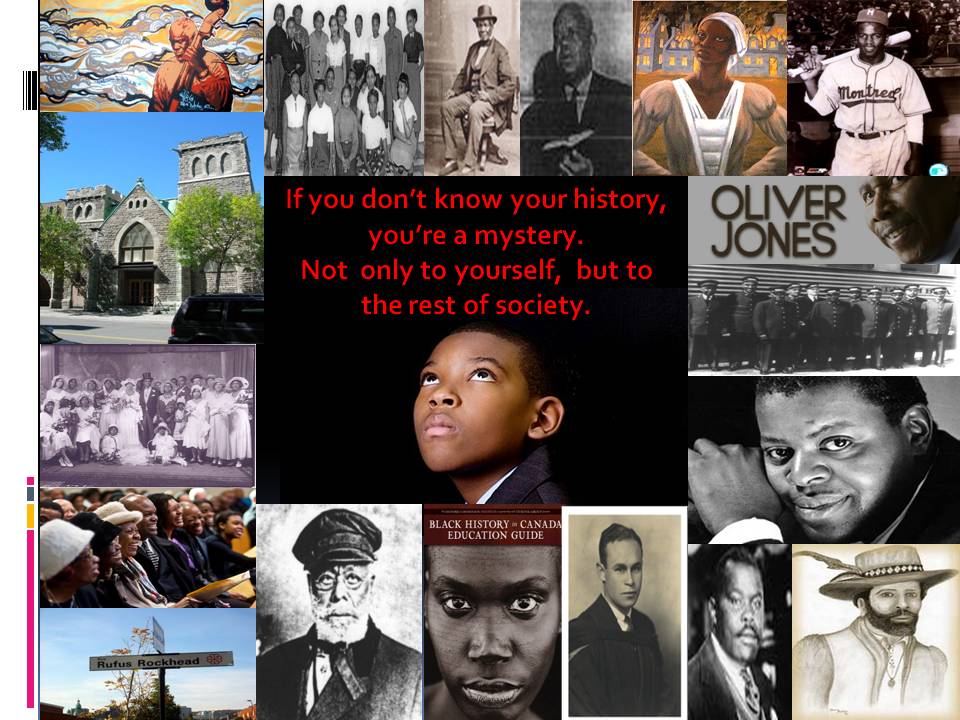
        <![CDATA[<p><a href="http://www.montrealites.ca/education/BANNER%20SPOT.jpg"><img alt="BANNER SPOT.jpg" src="http://www.montrealites.ca/education/assets_c/2012/11/BANNER%20SPOT-thumb-550x412-3298.jpg" class="mt-image-center" style="text-align: center; display: block; margin: 0 auto 20px;" height="412" width="550" /></a>The positive development of any given society is borne by its members and the contributions which they are allowed to make continue to enhance its progression.  This statement can be true, if all members are willing participants and are allowed to share in the enrichment of their respective society. The level and manner towards this participation must be defined and determined by each individual/group. For every person acquires his/her own experiences and perspectives of the world, which are unique unto themselves. Permitting the inclusion of these perceptions would not only add to the social flavor of that populace, it would also increase the likelihood of its members reaching their human potential. To stifle this reality would limit the richness that that society could potentially reach. The depth of this progression could be capitalized on if the society was comprised of an array of ethnic groups. For each cultural community possesses its own distinct language, art, literature, food, religion, traditions and history.</p>
<p>The same is true for the Black community of Montreal, whose recorded history starts four hundred years ago with <span style="color: #800000;">Mathieu DaCosta</span>. DaCosta, a free Black African, who was the interpreter to the Native peoples for Samuel de Champlain and Pierre Dugua de Monts in 1608 and according to early documents he may have been present in the Port Royal Habitation in the Annapolis Basin in 1605. [1]   Mathieu DaCosta was an experienced translator who had many interactions with the Europeans and spoke French, Portuguese and Dutch. It is assumed that his ability to communicate with the Aboriginal people stems from frequenting the Americas or learning "pidgin"a dialect used in the New World by the Basques of Spain, which the Natives understood.[2]</p>
<p></p>]]>
        <![CDATA[<p>Approximately 100 years after Mathieu DaCosta landed in Montreal, King Louis XIV legalized slavery in New France in 1709. [3]  According to historian, Marcel Trudeau, Montreal was home to 2077 slaves during its early formation. [4] One of the most notable slaves in Canadian history is <span style="color: #800000;">Marie-Joseph Angélique</span>.  Marie-Joseph was a black slave born of Portuguese descent who was owned by Therese de Couagne and her husband, Francois Poulin de Francheville. [5] There are different reports about the reasons behind her intended escape from her master. One report states that she feared being sold by her master and the second report states that she and her White lover, Charles Thibault, intended to flee the city to be together. In any event, Angélique is recorded as having set fire to Couagne's home to cover her impending departure in the evening of April, 1734. As a result the fire destroyed a hospital and 45 homes on Saint-Paul Street. [6]  Marie-Joseph was caught, imprisoned, tortured until she confessed to the crime and was found guilty in June of the same year. Her sentence was the death penalty, which took place after she had been paraded around town and her hand was amputated. After her hanging, her body was burned and her ashes thrown to the wind. [7]</p>
<p><img style="display: block; margin-left: auto; margin-right: auto;" class="mt-image-none" alt="Marie Joseph gif" src="http://www.beatnik.ca/nine/Marie%20Joseph%20gif" height="440" width="403" /></p>
<p><br /><span style="color: #800000;">JANUARY 1792 - THE BLACK LOYALIST EXODUS</span>: Due to economic hardships and widespread discrimination 1200 Blacks leave Nova Scotia and sail across the Atlantic Ocean to settle in Sierra Leone. [8]</p>
<p><span style="color: #800000;">JULY 1796 - THE MAROONS LAND IN HALIFAX</span>:  Six hundred Maroon immigrants arrive in Nova Scotia from the community of escaped slaves from Jamaica. They had preserved their freedom and countered many attempts to be re-enslaved. [9]</p>
<p>Canada was the final destination for many fugitive slaves who either escaped with Harriet Tubman on the Underground Railroad or alone.  Between 1815 and 1860 thousands of African-Americans arrived in Upper and Lower Canada seeking refuge. [10] Not all Blacks arrived in Canada as slaves during this period in time. For example, <span style="color: #800000;">George Bonga</span>, son to an African-American slave and an Ojibwe mother was a free Black man. He attended school in Montreal for an undisclosed time frame. Fluent in English, French and Ojibwe, Bonga was an excellent fur trader and interpreter in the Minnesota Territory. [11]</p>
<p></p>
<p>With the influx of fugitive slaves, immigrants from the West Indies and Blacks born in Canada, the cultural population of Canada was developing new hues. Despite the harsh winters and financial uncertainties, Blacks envisioned this country to hold more opportunities in terms of education, land ownership and a general sense of freedom. Even though racism was prevalent, it was an improvement to the living conditions experienced in the southern states of America.</p>
<p>     <img style="text-align: left; display: block; margin-left: auto; margin-right: auto;" class="mt-image-none" alt="Black Porters.jpg" src="http://www.beatnik.ca/nine/Black%20Porters.jpg" height="556" width="750" />     </p>
<p>In the 1880s the Black community of Montreal began to concretize and embarked on a pathway towards "do for self."The Canadian Pacific Railway established its headquarters and training center in Montreal. In order to maintain minimal labor costs, the red caps, sleeping car porters and cooks positions were reserved for Black males, while the women tended to work as domestic servants. These jobs became the steady employment for young men of color regardless of their educational achievements. African Americans were recruited from the United States to fill these positions as well. Hence the population increased in the downtown areas.  With a strong desire to look after their spiritual needs, develop a sense of unity within the community and counter the exclusionary reception received by the White congregations, a small group of porters decided to build their own church. The first organizational meeting was held July 1907 and with the sacrifices made by men and women, the congregation moved into the premises at 3007 Delisle, corner of Atwater in 1916. <span style="color: #800000;">The Union United Church</span> along with the Colored Women's Club of Montreal, a social club organized in 1900, started a clothing outlet for Black immigrants facing their first winter and provided food and shelter to the less fortunate. [13]</p>
<p><img style="display: block; margin-left: auto; margin-right: auto;" class="mt-image-none" alt="Front of Union United Church.jpg" src="http://www.beatnik.ca/nine/Front%20of%20Union%20United%20Church.jpg" height="632" width="592" /></p>
<p>Most of the organizations that were started in the early 1900s, supported the church's philosophy of assisting those who were in need of help, promoting the active participation of all members and maintaining a close-knit bond. One of the organizations that sprouted up during this time was a chapter of  the <span style="color: #800000;">Universal Negro Improvement  Association</span>, founded by <span style="color: #800000;">Marcus Garvey</span>, who had delivered an inspirational speech to the community. They were motivated by his message that the Black man should recognize his capabilities and talents and not to shy away from demanding his rights.  This group also laid strong emphasis on the youth in order to provide them with self-confidence, a sense of belonging, an understanding of their history and social activities that would help them as they matured.[14]</p>
<p><img style="display: block; margin-left: auto; margin-right: auto;" class="mt-image-none" alt="UNIA.gif" src="http://www.beatnik.ca/nine/UNIA.gif" height="349" width="603" /></p>
<p>After 1918, the West Indian population in Montreal increased hoping that they would be able to find employment in the skilled labour field, in which they excelled. To their dismay, the only vacancies were on the railroads. Some remained in the city, while others migrated to America. With this, the membership at the church increased.  In 1925, <span style="color: #800000;">Reverend Charles H. Este</span> became the church's minister and the community's leader as they fought against the "Color Line" within employment, poor or discriminatory housing conditions and social issues.  Reverend Este, as he was affectionately known, is also credited with being the co-founder of the Negro Community Center. The center initially started in the church basement  (currently located on Coursol street), with the objective of increasing community awareness, removing barriers to unlawful hiring practices and facing any injustices that were inflicted upon the community members. The primary activities were directed towards the  youth and included a gym and music sessions. During the depression, the church maintained its role as the backbone of the community and continued to provide for the needs of the people. Jobs were scarce as many were laid off from the railroads and Reverend Este ensured that the city provided sustenance to the forgotten community.[15]</p>
<p>One of the other social activities that appeared in the early 1930s, was <span style="color: #800000;">Rufus Rockhead</span>'s Paradise, a jazz club that opened on the corner of St-Antoine and Mountain. Born in Jamaica, Rockhead obtained a liquor license in his own fashion and his establishment gained the reputation for being one of the hottest spots in Montreal. His night club hosted the top jazz musicians from New York such as <span style="color: #800000;">Eartha Kitt, Dizzy Gillepsie, Sarah Vaughn,</span> <span style="color: #800000;">Billie Holiday, Redd Foxx and Sammy Davis, Jr</span>. to name a few and others, who would stop by to just to chat with the owner like <span style="color: #800000;">Pearl Bailey and Louis Armstrong</span>. [16]</p>
<p><img style="display: block; margin-left: auto; margin-right: auto;" class="mt-image-none" alt="Rockheads.jpg" src="http://www.beatnik.ca/nine/Rockheads.jpg" height="360" width="558" /></p>
<p>Montreal is also home to some local musicians who have gained international acclaim with their extraordinary agility, these words are related to none other than <span style="color: #800000;">Oliver Jones</span><img style="display: block; margin-left: auto; margin-right: auto;" class="mt-image-none" alt="oliver-jones.jpg" src="http://www.beatnik.ca/nine/oliver-jones.jpg" height="265" width="666" /></p>
<p>and the late, great <span style="color: #800000;">Oscar Peterson</span></p>
<p><span> <img style="display: block; margin-left: auto; margin-right: auto;" class="mt-image-none" alt="oscar_peterson_by_aosfish-d36f40g.png" src="http://www.beatnik.ca/nine/oscar_peterson_by_aosfish-d36f40g.png" height="460" width="715" /></span></p>
<p>In addition, the Black community also cherishes the memory of <span style="color: #800000;">Dr. Charles Drew</span>, an American clinician who was trained at McGill University and did his internships at Royal Victoria Hospital and the Montreal General Hospital.  While studying at McGill he developed an interest in blood plasma and technology.  He played a major role in the "collection of blood for the American armed forces."[17]</p>
<p style="text-align: center;"><img class="mt-image-none" alt="Dr. Charles Drew.png" src="http://www.beatnik.ca/nine/Dr.%20Charles%20Drew.png" height="471" width="363" /></p>
<p><span style="color: #800000;">Jackie Robinson</span> also deserves mention as one who brought international recognition to the Black community in Montreal when he played for the Montreal Royals in 1946 and for his role in breaking the color barrier in professional baseball.</p>
<p style="text-align: center;"><img class="mt-image-none" alt="Jackie Robinson.jpg" src="http://www.beatnik.ca/nine/Jackie%20Robinson.jpg" height="689" width="499" /></p>
<p>Blacks continue to make contributions to the society at large, but those contributions are coming from a much more diverse Black population.</p>
<p><strong><span style="color: #800000;">CURRENT SITUATION:  </span></strong><span style="color: #000000;">The wave of Black immigrants continues to flow into Canada, but as of the 1960s, with improved economic and social conditions many people of color have moved from the downtown core of Little Burgundy to other sections of town, mainly Cote-Des-Neiges, N.D.G, Verdun, LaSalle and the West Island. In addition, the presence of the Haitian migrants arrived around the same time and they established themselves away from the English-speaking Blacks to establish a community in Montreal-North.  By 1986 their numbers reached 38,000 from 17,000 in 1977. Although they cherished higher education, still 25% of Haitian immigrants were unemployed. Their median income was half that of the average Quebecois. This resulted in limited housing opportunities and they thus settled in Central, North and North-east sections of Montreal.</span></p>
<p>By the 1990s, 23.8% of Africans who migrated to Canada settled in Quebec, but in cities off the island of Montreal like Quebec City, Trois-Rivières and Gatineau. Africans are also highly educated, more than 80% had completed their university studies and 64% stated they were unemployed between one to five years. These statements came from the English-speaking Africans who were living in Montreal. Despite their geographical background, all Blacks have had and are still struggling with inadequate living conditions, youth unemployment, social acceptance and discrimination within the society.[18]</p>
<p><strong><span style="color: #800000;">IMPLICATIONS FOR THE FUTURE:</span></strong></p>
<p>As history dictates, the presence of Blacks in Montreal has been accompanied by a strong work ethic, a desire to be a successful and contributing members of society and one which denounces the media stereotypes. Considering that the social improvements have not altered significantly since the mid-1960s, there is a potential for increased poverty and marginalization. With the given economic fluctuations in today's world, the Black community will have to investigate alternative means to gaining lawful employment. Which may require returning to school to further one's skills or being on the forefront of the latest technologies. The community may have to modify their fields of study to meet the diverse needs of the future and step outside of the normal course of educational pursuits.</p>
<p>In addition, community leaders may have to work with government agencies to develop school curriculums and before and after school programs to counter the potential issues related to poverty and youth unemployment. In conjunction with school programs, certain legislation may have to be enacted to increase access to blue and white collar jobs. Otherwise, the potential exists for youth-related crime levels to reach irreversible percentages.  Which may result in escalating tensions between the police and the Black community.</p>
<p>As has been demonstrated their is a relunctance to engage the Black population in meaningful employment, which may be related to prejudiced or racist attitudes. These practices will only be eliminated if there is meaningful dialogue and cultural exchange between all members of society. There needs to be a concerted effort on the part of the educational institutions to incorporate inclusive historical readings and resources within the instructional materials. This may take a few generations to implement, but it will be worth the wait.</p>
<p><strong><span style="color: #800000;">BIBLIOGRAPHY:</span></strong></p>
<p>[1] - The Canadian Library Association. <i>The Mathieu DaCosta Challenge - Unity in Diversity. </i>Historicas Educators Guide. &lt;<a href="http://www.gnb.ca/0131/pdf/h/hw/MDCChallengeEducatorsGuide.pdf">http://www.gnb.ca/0131/pdf/h/hw/MDCChallengeEducatorsGuide.pdf</a>&gt;</p>
<p>[2] - Historica Dominican Institute - Black History Canada &lt;<a href="http://blackhistorycanada.ca/events.php?id=21">http://blackhistorycanada.ca/events.php?id=21</a>&gt;</p>
<p>[3] - ibid</p>
<p>[4] - Montreal Chronology. &lt; <a href="http://ericsquire.com/docs/mtlchronology.htm">http://ericsquire.com/docs/mtlchronology.htm</a>&gt;</p>
<p>[5] - <a href="http://www.findagrave.com/cgi-bin/fg.cgi?page=gr&amp;GRid=16544542">http://www.findagrave.com/cgi-bin/fg.cgi?page=gr&amp;GRid=16544542</a></p>
<p>[6] - Great Unsolved Mysteries in Canadian History:  <i>Torture and Truth: Angélique and the burning of Montréal. </i>&lt;<a href="http://www.canadianmysteries.ca/sites/angelique/accueil/indexen.html">http://www.canadianmysteries.ca/sites/angelique/accueil/indexen.html</a>&gt;</p>
<p>[7] - <a href="http://www.findagrave.com/cgi-bin/fg.cgi?page=gr&amp;GRid=16544542">http://www.findagrave.com/cgi-bin/fg.cgi?page=gr&amp;GRid=16544542</a></p>
<p>[8] - Historica Dominican Institute - Black History Canada &lt;<a href="http://blackhistorycanada.ca/events.php?id=21">http://blackhistorycanada.ca/events.php?id=21</a>&gt;</p>
<p>[9] - ibid.</p>
<p>[10] - ibid.</p>
<p>[11]- Minnesota Conservation Volunteer, <i>Who was George Bonga?</i> November / December 2010 edition. &lt;<a href="http://files.dnr.state.mn.us/publications/volunteer/young_naturalists/george_bonga/george_bonga.pdf">http://files.dnr.state.mn.us/publications/volunteer/young_naturalists/george_bonga/george_bonga.pdf</a>&gt;</p>
<p>[12]- Some Missing Pages: The Black Community in the History of Quebec and Canada &lt; <a href="http://www.learnquebec.ca/en/content/curriculum/social_sciences/features/missingpages/">http://www.learnquebec.ca/en/content/curriculum/social_sciences/features/missingpages/</a>&gt;</p>
<p>[13] - David C. Este. "The Black Church as a Social Welfare Institution: Union United Church and the Development of Montreal's Black Community, 1907-1940<b>." </b><i>Journal of Black Studies</i> , Vol. 35, No. 1 (Sep., 2004), pp. 3-22. Published by: <a href="http://0-www.jstor.org.mercury.concordia.ca/action/showPublisher?publisherCode=sage">Sage Publications, Inc.</a> &lt;<a href="http://0-www.jstor.org.mercury.concordia.ca/stable/4129288">http://0-www.jstor.org.mercury.concordia.ca/stable/4129288</a>&gt;</p>
<p>[14] - Ibid.</p>
<p>[15] - Ibid</p>
<p>[16]- Some Missing Pages: The Black Community in the History of Quebec and Canada &lt; <a href="http://www.learnquebec.ca/en/content/curriculum/social_sciences/features/missingpages/">http://www.learnquebec.ca/en/content/curriculum/social_sciences/features/missingpages/</a>&gt;</p>
<p>[17] - Ibid.</p>
<p>[18]- James L. Torczyner. D.S.W and Sharon Springer, M.A. The Evolution of the Black Community of Montreal: Change and Challenge. 2001 &lt; <a href="http://www.mcgill.ca/mchrat/sites/mcgill.ca.mchrat/files/BlackDemographicStudy2001.PDF">http://www.mcgill.ca/mchrat/sites/mcgill.ca.mchrat/files/BlackDemographicStudy2001.PDF</a></p>
<p><b style="color: #800000;">PICTURES:</b></p>
<p>1) Mathieu DaCosta, Photo credit: <a href="http://blackhistorycanada.ca/events.php?id=21">http://blackhistorycanada.ca/events.php?id=21</a></p>
<p>2) Marie Joseph Angélique, Photo credit: <a href="http://www.findagrave.com/cgi-bin/fg.cgi?page=gr&amp;GRid=16544542">http://www.findagrave.com/cgi-bin/fg.cgi?page=gr&amp;GRid=16544542</a></p>
<p>3) Photo credit: The Black Studies Centre, Montreal, Quebec</p>
<p>4) Black Porters, Photo credit: <a href="http://outerregion.hackinghistory.ca/the-walk/the-railroad-porter/">http://outerregion.hackinghistory.ca/the-walk/the-railroad-porter/</a></p>
<p>5) Union United Church, Photo Credit: <a href="http://www.imtl.org/montreal/image.php?id=463">http://www.imtl.org/montreal/image.php?id=463</a></p>
<p>6)  UNIA Members. Photo Credit: Some Missing Pages: The Black Community in the History of Quebec and Canada</p>
<p>7) Rockhead's in the News, Photo credit: <a href="http://coolopolis.blogspot.ca/2009/03/name-that-businessman.html">http://coolopolis.blogspot.ca/2009/03/name-that-businessman.html</a></p>
<p>8) Oliver Jones, Photo credit: <a href="http://www.514-billets.com/concert/oliver+jones">http://www.514-billets.com/concert/oliver+jones</a></p>
<table cellpadding="0" cellspacing="0" border="0">
<tbody>
<tr>
<td valign="top">
<p>9) Oscar Peter - Photo Credit:</p>
</td>
<td valign="top" width="320">
<p>©2011-2012</p>
</td>
</tr>
</tbody>
</table>
<p>, <a href="http://aosfish.deviantart.com/art/Oscar-Peterson-192181264">http://aosfish.deviantart.com/art/Oscar-Peterson-192181264</a></p>
<p>10) Dr. Charles Drew, Photo Credit: <a href="http://profiles.nlm.nih.gov/ps/retrieve/Narrative/BG/p-nid/337">http://profiles.nlm.nih.gov/ps/retrieve/Narrative/BG/p-nid/337</a></p>
<p>11) Jackie Robinson, Photo Credit: <a href="http://studenttrip.wordpress.com/2011/12/20/montreal-did-you-know-2/">http://studenttrip.wordpress.com/2011/12/20/montreal-did-you-know-2/</a></p>
<p>    </p>
<p>      <span style="color: #800000;">    </span></p>
<div align="center"> </div>]]>
    </content>
</entry>

<entry>
    <title>Quebec&apos;s Education Reform</title>
    <link rel="alternate" type="text/html" href="http://www.montrealites.ca/education/2012/03/quebecs-education-reform.html" />
    <id>tag:www.montrealites.ca,2012:/education//41.2424</id>

    <published>2012-03-27T00:02:07Z</published>
    <updated>2017-09-26T03:46:03Z</updated>

    <summary>In the year 2000, the Ministry of Education rang in the new millennium with a whole new way of educating Quebec children. In the mid-1990s, Pauline Marois, then the Education...</summary>
    <author>
        <name>Katherine Jones</name>
        
    </author>
    
    <category term="cegep" label="CEGEP" scheme="http://www.sixapart.com/ns/types#tag" />
    <category term="education" label="Education" scheme="http://www.sixapart.com/ns/types#tag" />
    <category term="educationreform" label="Education reform" scheme="http://www.sixapart.com/ns/types#tag" />
    <category term="etoncollege" label="Eton College" scheme="http://www.sixapart.com/ns/types#tag" />
    <category term="google" label="Google" scheme="http://www.sixapart.com/ns/types#tag" />
    <category term="highschool" label="High school" scheme="http://www.sixapart.com/ns/types#tag" />
    <category term="ministryofeducation" label="Ministry of Education" scheme="http://www.sixapart.com/ns/types#tag" />
    <category term="paulinemarois" label="Pauline Marois" scheme="http://www.sixapart.com/ns/types#tag" />
    <category term="quebec" label="Quebec" scheme="http://www.sixapart.com/ns/types#tag" />
    <category term="student" label="Student" scheme="http://www.sixapart.com/ns/types#tag" />
    <category term="teacher" label="Teacher" scheme="http://www.sixapart.com/ns/types#tag" />
    <category term="tonylittle" label="Tony Little" scheme="http://www.sixapart.com/ns/types#tag" />
    
    <content type="html" xml:lang="en-US" xml:base="http://www.montrealites.ca/education/">
        <![CDATA[<p><img alt="group of 4.jpg" src="http://www.montrealites.ca/education/group%20of%204.jpg" class="mt-image-center" style="text-align: center; display: block; margin: 0pt auto 20px;" height="334" width="365" /><br />In the year 2000, the Ministry of Education rang in the new millennium with a whole new way of educating Quebec children. In the mid-1990s, Pauline Marois, then the Education Minister, had noticed a high dropout rate and decided to see what could be done to improve that, so a series of studies were undertaken, and the Quebec Education Program, colloquially known as "the Reform," was born (Guimont). The Reform was implemented gradually, starting in preschool and elementary in 2000, Grades 7-8 in 2005 and Grades 9-11 between 2006 and 2009. Junior high school teachers began seeing children who had been educated exclusively under the Reform in 2005, senior high school teachers in 2007. The first cohort of students who were educated entirely under the Reform are now in their 2nd year of CEGEP (Branswell).  </p>

<div style="margin-top: 10px; height: 15px;" class="zemanta-pixie"><a class="zemanta-pixie-a" href="http://www.zemanta.com/" title="Enhanced by Zemanta"><img style="border: medium none; float: right;" class="zemanta-pixie-img" src="http://img.zemanta.com/zemified_e.png?x-id=c609c2fa-69a0-4dff-8693-339799c6db4b" alt="Enhanced by Zemanta" /></a></div>]]>
        <![CDATA[<p>Longitudinal studies are being done to see how Reform students are faring, but they say it is too early yet to tell (Branswell). However, <em>somebody </em>must have <em>some </em>idea how the Reform is working out, and the people who are in the best position to know are teachers of the oldest students, so I decided to interview a number of veteran senior high school teachers to see what they had to say about the Reform. There are many aspects of the Reform that they talked about, but in the interest of brevity I will only be able to focus on questions concerning whether Reform students are indeed better prepared for the future, which was one of the main intentions of the Reform. </p>


<p>One idea of the Reform is to have school mimic the way things are done in the working world so that students are better prepared for the workplace. In business, people have to consult together on projects, so a central concept of the Reform is groupwork. For example, in high school, a problem, issue or task is presented to the students, and they need to confer together in small groups to try to figure out how to do it.</p><p>Tony LIttle, headmaster at Eton College<a class="zem_slink" href="http://maps.google.com/maps?ll=51.49187,-0.60792&amp;spn=0.01,0.01&amp;q=51.49187,-0.60792%20%28Eton%20College%29&amp;t=h" title="Eton College" rel="geolocation"></a>, said, "The different sexes require different teaching methods to bring out students' potential... Boys...require a more physical and active style of learning, [but the] verbal element of [Britain's high school curriculums] favour[s] girls over boys," thus "Boys are being failed by the British Educational System" (Roberts). The kinds of activities that Little is talking about are just the type of groupwork used in the Quebec Education Reform - and obviously it is not just boys who benefit from that kind of work. The idea is that students will become adept at figuring things out on their own, and they will learn more and be more engaged in the learning by doing so.</p>

<p>However, many of the teachers I spoke to felt that there has been too much emphasis on that type of learning in the Reform. Adolescents naturally love to chitchat with each other, and they need no encouragement in that, and having grown up in an academic environment that emphasizes groupwork, by the latter years of high school their expectation of education is that they are going to be able to sit around and chitchat about personal matters much of the time, as long as they get a little work in at some point. The lazy students can just let the more studious ones do the work while they share in the credit for it. (A teacher can't be checking every group at the same time!) In the last two years, even some of the exams have been group exams, sort of: the students do part of the exam and then pass it to the others in their group to read and give them advice on, and then they go and amend it.</p>

<p>With the students' expectation that they are going to be doing groupwork most of the time, when teachers need to explain certain things to the entire class it is difficult for them to keep the students focused. The teachers need to be well prepared in advance with concise, interesting explanations in order to keep the students' attention, because as several of the teachers pointed out, students' attention spans seem to have decreased dramatically.</p>

<p>One question I had for the teachers I interviewed is whether the Reform is responsible for that or whether this is simply the way it is in society now. As one teacher pointed out, kids these days are used to instant information; if they want to know something, they just Google it or look it up on Wikipedia, and they don't have much patience to wait for teachers to take a long time to explain things, and that is largely a result of the society in which we live, not necessarily the Reform. However, the general consensus among the teachers I spoke to is that the Reform doesn't help to increase students' powers of concentration.</p>

<p>One teacher said group activities work better with advanced students, because many of the regular students don't take it seriously or make much of an effort. However, advanced students will thrive in whatever learning environment they're in, and the Reform wasn't created to reach them but rather to reach the weaker students. Also, some schools have a high percentage of weaker students, so those schools in particular having difficulties with the Reform. (The teachers I interviewed were from schools somewhere in the middle.)</p>

<p>Part of the reason some students don't take the work seriously is because they know they will probably pass anyway. Students are generally not held back anymore, and also the evaluation methods have changed. The Reform focuses on "competencies", which means different types of work - for example, "reading texts" and "writing texts" - so students don't just receive one mark per subject but rather two, one for each competency. The minimum mark permitted for each competency is 35%, even if the student did no work at all in that competency, so if a student got 85% for one competency and 0% for the other, the 0% would be bumped up to 35%, so the student would pass with a 60%, whereas without the separate competencies the student would have gotten 43%. The dropout rate in Quebec has indeed decreased, but one could ask if all of those graduates really deserved to graduate.</p>

<p>One positive aspect of the hands-on activities that students do - and one of the major focuses of the Reform - is that the problems are more real-life and practical, whereas education in the past had much more emphasis on the theoretical. However, the students are limited in how difficult the problems are that they can solve, because, as all of the teachers I spoke to mentioned, students are weaker in basic skills than students in the past, both in math and in language (reading comprehension and writing) ("out the window" is how one teacher put it, and another asked, "How far back do I need to go [to make the work simple enough for them]?"), and the reason they are weak in those basic skills is because too much emphasis has been put on the groupwork and not enough on those basic skills. The groupwork is based on the principle of learning through self-discovery, but as one teacher pointed out, they are still children, so there is not necessarily a need for them to try to figure everything out themselves every time; "Why reinvent the wheel?" That same teacher had a suggestion as to a better way that the self-discovery could be accomplished: It shouldn't be all student-led; instead, teachers should be facilitators and should stage the lessons and poke and manipulate the students to go in the direction they want them to go rather than leaving them almost entirely on their own. Besides that, there are many facts which cannot be learned through self-discovery but simply need to be taught, and this is one area where the Reform has fallen short, according to the teachers I spoke to. By the end of high school, the students are so used to the culture of self-learning and groupwork that it is difficult for teachers to get them to stop chitchatting long enough to get many basic facts into them. One teacher said that while the students were in fact better prepared for the working world in the area of groupwork, that's not all that goes on the in the workplace; they also need to have the individual skills, but the Reform has "lost sight of meeting basic standards and skills."</p>

<p>One teacher stressed that the biggest thing the Reform students have lost is a&nbsp; work ethic. They (and often their parents too) have a sense of entitlement, that if they studied for 20 minutes, they should pass, and if they don't, it's the teacher's fault. This is of course not entirely because of the Reform, but the Reform's policies have certainly contributed to students' sense that they can get what they want without putting much (if any) work into it. The same teacher said that it used to be that there would be 3-4 students in a class who had a lot of difficulty with the material, but now there can be a third of the class like that, not because they are any less intelligent but because they're lacking the basic skills and the work ethic. So that puts teachers in a difficult position: do they give the students what they really deserve for the work they do, in which case they will take a lot of heat from the parents and from the education system, or do they lower their standards? </p>

<p>One teacher said that teachers in general tend to be "hostile to change"; they like the status quo, so that could be one reason that many teachers don't like the Reform. However, any kind of curricular change is going to result in a lot of extra work for the teachers to adapt to, and most teachers work incredibly hard already. Also, there do seem to be genuine problems with many aspects of the Reform. However, some teachers feel there are more positive than negative aspects, and one teacher pointed out that we certainly wouldn't want to go back to caning to get the students to learn! (Fun Fact of the Day: Eton's last caning was in 1984!) </p>

<p>I myself am on my way to becoming a secondary school teacher, and having worked in the system already, I am well aware of the difficulties, and I know it is not an easy field to work in, perhaps especially now. Nevertheless, I intend just to do the best I can and have the maximum impact that I can have on any students who happen to cross my path, no matter what methods I am required to work with.</p>

<p>Photo credit: <a href="http://flic.kr/p/sf27">Flickr</a></p>

<p>Bibliography</p>

<p>Bastien, Richard. "Addressing a Few Misconceptions about the Québec Education Reform." Schoolscapes 3.1. Ministère de l'Éducation autumn 2000. Page 1. Web. 3 November 2011.</p>

<p>Branswell, Brenda. "Reform Cohort Graduates to CEGEP." The Montreal Gazette 24 August 2010. Web. 3 November 2011.</p>

<p>Dawson, Mike. "Report card on educational reform." ACDSA Citizens for Democratic &amp; Autonomous Schools. (originally printed in The Montreal Gazette 17 March 2010.) Web. 3 November 2011.</p>

<p>Guimont, Gerard. "Highlights of the Educational Reform and Pedagogical Renewal in Quebec." Pedagogique Collégiale 22.3 spring 2009. Web. 3 November 2011.</p>

<p>"Québec Education Program: Secondary School Education, Cycle 2." Éducation, Loisir et Sport Québec. Web. 3 November 2011.</p>

<p>Roberts, Laura. "Boys failed by education system says Eton headmaster." The Telegraph 19 January 2010. Web. 3 January 2012.</p>

<p>"The Education Reform: The Changes Underway." Ministère de l'Éducation, du Loisir et du Sport October 2005. Web. 3 November 2011.</p>

<p>Waddington, David. I. "Fighting to defend progressive school reform in Québec." social issues. John Dewey Society's Commission on Social Issues, 15 May 2011. Web. 3 November 2011.<br />
</p>

<div style="margin-top: 10px; height: 15px;" class="zemanta-pixie"><a class="zemanta-pixie-a" href="http://www.zemanta.com/" title="Enhanced by Zemanta"><img style="border: medium none; float: right;" class="zemanta-pixie-img" src="http://img.zemanta.com/zemified_e.png?x-id=c609c2fa-69a0-4dff-8693-339799c6db4b" alt="Enhanced by Zemanta" /></a></div>]]>
    </content>
</entry>

<entry>
    <title>Inclusive Education: Including Special Needs Students in Regular Classrooms</title>
    <link rel="alternate" type="text/html" href="http://www.montrealites.ca/education/2012/03/inclusive-education-including-special-needs-students-in-regular-classrooms.html" />
    <id>tag:www.montrealites.ca,2012:/education//41.2386</id>

    <published>2012-03-03T21:40:02Z</published>
    <updated>2017-10-31T06:48:52Z</updated>

    <summary> Last year I had the privilege of hearing a talk delivered by a young man at the secondary school where I teach. Shaun Perrier has Asperger Syndrome, and he...</summary>
    <author>
        <name>Katherine Jones</name>
        
    </author>
    
    
    <content type="html" xml:lang="en-US" xml:base="http://www.montrealites.ca/education/">
        <![CDATA[<p><img alt="disabled girl.jpg" src="http://www.montrealites.ca/education/disabled%20girl.jpg" width="500" height="375" class="mt-image-center" style="text-align: center; display: block; margin: 0 auto 20px;" /><br /> Last year I had the privilege of hearing a talk delivered by a young man at the secondary school where I teach. <a href="http://montreal.ctv.ca/servlet/an/local/CTVNews/20110424/mtl_asbergers_110424/20110424/?hub=MontrealHome">Shaun Perrier</a> has <a href="http://www.ninds.nih.gov/disorders/asperger/detail_asperger.htm#179663080">Asperger Syndrome</a>, and he gave the talk - on his own initiative - to his peers at the school, to let them know what it is like to have Asperger's. The syndrome is an autism spectrum disorder characterized by difficulties with social interaction due to an inability to catch nuances in others' words and body language, and a similar lack of nuance of their own - a lack of facial expression, and speaking in a monotonous or overly formal manner. It is also characterized by a need to have a highly controlled environment, with a fixation on repetitive routines or rituals, as well as clumsiness. I was teary-eyed listening to the struggles that Shaun had gone through in his life and deeply impressed by how much he had overcome, and my heart went out to him and others like him, who deserve every opportunity to succeed that society can give them.</p>]]>
        <![CDATA[<p>Shaun is now in CEGEP, but in high school, he was fully integrated in regular classrooms. He had an attendant who would help him get himself set up with the work and then either stay or go on to other classes to help other students. Attendants have no particular training; they are just there to help the students to whom they are assigned to stay on task, and also to help them with behaviour issues and social interactions. Academically Shaun had no problems; he was both intelligent and studious. His issues were more in relation to getting his routines set up and occasionally in his interactions with the other students.</p>

<p>Shaun was part of what is known as inclusive education, in which students with special educational needs are included in regular classrooms if at all feasible. The recent trend in Canada has been to practice inclusion to the greatest extent possible, and while education is a provincial jurisdiction, all the provinces have the same commitment to inclusive education (O'Donnell 130). The push for inclusive education began in the 1980s, and "in Canada, this push for reform was supported by the equality provisions of the Charter of Rights and Freedoms, which came into force in 1985. Since then the push for...inclusion has become an on-going element of educational politics in Canada" (<a href="http://www.inclusiveeducation.ca/documents/2MakingCanadianSchoolsInclusiveGPorter.pdf">Porter</a>). </p>

<p>However, inclusive education is a controversial issue: some people believe inclusion is the best approach to education, both for special needs students and for society as a whole, while others believe that all students are best served when special needs students have separate classrooms. Nevertheless, inclusion is more and more the way that education is being carried out in Canada, and anything that concerns elementary and secondary education concerns everyone in society, because "children are our future," as the late great <a href="http://www.youtube.com/watch?v=Dc3xY4UTeDU&feature=related">Whitney Houston</a> reminded us.</p>

<p><u>Types and Rate of Disabilities in Canada</u></p>

<p>In a recent North American study, schools reported that 10-12% of students have some kind of disability (Jordan). The <a href="http://www.mels.gouv.qc.ca/sections/publications/publications/EPEPS/Formation_jeunes/Adaptation_scolaire/PlanActionEHDAA_a.pdf">Quebec Ministry of Education</a> classifies special needs students in three categories: handicaps, social maladjustments and learning disabilities. (Shaun has social maladjustments but not handicaps or learning disabilities.) Listed below are the disabilities as classified by <a href="http://www.statcan.gc.ca/cgi-bin/imdb/p2SV.pl?Function=getSurvey&SDDS=3251&lang=en&db=imdb&adm=8&dis=2">Statistics Canada</a>, including the percentage of disabled students who have those particular conditions. (The percentages add up to more than 100% because some disabled students have more than one disability.)</p>

<p>65%	learning disabilities such as attention problems, hyperactivity and dyslexia<br />
32%  	psychological, emotional or behavioural conditions<br />
30%  	developmental disorders such as autism or Down syndrome</p>

<p>There are also sight, hearing, speech, mobility and dexterity conditions, as well as chronic conditions such as asthma, severe allergies, heart condition, cancer, epilepsy, cerebral palsy, etc. If the chronic conditions do not cause activity limitations, they are not considered disabilities when planning services for disabled students (<a href="http://www.statcan.gc.ca/cgi-bin/imdb/p2SV.pl?Function=getSurvey&SDDS=3251&lang=en&db=imdb&adm=8&dis=2">PALS</a>).</p>

<p><u>Levels of Inclusion</u></p>

<p>The following list comprises the different levels of inclusion for students with special needs. Only the first two qualify as inclusive education: </p>

<p>1.	Full inclusion with in-class support - The student is with the regular class all the time, and the in-class support is provided by the regular classroom teacher or teaching assistants, and sometimes by specially trained professionals.<br />
2.	Partial inclusion with pull-out programs - The student is usually with the regular class, but they are sometimes taken out of class and given special support, either individually or in small groups<br />
3.	Self-contained classrooms comprised of students who all have special needs<br />
4.	Special day schools where the entire school is comprised of students with special needs<br />
5.	Residential schools where the students' needs are severe enough to require round-the-clock support<br />
6.	Hospitals or home care</p>

<p>In the case of the latter two points, inclusive education is not feasible. The debate concerning inclusion pertains to the first four points: should students with special needs be included in regular classrooms or in separate classrooms or schools, and if they are included in regular classrooms, should they be included all the time or just part of the time? (If students are violent, they are not considered to be acceptable candidates for inclusive education) (O'Donnell 132).</p>

<p><u>Individualized Education Plans</u></p>

<p>In Canada, whether special needs students are included in regular classrooms or not, all of them are given an Individualized Education Plan (IEP) created uniquely for them. The IEP is determined at the beginning of each school year by a team consisting of the parents, the child's teachers, the school psychologist and a special education consultant. The IEP includes </p>

<p>-	measurable goals for the year <br />
-	a specific plan for achieving those goals<br />
-	the support that the child is supposed to receive<br />
-	the degree (if any) of inclusion in the regular classroom</p>

<p>The IEP also states whether the curriculum will be modified for the student. If the student does the same work as the regular students but simply receives extra support in doing it, they will receive a regular high school diploma; if the work is modified, they will receive a different diploma (O'Donnell 132).</p>

<p><u>Inclusion in Quebec</u></p>

<p>Inclusive education is tied in with <a href="http://en.wikipedia.org/wiki/Progressive_education">progressive education</a>. Progressive education is used in <a href="http://www.mels.gouv.qc.ca/sections/programmeFormation/index_en.asp">Quebec's Education Reform</a>, which was created in 1997 and implemented beginning in 2001. Progressive education is an approach to education which focuses on group work, problem solving, hands-on learning, critical thinking and development of social skills. Quebec's Reform did not directly address the issue of special needs students; therefore, in 1999 the Ministry of Education published a <a href="http://en.wikipedia.org/wiki/Progressive_education">plan of action for special education</a>, which focused on the inclusion of special needs students in regular classrooms. In a progressive and inclusive school environment, "everyone is exposed to a 'rich set of activities,' and each student does what he or she can do, or what he or she wishes to do and learns whatever comes from that experience" ("<a href="http://en.wikipedia.org/wiki/Inclusion_%28education%29">Inclusion</a>"). </p>

<p>At the elementary level in Quebec, inclusive education is implemented as much as it is deemed possible. At the secondary level, regular students and most special needs students are streamed into regular and advanced levels in the three core subjects, English, French and math. (For the non-core subjects, there is no streaming.) Shaun was able to go in advanced courses because his disability does not affect his cognitive functioning, and any issues related to social interactions were minor. However, most special needs students in inclusive environments go into the regular stream, because even if they have high cognitive functioning, if they have attention or behavioural problems, those will affect their learning and will already have affected their academic level by the time they get to high school.</p>

<p>At some schools there are one or more other alternatives for special needs students: at the school where I teach there are two special classes for students with behaviour and attention problems who are doing either regular or modified work, depending on the student; two classes of work-oriented students who are doing modified work and have supervised work placements outside the school; and two classes with students who have extensive intellectual challenges. All of these classes have a very small number of students in them.</p>

<p><u>Advantages of Inclusive Education</u></p>

<p>Proponents of inclusive education see many benefits to the practice. The first major argument in favour of it is that if special needs students are not included in regular classrooms, that "reduces the disabled students' social importance," because "society accords disabled people less human dignity when they are less visible in general education classrooms" ("Inclusion").</p>

<p>The second major argument in favour of inclusive education is that everyone benefits when special needs students are included in regular classrooms. The disabled students themselves benefit: for example, one study showed that students with intellectual challenges learn more in inclusive classrooms than in segregated classrooms or schools, and their social skills improve as well. Also, schools feel like welcoming places for all students. In addition, proponents of inclusion assert that regular students develop "a heightened sensitivity to the challenges that others face, increased empathy and compassion, and improved leadership skills ("Inclusion").<br />
<u><br />
Disadvantages of Inclusive Education</u></p>

<p>Critics of inclusive education say that there is a downside to the practice, both for the special needs students and for regular students. Many educators, administrators and parents have reservations about it. Most of the concerns are not with inclusion in principle but in the way it is put into practice.</p>

<p>One issue is that many special needs students need individualized instruction, so often the regular teacher is teaching at the front of the class while the special needs educator is teaching special needs students at the back of the room, and that is not true inclusion, therefore the inclusion has not achieved its objective. </p>

<p>As well, some special needs students require highly controlled environments. Shaun was able to function acceptably in a regular classroom, but students who have attention problems or sensory processing disorders may find a regular classroom too chaotic to function sufficiently well, especially where progressive education methods are used. That can affect the students' academic progress and could also result in behaviour issues which could hinder the regular students as well ("Inclusion").</p>

<p>When implemented properly, inclusion should not cost less than when special needs students have their own classrooms, because the special education professionals are supposed to move into the regular classrooms along with the special needs students, and there are also supposed to be a sufficient number of attendants to assist them ("Inclusion"). However, the reality is that often that is not the case, and special needs students are frequently left in the regular class with no extra support. I have worked at several different schools, and they have all been seriously lacking special education professionals and attendants because there is simply no budget for it.</p>

<p>As a result, it is frequently left to the regular teacher to try to meet the needs of both the special needs students and the rest of the class. Unfortunately, when the teacher is spending time on the special needs students, that time is taken away from the class as a whole, which therefore hinders their learning, and if the teacher does not spend that time with the special needs students, those students will not be making the progress that they could be making and it could also lead to behaviour disruptions which have an impact on the entire class. (Even if an attendant or special education professional is in the classroom, there are still often behaviour issues, particularly since they usually have a number of students to take care of.) There is also a concern that teachers are not adequately trained how to deal with the problems that special needs students sometimes manifest, nor how to adapt their lessons to effectively integrate them. As well, the wide range of abilities in the class means that students on both ends of the scale are sometimes going to be left short: the higher ability students may not be challenged enough, and the work may be too difficult for special needs students ("<a href="http://www.sedl.org/change/issues/issues43.html">Pros and Cons</a>").</p>

<p>Advocates for inclusive education acknowledge those points but nevertheless maintain that "even if typical students are harmed academically by the full inclusion of certain special needs students,...[that] is always less important than the social harm caused by making people with disabilities less visible in society" ("Inclusion").</p>

<p>Some people, however, do not agree that special needs students should be exposed to regular students in this way, because not only do some of them fail to make the academic progress that they could be making, they can also be harmed socially and emotionally by the experience. Special needs students are sometimes embarrassed by their limitations and the adaptations that those limitations require. One student that I had would act out and make it seem as though he was just a troublemaker in order to hide the fact that he was behind academically because he had had cancer and did not want anyone to know about it (yet he was kept at grade level, ostensibly to protect his self-esteem). To compound the problem, I was not informed about it until a couple of months into the school year due to a communication error. (Everyone is stretched to the limit in the public school system.). As well, even if regular students are sensitized to special needs students, they could still be made fun of; therefore, some people believe that they should be protected from that in their own classrooms.</p>

<p><u>Conclusion</u></p>

<p>Society has come a long way since the days when special needs students were segregated in separate schools or simply fell through the cracks. <a href="http://www.cea-ace.ca/education-canada/article/web-exclusive-inclusive-education-lessons-quebec%E2%80%99s-english-sector">Julie Hobbs of Education Canada</a> draws a striking contrast between the former way of approaching special needs education and contemporary success stories of the beneficial effects of inclusion when it is done right. </p>

<p>The concerns that people have about inclusion are generally not philosophical but practical: many who are involved with special needs students feel that society is rushing too fast to follow the inclusion trend, because the long-term outcome of these kinds of educational decisions will not be seen clearly for many years. </p>

<p>As well, the decision to implement inclusive education may be based on presumed budgetary savings. "High rates of education are essential for countries to be able to achieve high levels of economic growth" ("<a href="http://en.wikipedia.org/wiki/Education">Education</a>"); however, when it comes to investing money in it, education is not usually society's primary concern.</p>

<p>In addition, many feel that not enough consideration is being given to whether inclusion is the best option for each individual student, and not enough effort is being made to ensure that adequate supports are in place to increase the chances of the success of the inclusion. When implemented prudently, inclusive education is probably a great idea for society - but the net should not be spread too wide, and it should be reinforced!</p>

<p><img alt="fish in net.jpg" src="http://www.montrealites.ca/education/fish%20in%20net.jpg" width="500" height="375" class="mt-image-center" style="text-align: center; display: block; margin: 0 auto 20px;" /></p>

<p>Photo credits: Flickr (<a href="http://flic.kr/p/4N1aK6">students</a>, <a href="http://flic.kr/p/62BM3C">fish net</a>)</p>

<p>Bibliography</p>

<p>"Adapting Our Schools to the Needs of All Students, Policy on Special Education." Ministère de l'Éducation, 1999. Web.</p>

<p>"Asperger Syndrome Fact Sheet." National Institute of Neurological Disorders and Stroke. National Institutes of Health, n.d. Web.</p>

<p>Branswell, Brenda. "Advocacy: 'School can be gruelling for someone like me' Teen Tells Peers." www.aspie-editorial.com. The Montreal Gazette 13 April 2011. Web. 21 Feb. 2012.</p>

<p>"Conditions for Greater Success." Éducation, Loisirs et Sports Québec.Web. 3 March 2012.</p>

<p>Hobbs, Julie. "Inclusive Education: Lessons from Quebec's English Sector." Education Canada 52.1. Web. 21 Feb. 2012.</p>

<p>Houston, Whitney (perf.). "The Greatest Love of All." Whitney Houston. Arista, 14 March 1986. Web. 21 Feb. 2012.</p>

<p>Inclusive Education Canada. Web. 15 Jan. 2012.</p>

<p>"Inclusion: The Pros and Cons." The Southwest Educational Development Laboratory (SEDL) 4.3. Web. 21 Feb. 2012.</p>

<p>Jordan, Anne. Introduction to Inclusive Education. Mississauga, ON: John Wiley & Sons Canada, 2007. Print.</p>

<p>O'Donnell, Angela M., et al. Educational Psychology: Reflection for Action, Canadian Edition. Mississauga, ON: John Wiley & Sons Canada, 2008. Print. </p>

<p>"Participation and Activity Levels Survey (PALS)." Statistics Canada: 3 Dec. 2007. Web. 21 Feb. 2012.</p>

<p>Porter, Gordon L. "Making Canadian Schools Inclusive: A Call to Action." Canadian Education Association: 48.2 (2008): 62-66. Web.</p>

<p>"Teen with Asperger's speaks about stigma, struggle." CTV Montreal: 24 April 2011. Web. 21 Feb. 2012.</p>

<p>Wikipedia contributors. "Education." Wikipedia, The Free Encyclopedia. Wikipedia, The Free Encyclopedia, 23 Feb. 2012. Web. 23 Feb. 2012. </p>

<p>Wikipedia contributors. "Inclusion (education)." Wikipedia, The Free Encyclopedia. Wikipedia, The Free Encyclopedia, 1 Feb. 2012. Web. 21 Feb. 2012.</p>

<p>Wikipedia contributors. "Progressive education." Wikipedia, The Free Encyclopedia. Wikipedia, The Free Encyclopedia, 7 Feb. 2012. Web. 21 Feb. 2012.<br />
</p>]]>
    </content>
</entry>

<entry>
    <title>Time for Take Off!</title>
    <link rel="alternate" type="text/html" href="http://www.montrealites.ca/education/2011/07/time-for-take-off.html" />
    <id>tag:www.montrealites.ca,2011:/education//41.1418</id>

    <published>2011-07-13T04:28:54Z</published>
    <updated>2012-02-09T14:03:03Z</updated>

    <summary> By Dunia Abbas Image source: Flickr.Graduation can mean so many things. It means happiness and sadness, freedom and restriction, utter fear and absolute excitement, all at the same time....</summary>
    <author>
        <name>Jeannette Novakovich</name>
        <uri>http://www.jnovakovich.com/</uri>
    </author>
    
    <category term="arizona" label="Arizona" scheme="http://www.sixapart.com/ns/types#tag" />
    <category term="canada" label="Canada" scheme="http://www.sixapart.com/ns/types#tag" />
    <category term="decisionmaking" label="Decision making" scheme="http://www.sixapart.com/ns/types#tag" />
    <category term="emirates" label="Emirates" scheme="http://www.sixapart.com/ns/types#tag" />
    <category term="flickr" label="Flickr" scheme="http://www.sixapart.com/ns/types#tag" />
    <category term="immigration" label="Immigration" scheme="http://www.sixapart.com/ns/types#tag" />
    <category term="immigrationlaw" label="Immigration law" scheme="http://www.sixapart.com/ns/types#tag" />
    <category term="supremecourtoftheunitedstates" label="Supreme Court of the United States" scheme="http://www.sixapart.com/ns/types#tag" />
    
    <content type="html" xml:lang="en-US" xml:base="http://www.montrealites.ca/education/">
        <![CDATA[


By
Dunia Abbas<br /><br />

<p class="MsoNormal" style="" align="center"><a href="http://www.montrealites.ca/education/Screen%20shot%202011-07-13%20at%2012.32.26%20AM.png"><img alt="Screen shot 2011-07-13 at 12.32.26 AM.png" src="http://www.montrealites.ca/education/assets_c/2011/07/Screen%20shot%202011-07-13%20at%2012.32.26%20AM-thumb-500x326-1422.png" class="mt-image-center" style="text-align: center; display: block; margin: 0pt auto 20px;" height="326" width="500" /></a><span style="font-size: 10pt; font-family: Optima;">Image source: <a href="http://www.flickr.com/photos/28096801@N05/3310247847/#/photos/28096801@N05/3310247847/lightbox/">Flickr</a>.</span><br /></p><p class="MsoNormal" style="" align="center"><br /></p><p class="MsoNormal" style=""><span style="font-size: 10pt; font-family: Optima;">Graduation
can mean so many things. It means happiness and sadness, freedom and
restriction, utter fear and absolute excitement, all at the same time. This is
all due to the many decisions that must be taken as soon as <a class="zem_slink" href="http://en.wikipedia.org/wiki/Graduation" title="Graduation" rel="wikipedia">graduation</a> becomes
a near event. Even the smallest decisions become big ones as all of us
graduating students begin to think of what each decision could possibly
translate into later on for us. Relocation is the biggest decision for
<a class="zem_slink" href="http://en.wikipedia.org/wiki/International_student" title="International student" rel="wikipedia">international students</a> who usually have to&nbsp;compare and contrast where they
are now with their home. To help make their decision, they need to decide which
important criteria they need to base their decision on to be able to make the
best one possible. Personally, I have to <a class="zem_slink" href="http://en.wikipedia.org/wiki/Decision_making" title="Decision making" rel="wikipedia">make a decision</a> on whether or not I
should stay in <a class="zem_slink" href="http://maps.google.com/maps?ll=45.4,-75.6666666667&amp;spn=10.0,10.0&amp;q=45.4,-75.6666666667%20%28Canada%29&amp;t=h" title="Canada" rel="geolocation">Canada</a> a few years after graduation or relocate back to the
<a class="zem_slink" href="http://www.emirates.com/" title="Emirates (airline)" rel="homepage">Emirates</a>. I am <a class="zem_slink" href="http://en.wikipedia.org/wiki/Palestinian_people" title="Palestinian people" rel="wikipedia">Palestinian</a>, which means in most countries I am considered a
'stateless' person which is what makes <a class="zem_slink" href="http://en.wikipedia.org/wiki/Immigration_law" title="Immigration law" rel="wikipedia">immigration laws</a> and citizenship the
most major decisive factors for my relocation. Canada and the <a class="zem_slink" href="http://maps.google.com/maps?ll=24.4666666667,54.3666666667&amp;spn=10.0,10.0&amp;q=24.4666666667,54.3666666667%20%28United%20Arab%20Emirates%29&amp;t=h" title="United Arab Emirates" rel="geolocation">UAE</a> are both
great countries that I have enjoyed and I honestly would not mind settling in
either, but I need to compare and contrast immigration laws as well as
employment ones for me to make a decision after graduation.</span></p><div align="right"><a href="http://www.montrealites.ca/education/time-for-take-off.html">Continue reading....</a></div>

<div style="margin-top: 10px; height: 15px;" class="zemanta-pixie"><a class="zemanta-pixie-a" href="http://www.zemanta.com/" title="Enhanced by Zemanta"><img style="border: medium none; float: right;" class="zemanta-pixie-img" src="http://img.zemanta.com/zemified_e.png?x-id=48a8b951-d731-455a-b32d-9927ce948b5c" alt="Enhanced by Zemanta" /></a></div>]]>
        
    </content>
</entry>

<entry>
    <title>Generation Y, Transiency, and the Undergraduate Degree   </title>
    <link rel="alternate" type="text/html" href="http://www.montrealites.ca/education/2011/05/generation-y-transiency-and-the-undergraduate-degree.html" />
    <id>tag:www.montrealites.ca,2011:/education//41.1378</id>

    <published>2011-05-30T15:16:49Z</published>
    <updated>2011-07-15T04:55:01Z</updated>

    <summary>By Heather GrahamWhen a student graduates with a bachelor&apos;s degree, it is generally known that it equates a great deal of student debt. Rising financial costs of education and its...</summary>
    <author>
        <name>Jeannette Novakovich</name>
        <uri>http://www.jnovakovich.com/</uri>
    </author>
    
    
    <content type="html" xml:lang="en-US" xml:base="http://www.montrealites.ca/education/">
        <![CDATA[By Heather Graham<a href="http://www.montrealites.ca/education/Screen%20shot%202011-05-30%20at%2011.22.01%20AM.png"><img alt="Screen shot 2011-05-30 at 11.22.01 AM.png" src="http://www.montrealites.ca/education/assets_c/2011/05/Screen%20shot%202011-05-30%20at%2011.22.01%20AM-thumb-550x366-1384.png" class="mt-image-center" style="text-align: center; display: block; margin: 0pt auto 20px;" height="346" width="500" /></a><span style="font-size: 10pt; font-family: Optima;">When a student graduates with a
bachelor's degree, it is generally known that it equates a great deal of
student debt. Rising financial costs of education and its affect on student
debt have been discussed ad nauseam by Governments, the Private Sector, and the
University Institution itself. What is not often considered or discussed are
the social costs of the diminishing value of an undergraduate degree. Today's
Generation Y is the highest educated, lowest employed generation to graduate
after having accrued the highest level of student debt. What does this mean for
Society?</span></p><p class="MsoNormal" style="margin: 0.1pt 0cm;"><br /><span style="font-size: 10pt; font-family: Optima;"></span></p><p class="MsoNormal" style="margin: 0.1pt 0cm;" align="right"><span style="font-size: 10pt; font-family: Optima;"><a href="http://www.montrealites.ca/education/generation-y-transiency-and-the-undergraduate-degree.html">Continue reading....</a><br /></span></p> ]]>
        
    </content>
</entry>

<entry>
    <title>English and French in Quebec: The History Behind Law 101</title>
    <link rel="alternate" type="text/html" href="http://www.montrealites.ca/education/2011/04/english and french.html" />
    <id>tag:www.montrealites.ca,2011:/education//41.1186</id>

    <published>2011-04-25T21:05:09Z</published>
    <updated>2011-07-15T04:55:39Z</updated>

    <summary>Fabienne BeauséjourImage source: FlickrLanguage remains a controversial issue in Quebec, especially Montreal. The adequacy of Law 101 is at the core of many discussions in and outside the province. People&apos;s...</summary>
    <author>
        <name>Jeannette Novakovich</name>
        <uri>http://www.jnovakovich.com/</uri>
    </author>
    
    
    <content type="html" xml:lang="en-US" xml:base="http://www.montrealites.ca/education/">
        <![CDATA[Fabienne Beauséjour<br /><img alt="Screen shot 2011-04-25 at 5.02.15 PM.png" src="http://www.montrealites.ca/education/Screen%20shot%202011-04-25%20at%205.02.15%20PM.png" class="mt-image-center" style="text-align: center; display: block; margin: 0pt auto 20px;" height="385" width="513" /><span style="font-size: 10pt; font-family: Optima;"></span><p class="MsoNormal" align="center"><span style="font-size: 10pt; font-family: Optima;">Image source: <a href="http://www.flickr.com/photos/designwallah/429903195/">Flickr</a></span></p><p class="MsoNormal"><br /><span style="font-size: 10pt; font-family: Optima;"></span></p><p class="MsoNormal"><span style="font-size: 10pt; font-family: Optima;"></span><span style="font-size: 10pt; font-family: Optima;" lang="EN-CA">Language remains a controversial
issue in Quebec, especially Montreal. The adequacy of Law 101 is at the core of
many discussions in and outside the province. People's understanding of this
law depends on whether they sit among the Francophones or Anglophones. Most
French speakers believe this law is very important and fair, while most English
speakers see the Charter of the French language as a totalitarian law. Thirty
five years after Bill 101 was passed, the government of Quebec still has to
defend some of its amendments in court. </span><br /></p><p class="MsoNormal" align="right"><a href="http://www.montrealites.ca/education/english-and-french-in-quebec-the-history-behind-law-101.html">Continue reading....</a><br /></p> ]]>
        
    </content>
</entry>

<entry>
    <title>Language as a Means and Not as a Goal Itself</title>
    <link rel="alternate" type="text/html" href="http://www.montrealites.ca/education/2011/04/language-as-a-means-and-not-as-a-goal-itself.html" />
    <id>tag:www.montrealites.ca,2011:/education//41.1181</id>

    <published>2011-04-25T17:10:26Z</published>
    <updated>2017-08-22T06:07:01Z</updated>

    <summary>Vera Polouvytnova Image source: Radical Graphics Understanding the process of integration for immigrant youth and the factors at play will allow the parents and the community to support the young...</summary>
    <author>
        <name>Jeannette Novakovich</name>
        <uri>http://www.jnovakovich.com/</uri>
    </author>
    
    
    <content type="html" xml:lang="en-US" xml:base="http://www.montrealites.ca/education/">
        <![CDATA[Vera Polouvytnova<img alt="Screen shot 2011-04-25 at 1.06.51 PM.png" src="http://www.montrealites.ca/education/Screen%20shot%202011-04-25%20at%201.06.51%20PM.png" class="mt-image-center" style="text-align: center; display: block; margin: 0pt auto 20px;" height="472" width="432" /><span style="font-family: &quot;Times New Roman&quot;; color: black;"> <font style="font-size: 0.64em;">Image source: <a href="Screen%20shot%202011-04-25%20at%201.06.51%20PM.png">Radical Graphics</a></font><br /></span></p>

<p class="MsoNormal" align="left"><span style="font-size: 10pt; font-family: Optima; color: black;">Understanding the process of integration for immigrant youth and the
factors at play will allow the parents and the community to support the young
adults better and ensure their successful integration into the host society. </span></p><p class="MsoNormal" align="right"><span style="font-family: &quot;Times New Roman&quot;; color: black;"> </span><a href="http://www.montrealites.ca/education/integration-of-immigrant-youth-in-montreal.html">Continue reading....</a><br /></p> ]]>
        
    </content>
</entry>

<entry>
    <title>The English Immersion Project</title>
    <link rel="alternate" type="text/html" href="http://www.montrealites.ca/education/2011/04/the-english-immersion-project.html" />
    <id>tag:www.montrealites.ca,2011:/education//41.1113</id>

    <published>2011-04-02T18:42:44Z</published>
    <updated>2012-03-03T22:27:52Z</updated>

    <summary>By Julie Phaneuf The French students&apos; lack of knowledge of the English language has been a preoccupation for our government for many years now. Recently, our Prime Minister Jean Charest...</summary>
    <author>
        <name>Jeannette Novakovich</name>
        <uri>http://www.jnovakovich.com/</uri>
    </author>
    
    
    <content type="html" xml:lang="en-US" xml:base="http://www.montrealites.ca/education/">
        <![CDATA[By Julie Phaneuf<a href="http://www.montrealites.ca/education/assets_c/2011/04/Screen%20shot%202011-04-02%20at%202.45.55%20PM-thumb-500x336-1165.png"><img alt="Thumbnail image for Screen shot 2011-04-02 at 2.45.55 PM.png" src="http://www.montrealites.ca/education/assets_c/2011/04/Screen%20shot%202011-04-02%20at%202.45.55%20PM-thumb-500x336-1165-thumb-500x336-1166.png" class="mt-image-center" style="text-align: center; display: block; margin: 0pt auto 20px;" width="500" height="336" /></a> The French students' lack of knowledge of the English language has been a preoccupation for our government for many years now. Recently, our Prime Minister Jean Charest announced an expansion of a new English immersion program
for sixth graders in Quebec's francophone schools. Such a system already exists
but it is available only to a small number of students whom have the capacities
needed to be able to achieve a complete curriculum in five months. A better
knowledge of English is certainly mandatory; however, the implementation of an
English immersion program to every French school in Quebec will undoubtedly
fail.</span></p> <br /><div align="right"><a href="http://www.montrealites.ca/education/bilingualism-the-english-immersion-project.html">Continue Reading..</a>..<br /></div><br />Image source: <a href="http://www.flickr.com/photos/eekim/504127467/#/photos/eekim/504127467/lightbox/">Flickr</a><br />]]>
        
    </content>
</entry>

<entry>
    <title>Welcome to Canada! Now Integrate</title>
    <link rel="alternate" type="text/html" href="http://www.montrealites.ca/education/2011/02/welcome-to-canada-now-integrate.html" />
    <id>tag:www.montrealites.ca,2011:/education//41.901</id>

    <published>2011-02-15T02:57:12Z</published>
    <updated>2012-03-04T15:49:16Z</updated>

    <summary>Marieke Bivar-Wikhammer Immigration is a recurrent issue in countries around the world. The meeting of the host country&apos;s and the immigrant&apos;s cultures and languages can sometimes cause conflict as nationalisms...</summary>
    <author>
        <name>Jeannette Novakovich</name>
        <uri>http://www.jnovakovich.com/</uri>
    </author>
    
    
    <content type="html" xml:lang="en-US" xml:base="http://www.montrealites.ca/education/">
        <![CDATA[Marieke
Bivar-Wikhammer  
<br /><a href="http://www.montrealites.ca/Screen%20shot%202011-01-12%20at%202.43.18%20PM.png"><img alt="Screen shot 2011-01-12 at 2.43.18 PM.png" src="http://www.montrealites.ca/assets_c/2011/01/Screen%20shot%202011-01-12%20at%202.43.18%20PM-thumb-550x354-755.png" class="mt-image-center" style="text-align: center; display: block; margin: 0pt auto 20px;" height="320" width="500" /></a><span style="font-size: 10pt; font-family: Optima;">Immigration is a recurrent issue in countries around the
world. The meeting of the host country's and the immigrant's cultures and
languages can sometimes cause conflict as nationalisms flare up and cultural
and linguistic protectionisms kicks in. An interesting phenomenon is that of
the more recently founded nations like those of the Americas. For some
countries, like the United States, there is less emphasis on official
multiculturalism and more of a tendency to regard the ensemble of citizens as
being simply American. For other countries, like Canada, there is an emphasis
on multiculturalism and on encouraging cultural diversity... that is, officially.</span><p class="MsoNormal" align="right"><a href="http://www.montrealites.ca/education/welcome-to-canada-now-integrate.html">Continue reading....</a> </p>]]>
        
    </content>
</entry>

<entry>
    <title>Eliminating Bullying from Our Schools</title>
    <link rel="alternate" type="text/html" href="http://www.montrealites.ca/education/2011/02/eliminating-bullying-from-our-schools.html" />
    <id>tag:www.montrealites.ca,2011:/education//41.900</id>

    <published>2011-02-15T02:56:13Z</published>
    <updated>2012-03-03T20:40:03Z</updated>

    <summary>By Cinzia VicarioOur society is constantly changing, and its evolution seems to be affecting people&apos;s values and morals at every age. For example, today it is not uncommon to turn...</summary>
    <author>
        <name>Jeannette Novakovich</name>
        <uri>http://www.jnovakovich.com/</uri>
    </author>
    
    
    <content type="html" xml:lang="en-US" xml:base="http://www.montrealites.ca/education/">
        <![CDATA[By Cinzia Vicario<br /><img alt="Screen shot 2011-02-15 at 1.06.41 PM.png" src="http://www.montrealites.ca/education/Screen%20shot%202011-02-15%20at%201.06.41%20PM.png" class="mt-image-center" style="text-align: center; display: block; margin: 0pt auto 20px;" width="491" height="423" /><span style="font-size: 10pt; font-family: Optima;">Our society is constantly changing, and
its evolution seems to be affecting people's values and morals at every age.
For example, today it is not uncommon to turn on the TV in the middle of the
day and see scenes of violence or sexual content that should be reserved to
adult viewers. In addition, some rap music, or even video-games, also add to
the problem by promoting use of violence or sexist behaviour that in the long
run tend to desensitize us. All of these factors, at various levels, contribute
to the decline of moral values in modern society. In fact, they are valid
examples of the lack of respect shown to our youth's normal psychological
development, or to the dignity of those we call minorities because of their
gender, race or sexual orientation.</span><div align="right"><a href="http://www.montrealites.ca/education/eliminating-bullying-from-our-schools.html"><span style="font-family: Optima;">Continue reading....</span></a></div><p class="MsoNormal" style="margin: 0.1pt 0cm;"><a href="http://www.montrealites.ca/education/cultural-integration-or-segregation.html"></a></p>


<p class="MsoNormal" style="margin: 0.1pt 0cm;"><br /></p><span style="font-size: 10pt; font-family: Optima;"></span>


 ]]>
        
    </content>
</entry>

<entry>
    <title>Educational Integration or Cultural Segregation?  </title>
    <link rel="alternate" type="text/html" href="http://www.montrealites.ca/education/2011/02/educational-integration-or-cultural-segregation-examining-quebecs-accueil-system.html" />
    <id>tag:www.montrealites.ca,2011:/education//41.899</id>

    <published>2011-02-15T02:55:40Z</published>
    <updated>2017-08-07T02:20:13Z</updated>

    <summary>Marieke Bivar-Wikhammer The issue of educational integration for immigrant youth in Quebec is a complicated one. To best explore the subject, I have chosen two articles that examine the problem...</summary>
    <author>
        <name>Jeannette Novakovich</name>
        <uri>http://www.jnovakovich.com/</uri>
    </author>
    
    
    <content type="html" xml:lang="en-US" xml:base="http://www.montrealites.ca/education/">
        <![CDATA[Marieke
Bivar-Wikhammer <br /><a href="http://www.montrealites.ca/education/Screen%20shot%202011-02-15%20at%2012.18.43%20PM.png"><img alt="Screen shot 2011-02-15 at 12.18.43 PM.png" src="http://www.montrealites.ca/education/assets_c/2011/02/Screen%20shot%202011-02-15%20at%2012.18.43%20PM-thumb-550x363-934.png" class="mt-image-center" style="text-align: center; display: block; margin: 0pt auto 20px;" height="363" width="500" /></a><span style="font-size: 10pt; font-family: Optima;">The issue
of educational integration for immigrant youth in Quebec is a complicated one.
To best explore the subject, I have chosen two articles that examine the
problem through studies. The first is <i style="">Who's
in and who's out? Language and the integration of new immigrant youth in Quebec</i>
by Dawn Allen, which focuses on the government of Quebec's definition of
integration and argues for more inclusive policy. She argues that "...in
Quebec's current policy documents, integration is conceptualized in such a way
that immigrants are the objects rather than the subjects of integration."
(Allen, 2). The second article is by Marilyn Steinbach and is based on findings
from a study drawing on interviews with a number of immigrant youth navigating
Quebec's "Accueil" system. Its title <i style="">Quand je sors d'accueil: linguistic integration of immigrant
adolescents in Quebec secondary schools</i> refers to the isolation experienced
by immigrant youth both socially and academically due to their status. As the
issue is a complex one and both papers are quite long, I have chosen to focus
on outlining the <i style="">Accueil</i> (meaning
"welcome") system that immigrant youth are required to go through in Quebec
before joining regular classes.</span><br /><div align="right">


</div><div align="right"><style>@font-face {
  font-family: "Cambria";
}@font-face {
  font-family: "Optima";
}p.MsoNormal, li.MsoNormal, div.MsoNormal { margin: 0cm 0cm 0.0001pt; font-size: 12pt; font-family: "Times New Roman"; }div.Section1 { page: Section1; }</style>


</div><p class="MsoNormal"></p><p class="MsoNormal" align="right"><a href="http://www.montrealites.ca/education/cultural-integration-or-segregation.html"><span style="font-family: Optima;">Continue reading....</span></a>&nbsp; <br /></p>


]]>
        
    </content>
</entry>

<entry>
    <title>Language Law Flaws</title>
    <link rel="alternate" type="text/html" href="http://www.montrealites.ca/education/2011/02/language-law-flaws.html" />
    <id>tag:www.montrealites.ca,2011:/education//41.898</id>

    <published>2011-02-15T02:55:12Z</published>
    <updated>2011-07-15T04:57:12Z</updated>

    <summary><![CDATA[Christine FournierAccess to an education in English through the public system should be a right and not a privilege in Quebec. However, that is all about to change.&nbsp; A recent...]]></summary>
    <author>
        <name>Jeannette Novakovich</name>
        <uri>http://www.jnovakovich.com/</uri>
    </author>
    
    
    <content type="html" xml:lang="en-US" xml:base="http://www.montrealites.ca/education/">
        <![CDATA[Christine Fournier<a href="http://www.montrealites.ca/education/laws.png"><img alt="laws.png" src="http://www.montrealites.ca/education/assets_c/2011/02/laws-thumb-550x366-942.png" class="mt-image-center" style="text-align: center; display: block; margin: 0pt auto 20px;" height="346" width="500" /></a><span style="font-family: Optima;">Access to an education in English through the public system
should be a right and not a privilege in Quebec. However, that is all about to
change.&nbsp; A recent development in the National Assembly of Quebec,
regarding language of instruction, has lead to the creation of Bill 115. This
bill will block access to public English education unless someone has
considerable means to pay for entry into the system. Bill 115 should not be
received with open arms because it is rather unnecessary and the legislation is
confusing, unconstitutional and unfair.</span><br /><p class="MsoNoSpacing" style="margin: 0.1pt 0cm;" align="right"><a href="http://www.montrealites.ca/education/language-laws.html">Continue reading....</a>.</p>]]>
        
    </content>
</entry>

<entry>
    <title>Tutoring</title>
    <link rel="alternate" type="text/html" href="http://www.montrealites.ca/education/2011/02/tutoring.html" />
    <id>tag:www.montrealites.ca,2011:/education//41.897</id>

    <published>2011-02-15T02:54:38Z</published>
    <updated>2012-03-03T19:14:35Z</updated>

    <summary> Grade A Tutors Montreal - Lists tutors available in Montreal by area providing help for students in all grades and subjects Liberty Tutoring - Offers 1-on-1 tutoring for students...</summary>
    <author>
        <name>Jeannette Novakovich</name>
        <uri>http://www.jnovakovich.com/</uri>
    </author>
    
    
    <content type="html" xml:lang="en-US" xml:base="http://www.montrealites.ca/education/">
        <![CDATA[<blockquote><a href="http://gradeatutorsmontreal.com/"><img alt="Screen shot 2011-02-15 at 1.38.20 PM.png" src="http://www.montrealites.ca/education/Screen%20shot%202011-02-15%20at%201.38.20%20PM.png" class="mt-image-center" style="text-align: center; display: block; margin: 0pt auto 20px;" width="461" height="436" /></a></blockquote><span style="font-size: 9.5pt; font-family: Optima;"><a href="http://gradeatutorsmontreal.com/"> </a></span><ul><li><span style="font-size: 9.5pt; font-family: Optima;"><a href="http://gradeatutorsmontreal.com/"><span style="color: blue;">Grade A Tutors Montreal</span></a> - Lists tutors available in
Montreal by area providing help for students in all grades and subjects </span><span style="font-family: &quot;Times New Roman&quot;;"></span></li><li><span style="font-size: 9.5pt; font-family: Optima;"><a href="http://www.libertytutoring.ca/"><span style="color: blue;">Liberty Tutoring</span></a> - Offers 1-on-1 tutoring for students
in the Montreal area</span></li></ul>

<p class="MsoNormal" style="margin-left: 18pt;"><span style="font-size: 9.5pt; font-family: Optima;">If you know of any quality tutoring services, please drop a note in the comment box below.</span></p>


   ]]>
        
    </content>
</entry>

<entry>
    <title>Links to Montreal Private School Expo Featured Schools</title>
    <link rel="alternate" type="text/html" href="http://www.montrealites.ca/education/2011/02/links-to-montreal-private-school-expo-featured-schools.html" />
    <id>tag:www.montrealites.ca,2011:/education//41.896</id>

    <published>2011-02-15T02:54:09Z</published>
    <updated>2011-02-17T20:56:38Z</updated>

    <summary>Alexander von Humboldt Schule Baie d&apos;Urfé, Quebec PK to 12(Coed) Athol Murray College of Notre Dame Wilcox, Saskatchewan 9 to 12(Coed) Bishop&apos;s College School Sherbrooke, Quebec 7 to 12(Coed) Centennial...</summary>
    <author>
        <name>Jeannette Novakovich</name>
        <uri>http://www.jnovakovich.com/</uri>
    </author>
    
    
    <content type="html" xml:lang="en-US" xml:base="http://www.montrealites.ca/education/">
        <![CDATA[<ul><li><a href="http://www.ourkids.net/school/school-profile.php?id=342"><span style="color: blue;">Alexander von Humboldt Schule </span></a>Baie
d'Urfé, Quebec PK to 12(Coed) </li><li><span style="font-size: 9.5pt; font-family: Optima;"><a href="http://www.ourkids.net/school/school-profile.php?id=199"><span style="color: blue;">Athol Murray College of Notre Dame
</span></a>Wilcox, Saskatchewan 9 to 12(Coed) </span><span style="font-family: &quot;Times New Roman&quot;;"></span></li><li><span style="font-size: 9.5pt; font-family: Optima;"><a href="http://www.ourkids.net/school/school-profile.php?id=34"><span style="color: blue;">Bishop's College School </span></a>Sherbrooke,
Quebec 7 to 12(Coed) </span><span style="font-family: &quot;Times New Roman&quot;;"></span></li><li><span style="font-size: 9.5pt; font-family: Optima;"><a href="http://www.ourkids.net/school/school-profile.php?id=43"><span style="color: blue;">Centennial Academy </span></a>Montreal,
Quebec 7 to 11(Coed) </span><span style="font-family: &quot;Times New Roman&quot;;"></span></li><li><span style="font-size: 9.5pt; font-family: Optima;"><a href="http://www.ourkids.net/school/school-profile.php?id=499"><span style="color: blue;">Collège Jean-de-Brébeuf </span></a>Montréal,
Québec 1 to 4(All Boys)/5 to 5(All Boys &amp; All Girls) </span><span style="font-family: &quot;Times New Roman&quot;;"></span></li><li><span style="font-size: 9.5pt; font-family: Optima;"><a href="http://www.ourkids.net/school/school-profile.php?id=272"><span style="color: blue;">College Prep International </span></a>Montreal,
Quebec 5 to 11(Coed) </span><span style="font-family: &quot;Times New Roman&quot;;"></span></li><li><span style="font-size: 9.5pt; font-family: Optima;"><a href="http://www.ourkids.net/school/school-profile.php?id=183"><span style="color: blue;">The Gow School </span></a>South
Wales, New York 7 to 12(All Boys) </span><span style="font-family: &quot;Times New Roman&quot;;"></span></li><li><span style="font-size: 9.5pt; font-family: Optima;"><a href="http://www.ourkids.net/school/school-profile.php?id=60"><span style="color: blue;">Kells Academy </span></a>Montreal,
Quebec K to 11(Coed) </span><span style="font-family: &quot;Times New Roman&quot;;"></span></li><li><span style="font-size: 9.5pt; font-family: Optima;"><a href="http://www.ourkids.net/school/school-profile.php?id=219"><span style="color: blue;">King's-Edgehill School </span></a>Windsor,
Nova Scotia 7 to 12(Coed) </span><span style="font-family: &quot;Times New Roman&quot;;"></span></li><li><span style="font-size: 9.5pt; font-family: Optima;"><a href="http://www.ourkids.net/school/school-profile.php?id=63"><span style="color: blue;">Kuper Academy </span></a>Kirkland,
Quebec PS to 11(Coed) </span><span style="font-family: &quot;Times New Roman&quot;;"></span></li><li><span style="font-size: 9.5pt; font-family: Optima;"><a href="http://www.ourkids.net/school/school-profile.php?id=420"><span style="color: blue;">Maplebrook School </span></a>Amenia,
New York UE to UE(Coed) </span><span style="font-family: &quot;Times New Roman&quot;;"></span></li><li><span style="font-size: 9.5pt; font-family: Optima;"><a href="http://www.ourkids.net/school/school-profile.php?id=520"><span style="color: blue;">Villa Sainte-Marcellines &amp;
College International des Marcellines </span></a>Westmount, Quebec K to 11(All
Girls)/12 to UE(Coed) </span><span style="font-family: &quot;Times New Roman&quot;;"></span></li><li><span style="font-size: 9.5pt; font-family: Optima;"><a href="http://www.ourkids.net/school/school-profile.php?id=92"><span style="color: blue;">Miss Edgar's &amp; Miss Cramp's
School </span></a>Westmount, Quebec K to 11(All Girls) </span><span style="font-family: &quot;Times New Roman&quot;;"></span></li><li><span style="font-size: 9.5pt; font-family: Optima;"><a href="http://www.ourkids.net/school/school-profile.php?id=116"><span style="color: blue;">Selwyn House School </span></a>Westmount,
Quebec K to 11(All Boys) </span><span style="font-family: &quot;Times New Roman&quot;;"></span></li><li><span style="font-size: 9.5pt; font-family: Optima;"><a href="http://www.ourkids.net/school/school-profile.php?id=122"><span style="color: blue;">Stanstead College </span></a>Stanstead,
Quebec 7 to 12(Coed) </span><span style="font-family: &quot;Times New Roman&quot;;"></span></li><li><span style="font-size: 9.5pt; font-family: Optima;"><a href="http://www.ourkids.net/school/school-profile.php?id=447"><span style="color: blue;">The Storm King School </span></a>Cornwall
on Hudson, New York 8 to 12(Coed) </span><span style="font-family: &quot;Times New Roman&quot;;"></span></li><li><span style="font-size: 9.5pt; font-family: Optima;"><a href="http://www.ourkids.net/school/school-profile.php?id=133"><span style="color: blue;">The Study </span></a>Westmount,
Quebec K to 11(All Girls)</span><span style="font-family: &quot;Times New Roman&quot;;"></span></li><li><span style="font-size: 9.5pt; font-family: Optima;">&nbsp;<a href="http://www.ourkids.net/school/school-profile.php?id=484"><span style="color: blue;">The Sacred Heart School of
Montreal </span></a>Montreal, Quebec 7 to 11(All Girls) </span><span style="font-family: &quot;Times New Roman&quot;;"></span></li><li><span style="font-size: 9.5pt; font-family: Optima;"><a href="http://www.ourkids.net/school/school-profile.php?id=135"><span style="color: blue;">Trafalgar School For Girls </span></a>Montreal,
Quebec 7 to 11(All Girls) </span><span style="font-family: &quot;Times New Roman&quot;;"></span></li><li><span style="font-size: 9.5pt; font-family: Optima;"><a href="http://www.ourkids.net/school/school-profile.php?id=127"><span style="color: blue;">Venta Preparatory School </span></a>Ottawa,
Ontario SK to 10(Coed) </span><span style="font-family: &quot;Times New Roman&quot;;"></span></li><li><span style="font-size: 9.5pt; font-family: Optima;"><a href="http://www.ourkids.net/school/school-profile.php?id=508"><span style="color: blue;">Villa Maria </span></a>Montreal,
Quebec 7 to 11(All Girls) </span><span style="font-family: &quot;Times New Roman&quot;;"></span></li></ul>


 ]]>
        
    </content>
</entry>

<entry>
    <title>Educational Animals</title>
    <link rel="alternate" type="text/html" href="http://www.montrealites.ca/education/2011/02/educational-animals.html" />
    <id>tag:www.montrealites.ca,2011:/education//41.895</id>

    <published>2011-02-15T02:53:38Z</published>
    <updated>2011-07-15T04:57:43Z</updated>

    <summary>Christine FournierLooking for educational activity children will enjoy? Why not visit the Ecomuseum in Ste-Anne-de-Bellevue, on the western tip of the island of Montreal. This 28-acre wildlife park houses over...</summary>
    <author>
        <name>Jeannette Novakovich</name>
        <uri>http://www.jnovakovich.com/</uri>
    </author>
    
    
    <content type="html" xml:lang="en-US" xml:base="http://www.montrealites.ca/education/">
        <![CDATA[Christine Fournier<span><a href="http://www.montrealites.ca/education/owl.png"><img alt="owl.png" src="http://www.montrealites.ca/education/assets_c/2011/02/owl-thumb-550x389-946.png" class="mt-image-center" style="text-align: center; display: block; margin: 0pt auto 20px;" height="369" width="500" /></a><span style="font-size: 10pt; font-family: Optima;">Looking for educational activity children will enjoy? Why
not visit the Ecomuseum in Ste-Anne-de-Bellevue, on the western tip of the
island of Montreal. This 28-acre wildlife park houses over ninety species of
birds, amphibians, reptiles, fish and mammals that can be seen in their natural
habitat.</span>

<p class="MsoNormal" align="right"><span style="font-size: 10pt; font-family: Optima;"> </span><a href="http://www.montrealites.ca/education/educational-animals.html">Continue reading....</a></p> </span>]]>
        
    </content>
</entry>

<entry>
    <title>Examining the Effects of Technology on Our Children</title>
    <link rel="alternate" type="text/html" href="http://www.montrealites.ca/education/2011/02/examining-the-effects-of-technology-on-our-children.html" />
    <id>tag:www.montrealites.ca,2011:/education//41.894</id>

    <published>2011-02-15T02:52:53Z</published>
    <updated>2011-07-15T04:57:57Z</updated>

    <summary>Mohamed NaiemOne of the most alarming issues educators and teachers discuss these days is the decrease of children&apos;s academic performance and the escalating aggressiveness among them. The scope of this...</summary>
    <author>
        <name>Jeannette Novakovich</name>
        <uri>http://www.jnovakovich.com/</uri>
    </author>
    
    
    <content type="html" xml:lang="en-US" xml:base="http://www.montrealites.ca/education/">
        <![CDATA[Mohamed Naiem<a href="http://www.montrealites.ca/education/Screen%20shot%202011-02-15%20at%201.52.58%20PM.png"><img alt="Screen shot 2011-02-15 at 1.52.58 PM.png" src="http://www.montrealites.ca/education/assets_c/2011/02/Screen%20shot%202011-02-15%20at%201.52.58%20PM-thumb-550x364-940.png" class="mt-image-center" style="text-align: center; display: block; margin: 0pt auto 20px;" height="344" width="500" /></a><span style="font-size: 10pt; font-family: Optima;">One of
the most alarming issues educators and teachers discuss these days is the
decrease of children's academic performance and the escalating aggressiveness
among them. The scope of this awful fact has reached a dreadful point: teachers
are only 'pushing' students from one grade level to another. In the meantime,
electronic devices providing access to movies and video games that are full of
sexuality and violence--intended for children-- are booming. As children's mental
abilities (still in development) can be shaped by whatever they are exposed to,
these digital devices, used mainly to entertain with movies and games, may have
played a role in the wrong turn of children's education. In other words, the
technological advance, that once was anticipated to enhance children's
education, has turned out to be rather harmful to their cognitive and social
skills development because technology marketers have set consumption, not
education, as a main goal to electronic innovations. To investigate this matter
deeply, I relied on works of renowned educationists in an attempt to raise
awareness about this subject. Indeed, understanding how technology may harm some
precious elements of our society, children, may draw parents' and teachers'
attention so that they act to save kids before it's too late. To apprehend the
topic at hand, I first explained what the basic objectives of children's
education are. Second, I showed how technology may contribute in teaching and
learning. Then, I detailed the harm the unguided use of computers and other
consumption oriented technology tools may cause to children's health,
behaviors, and education.</span><p class="MsoNormal" style="line-height: normal;" align="right"><span style="font-size: 10pt; font-family: Optima;"><a href="http://www.montrealites.ca/education/examining-the-effects-of-technology-on-our-children.html">Continue reading.....</a><br /> </span></p>]]>
        
    </content>
</entry>

<entry>
    <title>Minority Language Education in Quebec</title>
    <link rel="alternate" type="text/html" href="http://www.montrealites.ca/education/2011/02/backgrounder-minority-language-education-in-quebec.html" />
    <id>tag:www.montrealites.ca,2011:/education//41.893</id>

    <published>2011-02-15T02:30:47Z</published>
    <updated>2012-03-04T03:54:44Z</updated>

    <summary>By GB Harding Quebec parents have the right to educate their children in the language of their choice, in primary and secondary schools. These rights are immutable. Every child who...</summary>
    <author>
        <name>Jeannette Novakovich</name>
        <uri>http://www.jnovakovich.com/</uri>
    </author>
    
    
    <content type="html" xml:lang="en-US" xml:base="http://www.montrealites.ca/education/">
        <![CDATA[By GB Harding <br /><img alt="Screen shot 2011-02-15 at 1.47.50 PM.png" src="http://www.montrealites.ca/education/Screen%20shot%202011-02-15%20at%201.47.50%20PM.png" class="mt-image-center" style="text-align: center; display: block; margin: 0pt auto 20px;" height="400" width="500" /><span style="font-size: 10pt; font-family: Optima;">Quebec parents have the right to educate their children
in the language of their choice, in primary and secondary schools. These rights
are immutable. Every child who attends English school will continue the rights
for generations to come. Choosing an English school will stop the declining
number of English schools in Quebec and ensure the survival of this important
linguistic heritage.<br />
<br />
Canada is a multi-cultural country where minority language rights instruction
in education (English in Quebec and French in the rest of Canada) have been
guaranteed under the law since the British North America Act.</span><div align="right"><a href="http://www.montrealites.ca/education/minority-language-education-in-quebec.html"><span style="font-size: 10pt; font-family: Optima;">Continue reading....</span></a><br /><span style="font-size: 10pt; font-family: Optima;"></span></div> ]]>
        
    </content>
</entry>

</feed>