<?xml version="1.0" encoding="UTF-8"?>
<feed xmlns="http://www.w3.org/2005/Atom">
    <title>Sustainability Blueprints</title>
    <link rel="alternate" type="text/html" href="http://www.montrealites.ca/sustainability_blueprints/" />
    <link rel="self" type="application/atom+xml" href="http://www.montrealites.ca/sustainability_blueprints/atom.xml" />
    <id>tag:www.montrealites.ca,2014-10-31:/sustainability_blueprints//272</id>
    <updated>2015-03-17T18:30:42Z</updated>
    
    <generator uri="http://www.sixapart.com/movabletype/">Movable Type Pro 6.1.1</generator>

<entry>
    <title>The Workings of the UN Climate Change Conference</title>
    <link rel="alternate" type="text/html" href="http://www.montrealites.ca/sustainability_blueprints/2015/03/the-workings-of-the-un-climate-change-conference.html" />
    <id>tag:www.montrealites.ca,2015:/sustainability_blueprints//272.5857</id>

    <published>2015-03-07T03:03:10Z</published>
    <updated>2015-03-17T18:30:42Z</updated>

    <summary> Promotion for the upcoming Climate Change Conference in Paris has started, and its message is clear: the clock is ticking, and it&apos;s time to establish concrete steps to protect our world from a plethora of irreversible, catastrophic situations. As...</summary>
    <author>
        <name>Marina E</name>
        
    </author>
    
    
    <content type="html" xml:lang="en-us" xml:base="http://www.montrealites.ca/sustainability_blueprints/">
        <![CDATA[<p>
<iframe width="640" height="360" style="display: block; margin-left: auto; margin-right: auto;" src="https://www.youtube.com/embed/cQ4EYieWsTU" frameborder="0" allowfullscreen=""></iframe>
</p>
<p><span style="line-height: 1.62;">Promotion for the upcoming Climate Change Conference in Paris has started, and its message is clear: the clock is ticking, and it's time to establish concrete steps to protect our world from a plethora of irreversible, catastrophic situations. As established by many world leaders and researchers, we can no longer view elements such as politics, economy and ecology, separately. A holistic view is needed to grasp the full reach and impact of our actions on the world around us, and organizations worldwide have been brainstorming, researching and establishing concrete steps needed to assure minimizing the impact of climate change on society. This article will focus on the organization of the Climate Change Conference, which is the main force behind the instigation of a call for action. The basics of civil engagement and the structuring agency of the United Nations will be covered, as well as an overview of the procedures that took place in Lima, Peru in 2014 and the ongoing work leading up to the anticipated Conference in Paris next November.</span></p>]]>
        <![CDATA[<p><b style="line-height: 1.62;">Facing a Global Threat</b></p>
<p><span>Climate Change. The term has been going around for years, evoking the shifts that are taking place in our environment at a much greater rate than expected due to our increasing carbon footprint. Over the last 100 years, society has evolved like no other time in history, technology and societal rearrangements intensifying our impact on the planet. We are used to living without thinking of the greater picture created by globalization, but since the 60s, social concern and involvement has been increasing as well. A counterweight to globalization can be found in civil engagement and mobilization, which instigates new ways of considering our relationship to the world. When it comes to the climate movement, it has been openly in action since the United Nations Conference on the Environment and Development, which took place in Rio in 1992. Every year since then, the issue has been brought up, analyzed and investigated in greater and greater depth. Now in 2015, we look forward to the Climate Change Conference in Paris, said to bring new foundations to the movement, one based in concrete, globalized action.</span></p>
<p><a href="http://www.montrealites.ca/sustainability_blueprints/climate/climate_disasters.jpg"><img alt="climate_disasters.jpg" src="http://www.montrealites.ca/sustainability_blueprints/assets_c/2015/03/climate_disasters-thumb-500xauto-7400.jpg" width="500" height="283" class="mt-image-center" style="text-align: center; display: block; margin: 0 auto 20px;" /></a></p>
<p><b>Global Civil Society Involvement and the United Nations</b></p>
<p><span>The involvement of individuals is crucial to instigate any form of change, and it often takes effect in activism. Global Civil Society "consists of people organizing to influence their world," explains Michael Goodhart</span><a href="#_edn1" title="">[i]</a><span>. Global Civil Society is formed by "ideas, values, institutions, organizations, networks and individuals located between the family, the state, and the market," and which operates "beyond the confines of national societies, polities and economies."</span><sup>i</sup><span> As an increasingly complex globalized society, civil engagement via NGOs and other organizations help manage a situation, track progress, involve others and push forward legislation and governmental implication. Activism led by a handful of individuals often leads to the implementation of legislations by governments.</span></p>
<p><span>When it comes to the climate, the reach of the issue must be global. This is where the UN steps in. </span><a href="http://www.un.org/en/">The United Nations</a><span>, an intergovernmental organization that focuses on international cooperation, has been active in coordinating mobilization in many spheres. The UN is comparable to an umbrella under which different constituencies, mainly formed by civil society, can unite and voice their opinion to instigate advancements pertaining to certain subjects. It is interesting to know that civil society is represented by a wide variety of individuals and organizations. Youth, women, indigenous people have their own organizations, as well as entrepreneurs, university groups and faith communities. They have enlisted and been granted consultative status by the UN in order to participate and observe. These participants team up to listen to debates, give their input and vote on specific issues. Together, they tackle different issues that need to be addressed. Conferences are organized with the goal to gain new grounds towards a universal climate change action plan.</span></p>
<p></p>
<p><b>Insight into Lima</b></p>
<p><a href="http://www.montrealites.ca/sustainability_blueprints/climate/logolima.jpg"><img alt="logolima.jpg" src="http://www.montrealites.ca/sustainability_blueprints/assets_c/2015/03/logolima-thumb-200xauto-7403.jpg" width="200" height="131" class="mt-image-left" style="float: left; margin: 0 20px 20px 0;" /></a>Leaders gathered in Lima, Peru last November for the <a href="http://www.cop20.pe/en/9539/en-defensa-de-su-territorio/">UN Climate Change Conference 2014</a> to continue working on what is now referred to as the 'Lima Call for Climate Action' text. This conference was crucial for leaders of different countries and backgrounds to advance major segments required for the elaboration of a concrete action plan that took into account different situations and contexts on a global scale. "As sketched out in Lima, all countries, rising economies as well as rich countries would pledge action on climate change."<a href="#_edn2" title="">[ii]</a></p>
<p><span>Juan J. Vazquez Milling, a youth representative from Montreal who has been involved in Climate Change activism for a few years, had the opportunity to read the opening statement for the Youth Constituency for Climate Change (YOUNGO). The Conference of Youth, a faction of the UN, is particularly important considering individuals involved will most likely gain importance in other subdivisions of the UN as the years go on.</span></p>
<p><span><a href="http://www.montrealites.ca/sustainability_blueprints/climate/juan_team.jpg"><img alt="juan_team.jpg" src="http://www.montrealites.ca/sustainability_blueprints/assets_c/2015/03/juan_team-thumb-600xauto-7401.jpg" width="600" height="248" class="mt-image-center" style="text-align: center; display: block; margin: 0 auto 20px;" /></a><br /></span></p>
<p><span>Juan's involvement started with the </span><a href="http://www.brahmakumaris.org/canada">Brahma Kumaris</a><span>, a religious movement through which he emphasized the connection between the self and the environment, and how as spiritual beings we have an impact on the planet. He shared with me the importance of the diversity of the organization, and how each faction brings valuable input to create a complete, concise and universal message. Activists specializing in administration or finance would brainstorm and emphasize the importance of specific aspects to groups that had less knowledge of such matters, for example. However useful to have divergent point of views, it does not always go smoothly. As Goodhart states, global civil society "is a contested terrain, populated by value-driven actors who do not necessarily share harmonious value systems: indeed, their values sometimes clash."</span><sup>i</sup><span> Juan was a witness to this. He remembers a particularly tense reunion where decisions needed to be taken and roadblocks were being felt with disagreeing members of the team. Finance was a particularly touchy subject, specialists pushing forward arguments and statements that needed more explaining to some individuals and did not meet with unanimous agreements. Juan soulfully suggested a meditation and successfully lowered tension in this particularly heated meeting. Many individuals came forward to express how valued his input had been. We are, after all, on the same team. Diversity and acceptance, is key in forging a strong and united faction.</span></p>
<p><span><a href="http://www.montrealites.ca/sustainability_blueprints/climate/youngo_team.jpg"><img alt="youngo_team.jpg" src="http://www.montrealites.ca/sustainability_blueprints/assets_c/2015/03/youngo_team-thumb-600xauto-7404.jpg" width="600" height="209" class="mt-image-center" style="text-align: center; display: block; margin: 0 auto 20px;" /></a><br /></span></p>
<p><span>This episode skillfully illustrates the need to include seemingly disparate groups to work together. Here, members of a faith group were able to reestablish cohesion and positivity. Individuals who participate do not necessarily bring solutions, but all bring their share to the association. Together, they helped gain new grounds towards the final Climate Call for Action that will be unveiled in Paris in November 2015.</span></p>
<p></p>
<p><b>Looking Forward to Paris</b></p>
<p><span style="line-height: 1.62;"><a href="http://www.montrealites.ca/sustainability_blueprints/climate/logocop21.jpg"><img alt="logocop21.jpg" src="http://www.montrealites.ca/sustainability_blueprints/assets_c/2015/03/logocop21-thumb-autox323-7402.jpg" width="200" height="323" class="mt-image-left" style="float: left; margin: 0 20px 20px 0;" /></a>The road to Paris is very busy, to say the least. As Juan explained, decision-making has its own rhythm. People are putting tremendous effort in laying out a trustworthy plan to expose at the </span><a href="http://www.cop21.gouv.fr/en" style="line-height: 1.62;">Climate Summit of Paris 2015</a><span style="line-height: 1.62;">.</span></p>
<p></p>
<p>Earlier in February, representatives met in Geneva, Switzerland to work on specific, arduous points. A draft text was accepted<sup>iii</sup>, but the work is far from over, many technicalities having to be settled to assure the efficiency of the proposal. As decided in Lima, "countries are due to come forward by March 2015 with their proposed emissions reductions targets." Smaller scale conferences will be dealing with different segments till November and working groups all over the planet are continuously perfecting sections that deal with their subject of expertise. For example, one of these groups focuses on intergenerational equity, making sure that decision-makers are aware of the need for equitable recommendations in regards to contrasting age groups. The next important conference will be in Bonn, Germany, next June.</p>
<p><span>"Many people are concerned about the real level of 'change' pushed by such discussions," </span><sup>ii</sup><span> and many are concerned that this is one of the last chances for humanity to deal with this very important subject, due to the magnitude of the situation. More and more hype is starting to circulate about Paris as the expectation and importance of the decisions that will be voiced is felt. Individuals are voicing our need to unite to avoid what could be a catastrophic, worldwide phenomenon.</span></p>
<p>Media coverage has been helping the cause obtain support via social engagement, and particular emphasis is put on celebrity ambassadors for climate change. <span>Leonardo DiCaprio's speech on the need for action regarding climate change went viral. The singer Pharell Williams plans on starting a </span><a href="http://ecowatch.com/2015/01/21/live-earth-pharrell-al-gore/">concert series</a><span> 'On the Road to Paris' to help spread awareness. Activists and organizations are voicing loud and clear their opinion on the subject.</span></p>
<p>
<iframe width="640" height="360" style="display: block; margin-left: auto; margin-right: auto;" src="https://www.youtube.com/embed/ka6_3TJcCkA" frameborder="0" allowfullscreen=""></iframe>
</p>
<p></p>
<p><span>Hopes are high for positive change to come forth as individuals focus on solutions and taking action. We must look past the comfort zone, keep the greater picture in mind and unite with the common understanding that real changes must be implemented. Hopefully, world leaders will all support the decisions and actions outlined in Paris next November, for the wellbeing of our planet.</span></p>
<div><br clear="all" /><hr align="left" size="1" width="33%" />
<div>
<p><a href="#_ednref1" title="">[i]</a> Goodhart, M. "Human Rights, Politics and Practice" Second Edition, Oxford University Press. 2012</p>
</div>
<div>
<p><a href="#_ednref2" title="">[ii]</a> Goldenberg, S. "Lima Climate Change Talks Reach Global Agreement" The Guardian.com. 12/14 <a href="http://www.theguardian.com/environment/2014/dec/14/lima-climate-change-talks-reach-agreement">http://www.theguardian.com/environment/2014/dec/14/lima-climate-change-talks-reach-agreement</a></p>
</div>
<div>
<p><a href="#_ednref3" title="">[iii]</a> "UN Agees Draft Text for Paris Climate Summit" BBC.com 13/02/15 <a href="http://www.bbc.com/news/science-environment-31456369">http://www.bbc.com/news/science-environment-31456369</a></p>
<p></p>
<p></p>
<p><span>Photo credits:</span></p>
<p>(1) National Climate Change Secretariat, Prime Minister's Office Singapore - <a href="https://www.nccs.gov.sg/nccs-2012/climate-change-and-why-it-matters.html">https://www.nccs.gov.sg/nccs-2012/climate-change-and-why-it-matters.html</a></p>
<p>(2) Hisham Husain, <a href="http://www.cultnoise.com/spotlight-society-one-solution-climate-change-no-one-seems-know/">http://www.cultnoise.com/spotlight-society-one-solution-climate-change-no-one-seems-know/</a></p>
<p>(3) Lima Climate Change Logo, <a href="http://phys.org/news/2014-12-philippines-typhoon-climate-action.html">http://phys.org/news/2014-12-philippines-typhoon-climate-action.html</a></p>
<p>(4) Paris Climate Change Logo, <a href="http://www.ambafrance-ca.org/COP-21-Paris-Conference-Logo">http://www.ambafrance-ca.org/COP-21-Paris-Conference-Logo</a></p>
</div>
</div>]]>
    </content>
</entry>

<entry>
    <title>Sustainable Tips for Montreal Consumerists</title>
    <link rel="alternate" type="text/html" href="http://www.montrealites.ca/sustainability_blueprints/2015/01/sustainable-tips-for-montreal-consumerists.html" />
    <id>tag:www.montrealites.ca,2015:/sustainability_blueprints//272.5691</id>

    <published>2015-01-30T18:26:09Z</published>
    <updated>2015-02-04T17:22:47Z</updated>

    <summary> Small-scale sustainable habits can pave the way to large-scale sustainable living. Individuals are often overwhelmed by the idea of going green, but the transition is not as hard as it seems. Little actions taking place in our daily lives...</summary>
    <author>
        <name>Marina E</name>
        
    </author>
    
    <category term="sustainability" label="sustainability" scheme="http://www.sixapart.com/ns/types#tag" />
    
    <content type="html" xml:lang="en-us" xml:base="http://www.montrealites.ca/sustainability_blueprints/">
        <![CDATA[<p style="text-align: left;"></p>
<p><span><a href="http://www.montrealites.ca/sustainability_blueprints/main.png"><img alt="main.png" src="http://www.montrealites.ca/sustainability_blueprints/assets_c/2015/01/main-thumb-400x312-6814.png" width="400" height="312" class="mt-image-center" style="text-align: center; display: block; margin: 0 auto 20px;" /></a></span></p>
<p><span style="line-height: 1.62;">Small-scale sustainable habits can pave the way to large-scale sustainable living. Individuals are often overwhelmed by the idea of going green, but the transition is not as hard as it seems. Little actions taking place in our daily lives can have a great impact when considered by large audiences. Interested in using your money more sustainably? This list will give you a quick overview of elements to consider to use your money in an efficient budget-friendly and eco-friendly manner.</span></p>
<p></p>]]>
        <![CDATA[<p align="center"><i style="line-height: 1.62;">First, a few basics.</i></p>
<p></p>
<p><b>1. Don't buy what you don't need</b> - We live in a consumerist society in which cleverly marketed spending options are everywhere. Keep an eye out for frivolous spending. Do you really need that thingamajig? Wouldn't you rather save your money for something that's more advantageous? Save money you'd usually spend on 'not so useful things', save for a trip or something that would really improve your quality of life or offer a truly meaningful life experience.</p>
<p></p>
<p><b>2. Borrow instead of buy</b> - Why buy objects that might simply pile up unused after one or two uses? Rent or borrow things you might not need on a regular basis. Whether it is entertainment obtained at your<a href="http://ville.montreal.qc.ca/portal/page?_pageid=4397,6393630&amp;_dad=portal&amp;_schema=PORTAL"> local library</a>, sports gear rented from <a href="http://www.mec.ca/Main/home.jsp">Mountain Equipment Coop</a>, construction or party components from <a href="http://www.loutec.com/">Lou-Tec</a>, there are many enterprises that can accommodate your needs, and alleviate your spending (and unneeded materialism!).</p>
<p></p>
<p><b>3. Connect with your Community </b>- Social media allows us to connect easily with our community. It is possible to easily exchange goods or services via social media, classified advertisement platforms and other social network services. <a href="http://www.kijiji.ca/">Kijiji</a>, facebook groups and <a href="https://www.freecycle.org/">Freecycle</a> are examples of such websites.</p>
<p><a href="http://www.montrealites.ca/sustainability_blueprints/first.png"><img alt="first.png" src="http://www.montrealites.ca/sustainability_blueprints/assets_c/2015/01/first-thumb-600xauto-6815.png" class="mt-image-center" style="text-align: center; display: block; margin: 0 auto 20px;" height="206" width="600" /></a></p>
<p align="center"><i>Now, here is where the effort kicks in...</i></p>
<p></p>
<p><b>4. Buy what you ethically approve</b> - A major step in sustainable money-use is to take the extra step to (only) support morally well-founded enterprises. As a consumer, be in the know. The money you use supports enterprises that might not follow ethical principles you'd like to stand up for, such as cruelty-free standards, or fair trade. Know your opinion matters. Companies welcome client concerns and many have changed their ways to adapt to morally conscious consumers.</p>
<p></p>
<p><b>5. Buy locally produced food and goods when you can</b> - By doing this, you stimulate the local economy, and stand up to limiting unneeded import-export, and the environmental impact that goes along with it. You can support local farmers by participating in a cooperative, for example. For a fixed price, you will be able to pick up a crate of freshly harvested vegetables every week. Also, be aware of the different <a href="http://montreal.about.com/od/shopping/a/mtl_pub_market.htm">markets</a> found around Montreal. Enterprises such as <a href="http://lufa.com/en/">Lufa Farms</a> also offer locally produced food.</p>
<p></p>
<p><b>6. Buy in bulk </b>-<b> </b>Consumerism comes with packaging. But are you buying the product or the brand by doing this? More and more enterprises are allowing you to buy in bulk, often for cheaper than branded, pre-packaged options. <a href="http://www.bulkbarn.ca/fr-ca/aboutus.html">Bulk Barn</a>, <a href="https://www.vracenfolie.com/">Vrac en Folie</a>, <a href="http://www.cooplamaisonverte.com/">La Maison Verte</a> are different options. Cost-efficient choices are often found via <a href="http://montreal.about.com/od/foodwine/a/food_coops.htm">food cooperatives</a>. By buying bulk, you end up generating less waste, and saving money.<b></b></p>
<p></p>
<p><a href="http://www.montrealites.ca/sustainability_blueprints/second.png"><img alt="second.png" src="http://www.montrealites.ca/sustainability_blueprints/assets_c/2015/01/second-thumb-600xauto-6816.png" class="mt-image-center" style="text-align: center; display: block; margin: 0 auto 20px;" height="205" width="600" /></a></p>
<p align="center"></p>
<p align="center"><i>Simple shifts, big differences</i></p>
<p></p>
<p><b>7. Switch to Sustainable Everyday Products </b>- Many DIY options can be found on the internet to eliminate spending. Take cleaning products as example. Mixes of vinegar, lemon juice or baking soda in water can efficiently replace the use of toxic goods. Not ready to go that far? <a href="http://www.produits-lemieux.com/index.php">Produits Lemieux</a>, a Montreal-based company, allows customers to fill their own recycled containers with eco-friendly detergents and cleaning products for clothes, dishes, home and body.</p>
<p></p>
<p><b>8. Transportation </b>- Can't walk or bike there? Public transport via the <a href="http://www.stm.info/en">STM</a> is always an option, a much less costly one than having a car. Enterprises such as<a href="http://www.communauto.com/"> communauto</a> allow you to rent a vehicle short term if need be. Better for the environment... and your wallet does not have gas, car payments, insurance and eventual repairs to take care of!</p>
<p></p>
<p><b>9. Recycling and Composting</b> - Minimize your impact on landfills, pollute less by sorting out your trash, recycling <a href="http://ville.montreal.qc.ca/pls/portal/docs/page/arrond_cdn_fr/media/documents/charte_recyclage.pdf">what you can</a>, safely disposing <a href="http://ville.montreal.qc.ca/portal/page?_pageid=8417,94681594&amp;_dad=portal&amp;_schema=PORTAL">toxic goods</a> (<a href="http://ville.montreal.qc.ca/portal/page?_pageid=8417,94681649&amp;_dad=portal&amp;_schema=PORTAL">Eco-Centres</a> are available for this purpose), and using a compost bin to gather organic matter, which makes grounds more fertile for future plant growth. <a href="http://www.compostmontreal.com/">Compost Montreal</a> offers compost management services if you do not wish to deal with the process yourself. They bring a batch of fresh compost to residential areas in the spring, just in time for gardening.</p>
<p></p>
<p><a href="http://www.montrealites.ca/sustainability_blueprints/third.png"><img alt="third.png" src="http://www.montrealites.ca/sustainability_blueprints/assets_c/2015/01/third-thumb-600xauto-6817.png" class="mt-image-center" style="text-align: center; display: block; margin: 0 auto 20px;" height="208" width="600" /></a></p>]]>
    </content>
</entry>

<entry>
    <title>Sweet News for Rooftop Gardening</title>
    <link rel="alternate" type="text/html" href="http://www.montrealites.ca/sustainability_blueprints/2014/12/sweet-news-for-rooftop-gardening.html" />
    <id>tag:www.montrealites.ca,2014:/sustainability_blueprints//272.4462</id>

    <published>2014-12-01T14:00:00Z</published>
    <updated>2014-12-03T19:31:14Z</updated>

    <summary> Mid-November, I attended the two-year anniversary of an ingenious Montreal-based company called Alvéole. At its heart is the goal of reconnecting people to local food production. They install beehives on rooftops, maintain them and harvest honey in some of...</summary>
    <author>
        <name>Marina E</name>
        
    </author>
    
    
    <content type="html" xml:lang="en-us" xml:base="http://www.montrealites.ca/sustainability_blueprints/">
        <![CDATA[<p><a href="http://www.montrealites.ca/sustainability_blueprints/assets_c/2014/12/alveole_team-5543.html" onclick="javascript:void(&quot;mce-mt-event-placeholer&quot;);return false"><img src="http://www.montrealites.ca/sustainability_blueprints/assets_c/2014/12/alveole_team-thumb-500xauto-5543.jpg" width="500" height="281" alt="alveole_team.jpg" class="mt-image-center" style="text-align: center; display: block; margin: 0 auto 20px;" /></a></p>
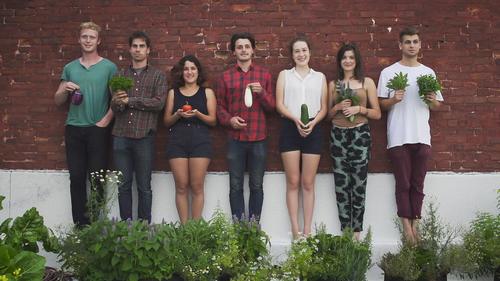
<p>Mid-November, I attended the two-year anniversary of an ingenious Montreal-based company called <a href="alveolemtl.com" target="_blank">Alvéole</a>. At its heart is the goal of reconnecting people to local food production. They install beehives on rooftops, maintain them and harvest honey in some of the most active neighbourhoods of the city, demonstrating with ease what it is like to initiate an innovative, sustainable enterprise whose process offers sweet returns.</p>
<p></p>
<p>In his hosting speech, co-founder Alexandre McLean shared interesting insights into benefits of beekeeping. Due to the pollinating assistance of these insects, an Alvéole client was able to obtain seven times more raspberries in her garden throughout the season. <i>Seven times</i>. Can it get more exciting than that? I spoke with Alexandre Ferrari, who is working with the founders on an important new addition to Alvéole's range of services: complete rooftop gardens. We talked about productive food systems, honey making and the various ways Alvéole plans to reconnect individuals to nature.</p>]]>
        <![CDATA[<p><strong>Q - You are a student in environmental science, focusing on food production. What pushed you to follow this path in your studies? </strong></p>
<p>It happened quite effortlessly. I remember as a child loving having a direct connection to food, being able to pick an apple directly from a tree. I find we are disconnected from this relationship in urban settings. Having to go to the market for groceries creates a big divide in our perception of food. It creates distance between acknowledging how crucial it is to eat fresh, the importance of organic food, and to understand where it comes from. When came the time to decide what I wanted to study, I looked at the job opportunities in this field and realized that it made perfect sense to focus on the environment and food production. We need to acknowledge and safeguard this relation.</p>
<p></p>
<p><strong>Q - How did you meet the creators of Alvéole and get involved in their project? </strong></p>
<p>Alexandre McLean, Etienne Lapierre and Declan Rankin Jardin are Alvéole's co-founders. Their mission is to bring urban beekeeping to a whole new level, and by doing this, reconnect individuals to local food production. Quebec imports 75% of its honey from abroad. By installing hives on rooftops, they bridge the divide between honey production and the market. They create quality products that necessitate less transport. They understand that their initiative has an impact on many levels. They contacted me to know if I would like to collaborate with them on a new segment of their project involving the design and creation of green rooftops with experimental hives. I decided to start testing different types of boxes offered on the market, notably the smartpot, the earthbox and the biotop. The idea was simple: find a functional system for the cultivation of honey and plants, for individuals and enterprises alike.</p>
<p></p>
<p><strong>Q - How did these trial rooftop gardens go? </strong></p>
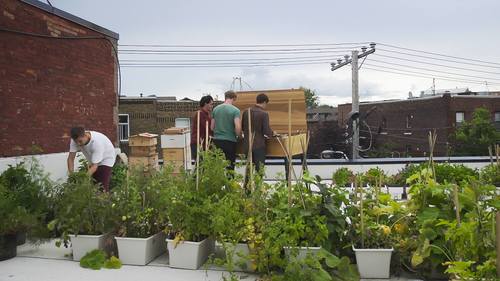
<p>They all did great, actually. Rooftops are often unused spaces to begin with, making location easy to define. I proceeded with our trial at the Alvéole headquarters in Verdun last summer. I tested 60 pods, an equal number of smartpots, earthboxes and biotops which all have their own specific qualities for specific types of plants. We used permaculture principles of companion planting, uniting 3 to 5 different varieties per pod. Certain plants grow better together. For example, Tomatoes, eggplants and basil make a great team. But what we are doing by making rooftop gardens is not only growing food. We are providing a habitat for the bees. They're not just honey-making machines, they need to have rest areas and access to water. They need nature. Surrounding their hive with flora is a great advantage for the welfare of the colony.</p>
<p></p>
<p><strong>Q - According to you, what are the biggest issues linked to food production in our society? </strong></p>
<p>The need for diversity is one. People do not acknowledge how crucial it is. Monoculture fields have a strong impact on our environment. First of all, it depletes nutrients from the earth. The ground isn't balanced with the attributes of diverse plants that would bring different components of the earth.</p>
<p>And what if this monoculture consists of a plant that is not pollinated by bees? Colonies must go farther to pollinate. They can only go from 3 to 5 km radius from their hive. Monocultures affect their reach, which prevents them from pollinating a great variety of plants, and thus affects environmental diversity and the wellbeing of the colony. You see, it's not just about making honey, it's about the imbalances caused in our environment on a whole other scale.</p>
<p>Also, I believe we need to reduce our dependence on the fossil fuel industry. We are living in the post Green Revolution and we are seeing more and more the negative effects of the use of petrochemicals in our food production systems. The use of inorganic fertilizers, pesticides, fungicides and herbicides degrades our land and our health, disrupts the biota of our soils, leaches into our waterways, and is extremely input demanding. By reducing our dependence on fossil fuels to produce our food, not only do we produce healthier food, we reduce the actual cost of producing food. Since the existence of the planet, vegetation has been extremely productive. The biochemical and fossil fuel industries want us to think that without these new technologies we would not be able to feed the world. The truth is that our world is extremely rich and to underestimate the productivity of our world might cost us the ecosystems we depend on for survival.</p>
<p>There are many other problems in regards to our food production system. What we need are ingenious people willing to take a step back and find new solutions to problems that have been imposed upon us by large agro-chemical industries.</p>
<p><a href="http://www.montrealites.ca/sustainability_blueprints/assets_c/2014/12/alveole_roofgardens-5542.html" onclick="window.open('http://www.montrealites.ca/sustainability_blueprints/assets_c/2014/12/alveole_roofgardens-5542.html','popup','width=1920,height=1080,scrollbars=no,resizable=no,toolbar=no,directories=no,location=no,menubar=no,status=no,left=0,top=0'); return false"><img src="http://www.montrealites.ca/sustainability_blueprints/assets_c/2014/12/alveole_roofgardens-thumb-500xauto-5542.jpg" width="500" height="281" alt="alveole_roofgardens.jpg" class="mt-image-center" style="text-align: center; display: block; margin: 0 auto 20px;" /></a></p>
<p><strong>Q - And in urban areas, bees have enough diversity? </strong></p>
<p>Actually, they do! Rooftop gardens are a major plus, but neighbourhood trees have a huge impact on a colony's production. Tonight, we are launching Alvéole's smartphone application, which can be used to highlight all sorts of aspects linked to urban beekeeping, such as honey composition.</p>
<p></p>
<p><strong>Q - What does the Alvéole application do? </strong></p>
<p>An interactive map of the city of Montreal is marked with all the locations of Alvéole hives. By clicking on each individual one, we can have access to a large quantity of information. The app accesses a database of the city in which the diversity of trees has been noted. That way, by calculating what trees are available in a 5km radius from the hive, we can know what plants contributed to the honey production of that specific hive. Different trees and plants produce different tasting honey. This means different neighbourhoods produce completely different tasting honey, and without even installing a hive it is possible to predict how the honey will turn out in different neighbourhoods.</p>
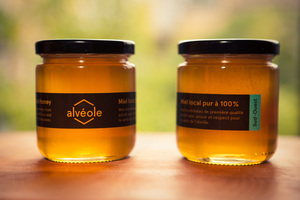
<p><a href="http://www.montrealites.ca/sustainability_blueprints/assets_c/2014/12/2sudouest_low-5544.html" onclick="window.open('http://www.montrealites.ca/sustainability_blueprints/assets_c/2014/12/2sudouest_low-5544.html','popup','width=1000,height=667,scrollbars=no,resizable=no,toolbar=no,directories=no,location=no,menubar=no,status=no,left=0,top=0'); return false"><img src="http://www.montrealites.ca/sustainability_blueprints/assets_c/2014/12/2sudouest_low-thumb-300xauto-5544.jpg" width="300" height="200" alt="2sudouest_low.jpg" class="mt-image-left" style="float: left; margin: 0 20px 20px 0;" /></a>Last year we sent our honey to a lab to determine the composition of pollen in the honey. They found that in Westmount there was s high proportion of pollen from <a href="http://en.wikipedia.org/wiki/Melissa_%28plant%29" target="_blank">Melissa</a>, which is a medicinal herb. It gave to the honey a mild taste of citrus. In other neighbourhoods like the Plateau, they found that there was a high proportion of raspberry pollen, which is known to give to the honey a very golden, almost reddish color. Although our application would not be able to distinguish these differences in honey since they do not come from trees, it would be interesting to have the ability to add all types of plants into the database in the future.</p>
<p></p>
<p><strong>Q - If I have an adequate roof and would like Alvéole to use the space to produce honey, what should I do? </strong></p>
<p>Not only a roof! We also install hives in gardens. Simply contact Alvéole through their website, it will be a pleasure for them to add you to the list. It's on a first come first serve basis. Certain neighbourhoods might reach their quota of hives quickly. We have to assure the bees won't be overcrowded and will have sufficient access to vegetation. That's another strongpoint of the Alvéole app, we get to keep track of which hives have access to what quantity of vegetation and prevent overcrowding. For example, McGill University has 20 hives, making us unable to install any in its vicinity, for fear of overcrowding that area.</p>
<p></p>
<p><strong>Q - We know what winter looks like in Quebec. What happens to bees during the cold season? Do you remove the hives? </strong></p>
<p>The hives stay at the same place all year long. During the fall, sweetened water is served to the bees, they stock it in their hive and feed on it during the winter months. When springtime arrives, they start emerging from the hive again.</p>
<p></p>
<p><strong>Q - What are Alvéole's next plans? What are your next plans? </strong></p>
<p>Next year we will be in good position to offer individuals and companies complete rooftop gardens, along with hives. Having properly tested the options last summer, we know what works best and will be offering this service to our clients. It will be possible for individuals to produce around 30% of their food all year round, as well as about 15 kg of honey. The production of fine herbs is especially easy to undergo and can become quite lucrative.</p>
<p>Alvéole teamed up with engineer Marc-André Roberge to produce a hive specifically for restaurants. This segment is referred to as Projet B. It contains beautifully designed partitions that can be detached and served directly to clients for them to enjoy locally produced honey, fresh out of the hive.</p>
<p>Alvéole is also in the works of expanding its reach to Montreal's suburbs and the greater Toronto area, where rooftop gardening is already very present. In Ontario, the government supports these initiatives more than in Montreal, they contribute 10$ for each square foot transformed. But Alvéole also has an impact outside of Canada. We teamed up with an NGO to instigate beekeeping initiatives in Haiti.</p>
<p>As for me, my way of tackling the problems linked to our food industry is by building/designing urban food production roof gardens in conjunction with urban beehives for people and businesses that want to be self-sufficient. Personally, I look forward to analyzing how the pollinating benefits of bees can maximize greenhouse food production. I plan on studying the matter while completing my degree and see to what extent bees can maximize our yield.</p>
<p></p>
<p></p>
<p></p>
<p>- Find Alvéole on <a href="https://www.facebook.com/alveolemtl" target="_blank">Facebook</a>, or contact them via their <a href="http://alveolemtl.com/" target="_blank">website</a>.</p>
<p>© Photos courtesy of Samuel Trudelle-Gendron</p>]]>
    </content>
</entry>

<entry>
    <title>Big Ideas and a Green Thumb</title>
    <link rel="alternate" type="text/html" href="http://www.montrealites.ca/sustainability_blueprints/2014/10/big-ideas-and-a-green-thumb.html" />
    <id>tag:www.montrealites.ca,2014:/sustainability_blueprints//272.4347</id>

    <published>2014-10-30T23:13:59Z</published>
    <updated>2014-11-05T14:59:47Z</updated>

    <summary>Ben-Yam Barshi&apos;s connection to nature has always been strong. It can be understood as a natural process for him to turn his life&apos;s attention and energy to the greatest connection to have with it: symbiotic systems to facilitate sustainable living...</summary>
    <author>
        <name>Marina E</name>
        
    </author>
    
    <category term="aquaponics" label="aquaponics" scheme="http://www.sixapart.com/ns/types#tag" />
    <category term="entrepreneurship" label="entrepreneurship" scheme="http://www.sixapart.com/ns/types#tag" />
    <category term="foodproduction" label="food production" scheme="http://www.sixapart.com/ns/types#tag" />
    <category term="sustainability" label="sustainability" scheme="http://www.sixapart.com/ns/types#tag" />
    
    <content type="html" xml:lang="en-us" xml:base="http://www.montrealites.ca/sustainability_blueprints/">
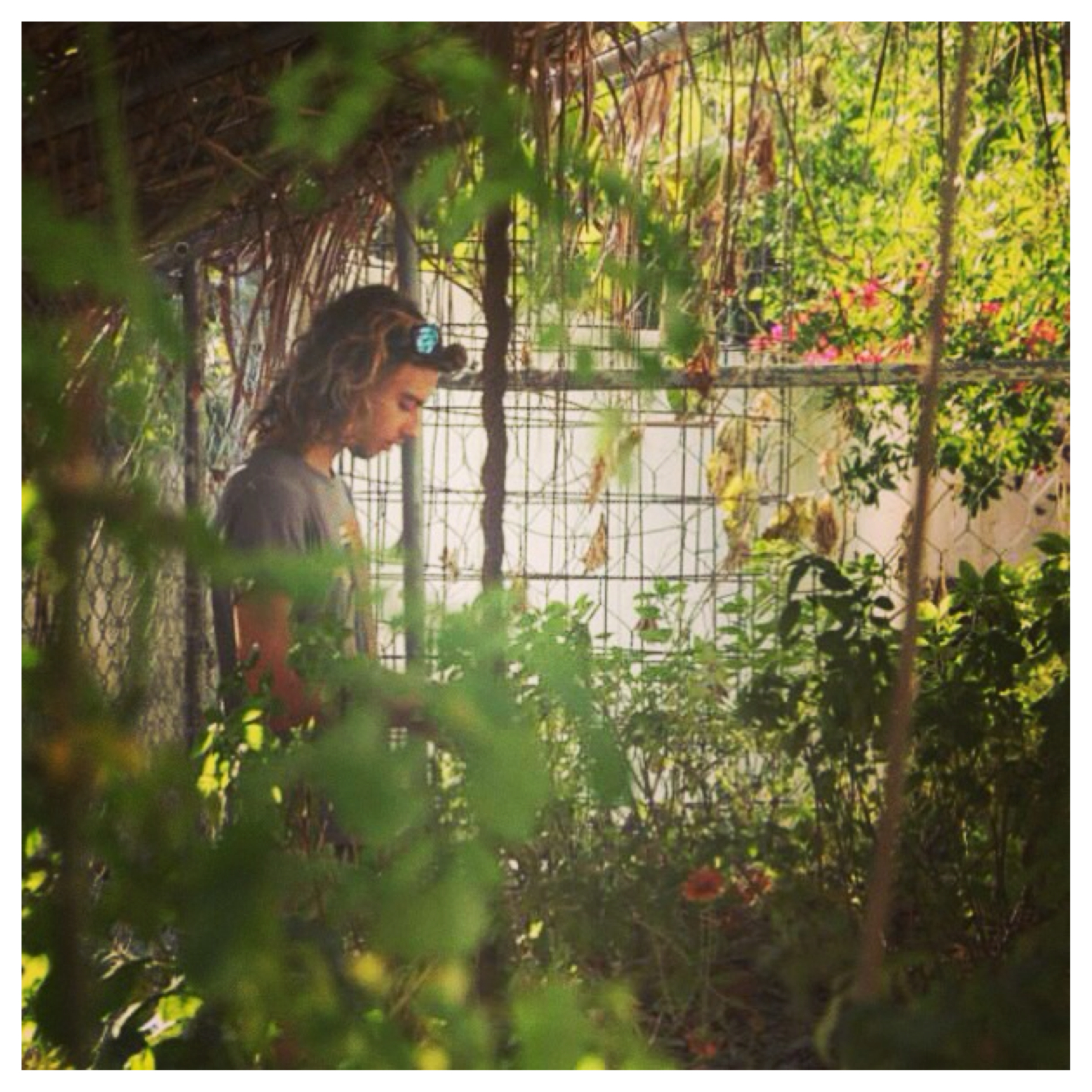
        <![CDATA[<p><span style="line-height: 1.62; font-size: 16.3636360168457px;"><br /><a href="http://www.montrealites.ca/sustainability_blueprints/benyam.jpg"><img alt="benyam.jpg" src="http://www.montrealites.ca/sustainability_blueprints/assets_c/2014/11/benyam-thumb-550xauto-5296.jpg" width="550" height="550" class="mt-image-center" style="text-align: center; display: block; margin: 0 auto 20px;" /></a>Ben-Yam Barshi's connection to nature has always been strong. It can be understood as a natural process for him to turn his life's attention and energy to the greatest connection to have with it: symbiotic systems to facilitate sustainable living and organic food production.</span></p>]]>
        <![CDATA[<p></p>
<p></p>
<p><span style="line-height: 1.62; font-size: 16.3636360168457px;">Born in the Dominican Republic, his standard of living involved surfing the waves of warm waters, walking barefoot in foliage-dense settings and eating ripe fruits right off the trees. His academic aspirations brought him to Montreal, his mother's hometown, but as many foreigners feel, the winter was too destabilizing for his southerly nature and he quickly returned to the Caribbean after completing his studies, inspired by the mindset of the city. His goal was clear: enjoy life the tropical way - which involved a more nature-oriented and laidback approach to life than in Northern cities - and focus on things he deemed were of significant importance: clean, safe, effective, organic food production.</span></p>
<p><span style="line-height: 1.62; font-size: 16.3636360168457px;">The biodiversity of the tropics created the perfect setting to focus on agriculture year-round. Mostly self-taught, he started absorbing the teachings of locals. He involved himself on farmers' lands near his native Cabarete, applying and developing notions of companion planting and growth methods. His help had a great impact. After much research, his attention turned to aquaponics. These systems connected fish farming to agriculture beds, nutrients feeding the fish, who then fed the plants. This natural cycle formed an efficient and productive system to raise fish, such as tilapia, and grow organic vegetables, all at once, maximizing water use and eliminating the need for chemical fertilizers.</span></p>
<p><span style="line-height: 1.62; font-size: 16.3636360168457px;">Ben-Yam got to work. He enthusiastically set up a stylish prototype at his parent's house, using small-scale fish. The vegetables quickly started thriving. He travelled to Haiti, where agriculture and water are difficult to manage, and installed systems that proved to be successful. He could see the idea not only worked, it was strong. </span><span style="font-size: 16.3636360168457px; line-height: 1.62;">A visit from an old friend living in New York sealed the deal to create a partnership and transform the system into a venture. </span><span style="line-height: 1.62; font-size: 16.3636360168457px;">The idea was to make home aquaponic systems that could be used indoors in urban environments. Sylvia Bernstein, the American pioneer in the concept, backed their idea. </span><a href="http://www.aqualibrium.com/" style="line-height: 1.62; font-size: 16.3636360168457px;" target="_blank">Aqualibrium</a><span style="line-height: 1.62; font-size: 16.3636360168457px;"> was launched via </span><a href="https://www.kickstarter.com/projects/1414985420/the-aqualibrium-garden-the-future-of-food" target="_blank" style="line-height: 1.62; font-size: 16.3636360168457px;">a Kickstarter campaign</a><span style="line-height: 1.62; font-size: 16.3636360168457px;"> that surpassed their funding needs by 142%. Mentions by </span><a href="https://www.kickstarter.com/projects/1414985420/the-aqualibrium-garden-the-future-of-food" style="line-height: 1.62; font-size: 16.3636360168457px;" target="_blank">Fast Company</a><span style="line-height: 1.62; font-size: 16.3636360168457px;">, </span><a href="http://inhabitat.com/aqualibrium-a-miniature-ecosystem-that-grows-fresh-vegetables-indoors/" style="line-height: 1.62; font-size: 16.3636360168457px;" target="_blank">Inhabitat</a><span style="line-height: 1.62; font-size: 16.3636360168457px;">, </span><a href="http://www.treehugger.com/sustainable-product-design/aqualibrium-aquaponics-grow-food-at-home-system.html" style="line-height: 1.62; font-size: 16.3636360168457px;" target="_blank">Treehugger</a><span style="line-height: 1.62; font-size: 16.3636360168457px;"> and more started appearing on the Internet. <a href="http://www.montrealites.ca/sustainability_blueprints/IMG_8002.JPG"><img alt="IMG_8002.JPG" src="http://www.montrealites.ca/sustainability_blueprints/assets_c/2014/11/IMG_8002-thumb-300xauto-5302.jpg" width="300" height="300" class="mt-image-right" style="float: right; margin: 0 0 20px 20px;" /></a>Reconnecting individuals to natural food production is clearly something that speaks to the masses, who are inspired by the idea of biting into a homegrown cherry tomato, regardless of living in an urban setting. Leaving the enterprise in the hands of his highly capable partners in New York, Ben-Yam returned to the Dominican Republic to work on what he still had in mind.</span></p>
<p><i style="line-height: 1.62; font-size: 16.3636360168457px;"><br />Bigger</i><span style="line-height: 1.62; font-size: 16.3636360168457px;"> systems. With the temperatures on the island, he was able to implement outdoor aquaponics systems that could accommodate larger capacities of edibles. In fact, they could be esthetically integrated in landscape design and organized and maintained to produce year-round. He formed </span><a href="http://www.jardindelfuturo.com/" style="line-height: 1.62; font-size: 16.3636360168457px;" target="_blank">Jardin del Futuro</a><span style="line-height: 1.62; font-size: 16.3636360168457px;">, meaning 'Gardens of the Future'. He perfected systems for Natura Cabana Spa and Resort, Infiniti Blu Luxury Front Condos as well as other condominums on the north shore of the island. <a href="http://www.montrealites.ca/sustainability_blueprints/assets_c/2014/11/IMG_7998-thumb-300xauto-5294.jpg"><img alt="Thumbnail image for IMG_7998.JPG" src="http://www.montrealites.ca/sustainability_blueprints/assets_c/2014/11/IMG_7998-thumb-300xauto-5294-thumb-300x300-5300.jpg" width="300" height="300" class="mt-image-left" style="float: left; margin: 0 20px 20px 0;" /></a>He is now focusing on making the systems interesting investments for homeowners. He believes in the potential of the system to reconnect individuals to food production, strengthen their bond to nature and accentuate the understanding of the importance of caring for this connection, fitting into a larger picture of "eco-awareness" prevalent in our day and age. Ben-Yam is regularly participating in public speaking about aquaponics, which is leading him to consider more projects related to education. His ideas sprout as fast as his plants, but as he always says, "it's a process." Time, energy and focus will make them advance.</span></p>
<p><span style="line-height: 1.62; font-size: 16.3636360168457px;">Aside from aquaponics, Ben-Yam also focuses on another fresh, green idea. His favourite plant is moringa, a nutrient-rich, fast growing tree that can not only survive but </span><i style="line-height: 1.62; font-size: 16.3636360168457px;">thrive</i><span style="line-height: 1.62; font-size: 16.3636360168457px;"> in arid conditions. He discovered it during his first volunteer visit to Sadhana Forest in Haiti. Ben-Yam usually has a few seeds in his pocket, ready to be handed over to whoever is interested. Fascinated by the properties of the plant and its nutritional value, he deemed it too remarkable not to invest in. He is not alone to have understood the potential of this plant; </span><a href="http://time.com/3544425/superfoods-moringa-tree-breadfruit-prickly-pear-cactus/" style="line-height: 1.62; font-size: 16.3636360168457px;" target="_blank">Time.com</a><span style="line-height: 1.62; font-size: 16.3636360168457px;"> has recently acknowledged it as one of the superfoods to look out for. </span></p>
<p><img alt="IMG_7994.JPG" src="http://www.montrealites.ca/sustainability_blueprints/assets_c/2014/11/IMG_7994-thumb-300xauto-5295.jpg" width="300" height="300" class="mt-image-right" style="float: right; margin: 0 0 20px 20px;" /></p>
<p><span style="line-height: 1.62; font-size: 16.3636360168457px;">The oil of the seeds being particularly beneficial for the skin, Ben-Yam teamed up with his partner Samira Hofmann to produce high quality, cold pressed moringa oil, in an eco-conscious fashion. They distribute the oil in its natural state or perfumed as a 100% natural beauty product with therapeutic values. It can be purchased wholesale or retail via their brand, </span><a href="http://gaiaearthalchemy.com/" target="_blank"><span size="3" style="font-size: medium;"><span style="line-height: 1.62;">Gaia</span></span></a><span style="line-height: 1.62; font-size: 16.3636360168457px;"><a href="http://gaiaearthalchemy.com/" target="_blank"> Earth Alchemy</a>, along with other moringa-derivatives, such as energizing tea made from the leaves.<br /></span></p>
<p><span style="line-height: 1.62; font-size: 16.3636360168457px;">Ben-Yam's goals naturally involve great social impact. His entrepreneurial endeavors are creating jobs in developing areas, inspiring locals and empowering them to reconnect with their surroundings. Last spring, he donated 1000 fruit plants via </span><a href="http://alloseman.wix.com/alt-154" style="line-height: 1.62; font-size: 16.3636360168457px;">Infunity</a><span style="line-height: 1.62; font-size: 16.3636360168457px;"> to support permaculture initiatives in Ans-A-Pitre, Haiti. His ideas are spreading, making him an entrepreneur to look out for. </span></p>
<p><span style="line-height: 1.62; font-size: 16.3636360168457px;">Ben-Yam's initiatives show us what can be achieved when you think outside the box, with your eyes wide open and your feet on the ground. Unafraid of creating his own path, he is showing us the potential of investing into green ideas. Many developing countries have great venture possibilities in this regard. Ben-Yam, inspired by the potential of his heavenly island, was able to bring his visions to life, showing us that thinking differently can lead to impressive endeavors that do find their place in our modern world. At 25, he has already achieved great things and keeps on aiming higher. His input in the entrepreneurial world shows us that the future does look green.</span></p>
<p><span style="line-height: 1.62; font-size: 16.3636360168457px;">Inspired by the projects mentioned?</span></p>
<p></p>
<p><span style="line-height: 1.62; font-size: 16.3636360168457px;">Like them on facebook:</span><a href="https://www.facebook.com/gardensofthefuture" style="line-height: 1.62; font-size: 16.3636360168457px;"> Aqualibrium</a><span style="line-height: 1.62; font-size: 16.3636360168457px;">, </span><a href="https://www.facebook.com/jardindelfuturo" style="line-height: 1.62; font-size: 16.3636360168457px;">Jardin del Futuro</a><span style="line-height: 1.62; font-size: 16.3636360168457px;">, </span><a href="https://www.facebook.com/gaiaearthalchemy" style="line-height: 1.62; font-size: 16.3636360168457px;">Gaia Earth Alchemy</a></p>
<p></p>
<p></p>]]>
    </content>
</entry>

</feed>